John Hay Quotes
… a hideous bugbear
Lincoln early in his career had thought that voluntary Negro emigration would be a solution to the race problem in America. However, over time he lost his enthusiasm for this. Conversations with Black leaders had persuaded him that American Negroes had helped build this country and wanted their fair place in it. Hay thought that the idea was not only immoral but impractical and considered the suggestion always to be a proposed solution which would never be practically implemented. There were a few attempts and there was a society set up to encourage emigration. The Nation of Liberia was founded by returning American ex-slaves, but there has been friction between the descendants of the Americans and those of the natives ever since.
John Milton Hay, 1838-1905, U.S. Ambassador to Great Britain, U. S. Secretary of State (Republican), Assistant and Secretary to the President (Abraham Lincoln), Description of Lincoln’s {57998} notion of Negro colonization
Sourced by: Eigen's Political and Historical Quotations

Dodge was a hotbed of violence, gun-fighting, drinking, gambling and prostitution. At one point they had 19 saloons serving liquor for a total population of only 1200. The Governor wrote to the mayor demanding change but the newspaper documented what really happened.
_0_thumbnail_47x47.jpg "A portrait of Richard Allen, a Methodist bishop and founder of the African Methodist Episcopal Church")
Many whites thought that the solution to the problem of free and emancipated Negroes was to send them to Africa. They assumed that the negroes would by desirous of that solution also, but they rarely asked them. When they did, they received answers much like this one from one of the leading Black clergymen in America.


Abraham Lincoln in his famous eulogy to Clay in Springfield, IL, used this quotation.
More than a decade before the Civil War there were many proposals and plans for ending slavery in America without war. Many of these debates took place amongst major religious institutions. John Price Durbin, an eminent Methodist clergyman and former president of Dickinson College proposed one. His plan called for compensation to slaveholders and the relocation of the freed slaves to Africa—a form of ethnic cleansing. Brown disagreed with forced colonization to Africa. Instead, he suggested California as a voluntary option. Brown’s idea received about 9 months of serious consideration, but in January of 1848, gold was discovered in California and the Gold Rush was on. Black colonization of California was off the table.

This idea has been rejected by American Blacks from before the Civil War. There were many Black families that have been in America longer than Rockwell who always had the choice to go back to where they cam from if they were unhappy with America but they never did.

Jefferson was referring to a plan then proposed and discussed to establish a colony in Africa which would be populated with free American Negroes and slaves when and if slavery could be ended. See Quotation xxx.

The United States should authorize payment for

See {625675}, {625686}, {625684}, {625682}, {625676} for additional quotations arguing for Black emigration.


Actually Blacks did all three. Some returned to Africa and established the state of Liberia. Others went to South America and most stayed in the United States and continued to help build the nation.

He was also himself a ship owner in the slave trade and he was the brother of the leading Rhode Island abolitionist, Moses Brown. See {585793}. Brown became the first American, prosecuted in federal court for illegal slave trading –-- a prosecution brought, in part, by his own brother. He was, however, acquitted.
In 1862 the president requested a $600,000 congressional appropriation to finance a pilot program for Negroes freed by the Civil War to emigrate to Africa. He met with a delegation of Black leaders:
Fuller, though a slave was recognized as a mathematical prodigy even by the Southerners, so biased against Blacks. Fuller was what today we call a mathematical savant. It is very puzzling how so many could maintain the doctrine of low Black intellect when in their midst was a well known Black mathematician who was not only superior to all the whites in the area but who thy put in the same league with Newton—the greatest mathematical genius of the era. For other quotations on the sophistication of the Blacks of the era at mathematics. Fuller’s skills are corroborated by other documentation {612507}. See {610913} and {594083} for more quotations regarding Black mathematical prowess. The Centinial was a pro abolitionist publication.
Fuller’s skills are corroborated by other documentation {610943} . Fuller would probably have been an “Idiot Savant”—a type of genius that is limited to a single field such as mathematics, art, etc. See {610913} and {594083} for more quotations regarding Black mathematical prowess.

He was lecturing to an audience of 1500 Blacks. Darrow was castigated for telling Negroes that they did not have an inherently inferior capacity from whites, This was feared would make them too demanding and insist on unrealistic equality.
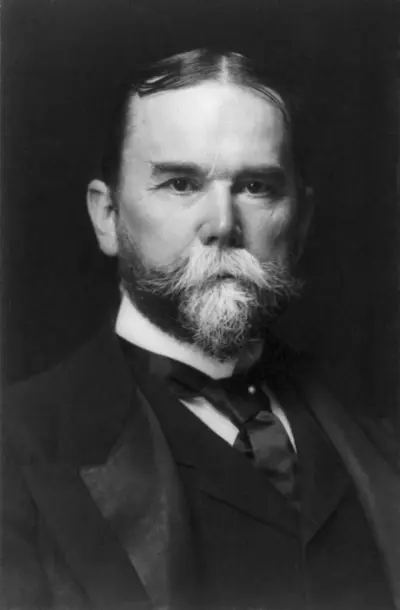
- Born: October 8, 1838
- Died: July 1, 1905
- Nationality: American
- Profession: Writer
John Milton Hay was an American statesman and official whose career in government stretched over almost half a century. Beginning as a private secretary and assistant to Abraham Lincoln, Hay's highest office was United States Secretary of State under Presidents William McKinley and Theodore Roosevelt. Hay was also an author and biographer, and wrote poetry and other literature throughout much of his life.
