Henry W. Grady Quotes
The new South presents a perfect democracy...; a social system compact and closely knitted, less splendid on the surface, but stronger at the core; a hundred farms for every plantation, fifty homes for every palace.
He often spoke in the North to try and explain the virtues of the “New South” with an idea of diminishing the stigma the South has borne every since the founding of the nation. In this particular speech, His audience included J. P. Morgan and H. M. Flagler at New York’s Delmonico's Restaurant at a meeting of the New England Society of New York. He gave a picture of a middle class society, but the reality was there was a very small middle class in the South at that time. Most farmers were tenant farmers and didn’t even own their own land. And the 50 homes for every palace were far below the standard with which the North had become familiar.
Henry W. Grady Speech to the New England Society of New York Delmonico's Restaurant , New York City 1886
Sourced by: Eigen's Political and Historical Quotations


When Tocqueville studied the United States, it was inferior to the England and the other European aristocracies in science, the arts, literature, philosophy, theology and most other intellectual fields of culture and human endeavor. He did not have the opportunity to observe the interactive, long term effects of freedom, democracy, and public education. The US would become the dominant cultural nation of the world, with the English language in far greater usage than at the height of the British Empire. American Science, literature, art developed with more and more people participating in and being educated for those areas and were free to create without the restraints of government or even cultural norms. American creativity was demonstrated by more new religions being created that than in any other nation on earth.


At the time English democracy was still suspect especially among the aristocracy.

formerly 2nd Viscount Stansgate


Explanation of the circumstances that kept his ancestors from achieving a university-level education.


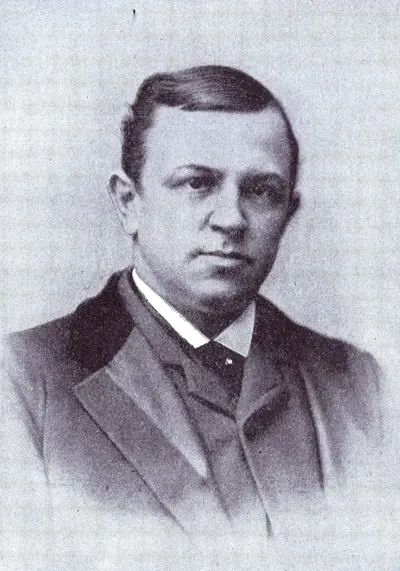
Henry Woodfin Grady was an American journalist and orator who helped reintegrate the states of the Confederacy into the Union after the American Civil War. Grady encouraged the industrialization of the South. He was praised by contemporaries and by authors Shavin and Galphin as a civic promoter, political strategist and captivating speaker, and by Atlanta journalist Frederick Allen as a visionary. However, in current times, Grady's arguments for the need for white supremacy in the post-Civil War South have resulted in his legacy being seen nowadays as anywhere from positive, to both positive and negative, to racist and therefore negative. Grady's name has been removed from several schools including Atlanta's former Grady High School. Grady was the father-in-law of Federal Reserve Chairman Eugene Robert Black and grandfather of banker and World Bank President Eugene R. Black Sr.
