Harold L. Ickes Quotes
If Eleanor Roosevelt has her way, how are we going to tell the rich from the poor?
Harold L. Ickes, 1874-1952, U.S. Secretary of the Interior (Republican), Comment on the First Lady's views of new community development and housing, Quoted in Blanche Wiesen Cook, Eleanor Roosevelt, 1993
Sourced by: Eigen's Political and Historical Quotations

This principle has been referred to as The Great Gatsby Curve. See {630975}.


The only publication with a full time Poverty beat


Of all the inequalities that existed in society, the easiest one to overcome with effort is wealth. Race, blood, parentage, even education are not as easily overcome. Of all the inequalities, traditionally Americans have been least offended by that of wealth under the theory that with current effort that can often be overcome. It is only in the latter part of the 20th century where modern economics and sociology have shown that wealth inequality itself is also difficult to overcome, that money as a societal leveler has been conceptually diminished. Sedgwick was the first American to identify the phenomenon that had operated in early America.


Kent came from a very affluent family,


The “competition of the poor included the political and social activism competition.”

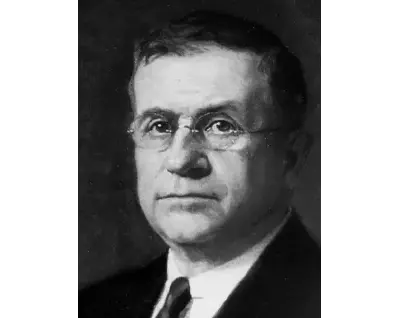
Harold LeClair Ickes was an American administrator and politician. He served as United States Secretary of the Interior for 13 years, from 1933 to 1946, the longest tenure of anyone to hold the office, and the second longest-serving Cabinet member in U.S. history after James Wilson. Ickes and Labor Secretary Frances Perkins were the only original members of the Roosevelt cabinet who remained in office for his entire presidency.
