Alexis de Tocqueville Quotes
If a [democratic] society displays less brilliance than an aristocracy, there will also be less wretchedness.
When Tocqueville studied the United States, it was inferior to the England and the other European aristocracies in science, the arts, literature, philosophy, theology and most other intellectual fields of culture and human endeavor. He did not have the opportunity to observe the interactive, long term effects of freedom, democracy, and public education. The US would become the dominant cultural nation of the world, with the English language in far greater usage than at the height of the British Empire. American Science, literature, art developed with more and more people participating in and being educated for those areas and were free to create without the restraints of government or even cultural norms. American creativity was demonstrated by more new religions being created that than in any other nation on earth.
Alexis de Tocqueville, 1805-1859, French Foreign Minister & Writer, Democracy in America, Volume I, 1835
Sourced by: Eigen's Political and Historical Quotations


At the time English democracy was still suspect especially among the aristocracy.


1st Earl of Beaconsfield


In 1877 Wasburn was dropped from the List of Ministers by the Unitarian Church. He had become quite atheistic.


The United States money was then on the Gold Standard. The country was growing and needed more money in circulation. But most of the gold that might be available was in England and English bankers could control much of the U. S. economy. The Populists and the Democrats wanted us to use silver to back U. S. money as there was plenty of silver in the United States. The Republicans would not relent and depression was upon the country. A half century later, it would be Republican President Richard M. Nixon, who took the United States off the gold standard. Lease was far ahead of her time.


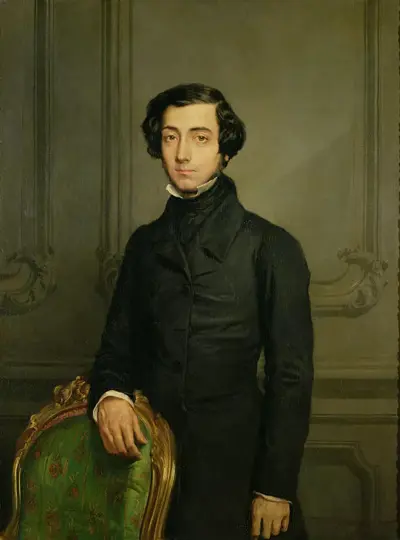
Alexis Charles Henri Clérel, comte de Tocqueville, colloquially known as Tocqueville (/ˈtɒkvɪl, ˈtoʊk-/), was a French aristocrat, diplomat, political scientist, political philosopher and historian. He is best known for his works Democracy in America (appearing in two volumes, 1835 and 1840) and The Old Regime and the Revolution (1856). In both, he analysed the improved living standards and social conditions of individuals as well as their relationship to the market and state in Western societies. Democracy in America was published after Tocqueville's travels in the United States and is today considered an early work of sociology and political science.
