Napoleon Bonaparte Quotes
The Netherlands were no more than the alluvium formed by the principle rivers of my empire.
Napoleon Bonaparte Bonaparte, 1769-1821, Military leader and Emperor of France, Derogatory Description of Holland, Quoted in Simon Schama, Patriots & Liberators: Revolution in the Netherlands 1780-1813, “Alluvium” is the technical term for the residue containing earth and sand left by rivers or floods
Sourced by: Eigen's Political and Historical Quotations


Dutch colonial administration was the responsibility of the Dutch East India Company.


William V, Prince of Orange, was in a very precarious position and might be deposed. Officially Harris and the British were supporting him and Harris was giving him money to firm up his regime, but their great fear was that the French would support and control the Patriot Revolutionary movement, then quite active. And William was very tentative in dealing with the growing Patriot revolutionary movement. Actually, to cover all eventualities, Harris was secretly aiding the Patriots as well. See {639752}.

Koxinga had an overwhelmingly superior force, and wanted the Dutch to surrender and avoid bloodshed. The Dutch with their typical European colonial attitude, had great difficulty surrendering to “natives” even if outnumbered. Finally, the Dutch Commander agreed to surrender. Koxinga then established a Chinese Government on the Island and became a great hero of the Ming Dynasty. Note the graphic of the statue to him which is one of the very few Chinese memorial statues to a military hero showing him in action—very similar to European statues.

He was a poor governor in general and was fired and replaced by the Dutch East India Company which was a happy occurrence for the colonists. The company was a money making institution and depended on colonists who would farm, trade and manufacture. If they were unhappy, the company would not profit. They would not have minded a tyrant if he could produce profits as some did in the Dutch East Indies, but Kieft was a loser on all counts.


Felipe, capitalizing on the death of the Portuguese King, declared in 1580 his intention of uniting the Iberian peninsula under his rule.


The French leader was one of the first to warn against the Fascism that Mussolini brought to Italy. Although most of the French leadership was opposed to Fascism when it came to fighting Fascism, the French later proved feeble, and many became collaborators and adopted the Nazi puppet state of Vichy France.

The speech writer, Anthony R. Dolan, had written, “Now and forever, Russia is an Evil Empire. Reagan crossed out “Now and forever” as he had the optimism that the Soviet Union would fall and Russia would reform at a time when only Senator Pat Moynahan had ever suggested the idea.

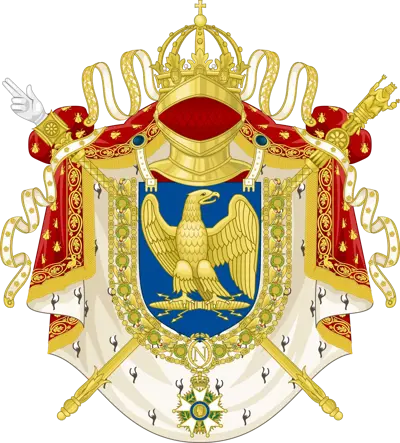
Napoléon Bonaparte was a French military and political leader of Corsican descent. He rose to prominence during the French Revolution and led several successful campaigns during the Revolutionary Wars. As Napoleon I, he was Emperor of the French from 1804 until 1814, and again in 1815. Napoleon dominated European and global affairs for more than a decade while leading France against a series of coalitions in the Napoleonic Wars. He won most of these wars and the vast majority of his battles, building a large empire that ruled over continental Europe before its final collapse in 1815. One of the greatest commanders in history, his wars and campaigns are studied at military schools worldwide. He remains one of the most celebrated and controversial political figures in human history.
