John Lothrop Motley Quotes
Thus the liberties of Holland and Flanders waxed, daily, stronger.
Motley, John Lothrop. The Rise of the Dutch Republic: A History. Vol. 1, Harper & Brothers, 1856, p. 32.


Despite his warning---and that of others—all that they could get agreement upon had each of these three weaknesses. After winning the American Revolution, the new country found the Articles of Confederation and the Continental Congress completely inadequate and finally in 1787 there was a Constitutional Convention held in secret in Philadelphia to overcome the weaknesses of the existing structure of which the warnings of Rush were three of the problems that had to be fixed.

He was a poor governor in general and was fired and replaced by the Dutch East India Company which was a happy occurrence for the colonists. The company was a money making institution and depended on colonists who would farm, trade and manufacture. If they were unhappy, the company would not profit. They would not have minded a tyrant if he could produce profits as some did in the Dutch East Indies, but Kieft was a loser on all counts.

Compare to the language of Jefferson in the Declaration of Independence. Jefferson and his colleagues were familiar with this document.


The term “America” was used by him and others to refer to South and Central America—not the United States.


This constitution, 13 years later, became the basis for the national Batavian Constitution.

The manifesto was designed to stop the practice of one country annexing part of another either by conquest or by purchase from the previous dominant power. Nations would trade and sell colonies or provinces to each other without any thought whatsoever to the wishes of the populations of those territories.
Dutch colonial administration was the responsibility of the Dutch East India Company.


At the time, Capetown was under the control of the Dutch East India Company which had recruited Gordon from Scotland. There was a wave of liberality following the Enlightenment, the American Revolution, and the very vocal English, anti-slavery, reformers. The Dutch were concerned mainly with making money, and that they thought that meant stability and the status quo. Gordon was their strong spokesman on this. Like American Southern slave owners, Gordon read the Bible as God endorsing slavery and the inferiority of Blacks. Thus, reformers did not "believe in God any more".


Although Holland was more egalitarian and fairer than most nations of Europe, it was not quite as desirable as Diderot described it. He only visited a part of Holland that was the most educated and affluent.

document he wrote. He and Benjamin Franklin were sent to France to try and raise support for the revolution in troops, war material, or loans. Franklin was much more popular in France and Adams included Holland where he tried to show the Dutch how similar the histories and traditions of the two countries were. He succeeded in obtaining loans that were needed badly.
Vreede wanted to create a Republic instantly. However some representatives of the old regime and affluent conservatives wanted the old laws and governmental structure less the monarch, William V. They argued that this would be temporary until the area was quiet and orderly unlike the passionate operations that was the result of the Dutch Revolution. To Vreede, delay was a trap (snare) to allow the aristocrats to reestablish their power and privileges.


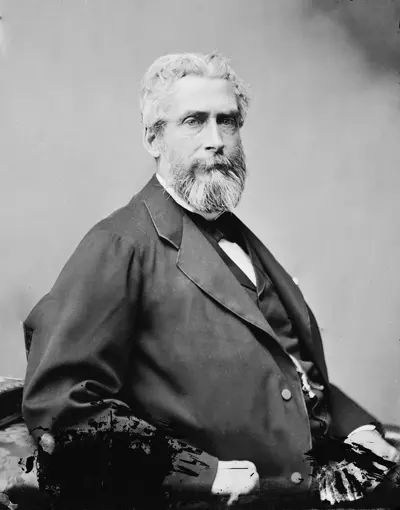
John Lothrop Motley was an American author, best known for his two popular histories The Rise of the Dutch Republic and The United Netherlands. He was also a diplomat, who helped to prevent European intervention on the side of the Confederates in the American Civil War.
