Koxinga Quotes
You Hollanders are conceited and senseless people; you will make yourselves unworthy of the mercy which I now offer; you will subject yourselves to the highest punishment by proudly opposing the great force I have brought with the mere handful of men which I am told you have in your Castle; you will obstinately persevere in this. Do you not wish to be wiser? Let your losses at least teach you, that your power here cannot be compared to a thousandth part of mine.
Koxinga had an overwhelmingly superior force, and wanted the Dutch to surrender and avoid bloodshed. The Dutch with their typical European colonial attitude, had great difficulty surrendering to “natives” even if outnumbered. Finally, the Dutch Commander agreed to surrender. Koxinga then established a Chinese Government on the Island and became a great hero of the Ming Dynasty. Note the graphic of the statue to him which is one of the very few Chinese memorial statues to a military hero showing him in action—very similar to European statues.
Koxinga, 1624–1662, [Zheng Chenggong], Chinese Military Leader, Chief commander of the Ming Dynasty troops on the maritime front, Statement to the Dutch Commander on the Island of Formosa (Taiwan), Quoted in William Campbell, Formosa under the Dutch: described from contemporary records, with explanatory notes and a bibliography of the island, 1903
Sourced by: Eigen's Political and Historical Quotations

Koxinga had an overwhelmingly superior force, and wanted the Dutch to surrender and avoid bloodshed. The Dutch with their typical European colonial attitude, had great difficulty surrendering to “natives” even if outnumbered. Finally, the Dutch Commander agreed to surrender. Koxinga then established a Chinese Government on the Island and became a great hero of the Ming Dynasty. Note the graphic of the statue to him which is one of the very few Chinese memorial statues to a military hero showing him in action—very similar to European statues. Already Koxinga’s massed wooden junks with small cannon and fire torches had sunk one of the Dutch warships (they were not iron but had some iron plates on the deck to protect the gunners) and there were so many junks that the other Dutch ships sailed out to sea to avoid the Chinese huge number of junks.


This is the Admiral who commanded that invasion of Washington DC and the burning of the White House. It was in retaliation for the destruction of buildings in the American invasion of Canada that began the War of 1812.

Bush followed a tradition of American opposition to conquest. See Henry L. Stimson’s statement on the Japanese invasion of Manchuria.

The French had arrived there first an “claimed” the area with a tiny military contingent under Lieutenant Marchand. However, the British arrived afterward with a much larger military force. London and Paris decided that the French should withdraw in favor of the British. Delcasse had been right. Another case of “might makes right.”

He was a poor governor in general and was fired and replaced by the Dutch East India Company which was a happy occurrence for the colonists. The company was a money making institution and depended on colonists who would farm, trade and manufacture. If they were unhappy, the company would not profit. They would not have minded a tyrant if he could produce profits as some did in the Dutch East Indies, but Kieft was a loser on all counts.


This was written more than a year before the American Revolution Battles began. It took time to ship the men and supplies to America and the British did not handle that task with much efficiency. See {636926} for another of the King’s statements.

Fox was one of the opposition leaders who were opposed to the heavy handed policies that the British King and Government had used.


Napoleon was finally stopped by a multinational coalition led by England.

Every major Western power and Japan were looking to control parts of China for their own mercantile advantage. The Emperor, her adopted son, had stated that under no circumstances would the Chinese fight, but Cixi issued this decree, in effect, overruling the Emperor—a remarkable occurrence.


The Barbary Pirates had an incredible extortion racket going in the Mediterranean. If nations would pay them an annual sum each year, they would not attack and seize merchant ships of that country and sell the ships and goods while holding the sailors for ransom. President Jefferson had first dispatched American warships and authorized a major land operation which were very effective. Finally, a treaty was negotiated but Decatur reminded the Navy of what brought the Algerians to the negotiating table.

Earlier, his father had also castigated the ministers over their inept hard-line handling of the American Revolution. See {641505} .


She was ruling the largest country in the world and Denby’s opinion was held by most who knew China. What made her all the more remarkable was that, as a Chinese lower middle class women, she had no formal education, had rarely been allowed to travel out of her home or interact with men. As a young teen she was made a concubine to the Emperor and rarely left the harem. Like Abraham Lincoln she was self-taught and not only was able to seize power in China without any male advisor or patron, but she ruled as well as any world leader. In her later years she was pushing her country too fast and far, and the Western Powers had caused much domestic difficulty and to maintain power, she had to ally with the anti-West Boxers causing her reputation amongst Westerners to sink dramatically and thereafter was never much acknowledged for her remarkable political skills and accomplishments.

1st Baronet Hart. The Customs Duty was a major revenue source for governments of the day. China, had such a history and culture of corruption, especially around customs, that the Empress Cixi, to the distress of many of her own people, appointed Hart to oversee the entire customs operations. The yield amazed all, and opposition to Hart evaporated except from the officials who could no longer profit as before. Hart served in this position for 47 years.
This was not the ravings of a right wing extremist. It was normative for Prussia as a whole. Right wing extremism as we think of it today was the norm of the ruling classes in Prussia and other parts of Germany. This book was a best seller in Germany. This quotation illustrates the mentality of the conservative, militarist, culture that dominated Germany at the time. The German aggression of WWI was not even considered as immoral but a God-given right.
China had a similar policy with each side wanting to establish more of a precedent for its ownership of the islands. Military flyovers, landing parties raising national flags by both countries triggered counter measures and the likelihood of casualties and even death to some soldiers. Both sides seemed willing to risk the lives of their troops as long as the conflict could be contained thereafter. But sometimes it cannot be.
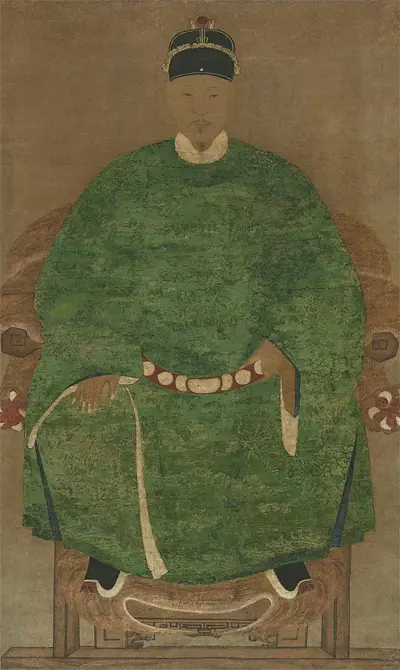
Zheng Chenggong, Prince of Yanping, better known internationally by his Dutch-Romanised Hokkien honorific Koxinga or Coxinga (Chinese: 國姓爺; pinyin: Guóxìngyé; Pe̍h-ōe-jī: Kok-sèng-iâ), was a Chinese Ming loyalist who resisted the Qing conquest of China in the 17th century, fighting them on China's southeastern coast.
