Jan van Riebeeck Quotes
…dull, stupid, lazy, stinking people.
Jan van Riebeeck, 1619-1677, First Dutch Governor of the Cape Colony of South Africa, Description of the African Natives, May 4, 1653
Sourced by: Eigen's Political and Historical Quotations


Some of the Right Wing attacks in President Obama were without any foundation of facts. All presidents have to work extremely hard, and if they were not “workaholics” they could not even get nominated for the post. Many critics saw a racist element in this attack. In Sununu’s youth there was a slander by which racists used to refer to Blacks as “lazy and shiftless”. Obama was the first Black President and whereas that demonstrated that the nation had gotten past much of its racism, some still remained and this might have been a vestige of it.

The White Africaners were attacking the Blacks to force them off their land so the Afrkaners could take over. The country was under British rule and the unarmed Blacks were being slaughtered by the Afrikaners who were British Subjects. Eventually the Boer War set the English against the Afrikaners. See {583902} for a related quotation.
The power structure of England and the English administrators of South Africa were strong advocates of racial equality at the beginning of the 19th century. They insisted on equal administration of law. However the Boer white population could think of nothing more absurd. In a sense the Boers were much like the Southern Whites at the same time. The South African government however could not enforce its equality policies in the rural area – the majority of South Africa at the time. When democracy and self rule came to South Africa, the racially moderating force of the English was minimized and the majority of South Africans wanted a racially segregated society. Apartheid resulted.

See {583928} and {583922}
Description of the Dutch Reformed Church in South Africa in the 1730’s


White Africaners were slaughtering Blacks to appropriate their land in violation of English law. See {583901} for a related quotation.

When the British first colonized South Africa, the area they used was akmost uninhabited or very sparcely so. However, some Black tribes (including the Zulus) were moving from the north and themselves were colonizing or annexing the areas to their kingdom. The British were most interested in Trading so did not have large land asperations. The Dutch white Boer Africanners, in contrast, wanted to farm the lands and use the range for their cattle. They wanted the land. The English policy was that there would be friendly relations with the Black tribes surrounding their Cape Colony and no one should take their land. However the Boers started attacking the Black areas and seizing their farms and villages. At first, the English assumed that the Blacks would easily be able to ward off the invasion as the Afrikanners had no professional troops like the British. However, the neighboring tribes were not very warlike or good fighters. They were being overrun by the Zulus coming from the North and the Boers from the South. The British Government had a real problem in that they would have to have British soldiers fight the white Afrikanners if they wanted to stop the illegal white invasions. This was the root of the Boer War where the British would be fully at war with the Africanners.
The White Boers viewed themselves as superior to the Blacks and the Blacks and Whites competed for land. In an early form of ethnic cleansing, the Boers attacked the undefended women and children of the Black tribes. The authorities opposed these atrocities but did not have any way of enforcing their orders.

At the time, Capetown was under the control of the Dutch East India Company which had recruited Gordon from Scotland. There was a wave of liberality following the Enlightenment, the American Revolution, and the very vocal English, anti-slavery, reformers. The Dutch were concerned mainly with making money, and that they thought that meant stability and the status quo. Gordon was their strong spokesman on this. Like American Southern slave owners, Gordon read the Bible as God endorsing slavery and the inferiority of Blacks. Thus, reformers did not "believe in God any more".


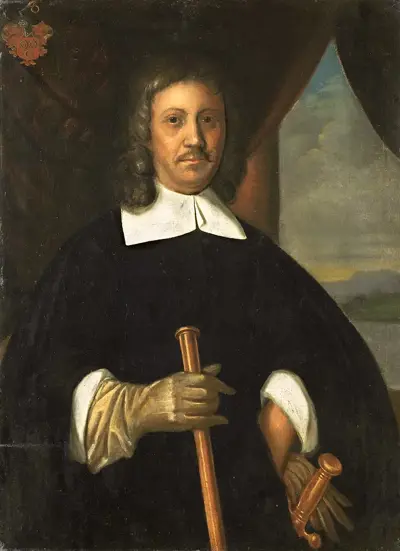
Johan Anthoniszoon "Jan" van Riebeeck was a Dutch navigator and colonial administrator who founded Cape Town and the Dutch Cape Colony of the Dutch East India Company.
