Philip Henry Sheridan Quotes
the Mayor of the city [John T. Monroe], during my absence, suppressed the Convention by the use of their police force, and in so doing attacked the members of the Convention and a party of two hundred negroes, and with fire-arms, clubs, and knives, in a manner so unnecessary and atrocious as to compel me to say that it was murder. About forty whites and blacks were thus killed, and about one hundred and sixty wounded. Everything is now quiet, but I deem it best to maintain a military supremacy in the city for a few days until the affair is fully investigated, IT WAS NOT RIOT. IT WAS AN ABSOLUTE MASSACRE BY THE POLICE, WHICH WAS NOT EXCELLED IN MURDEROUS CRUELTY BY THAT OF FORT PILLOW. IT WAS A MURDER WHICH THE MAYOR AND POLICE OF THE CITY PERPETRATED WITHOUT THE SHADOW OF NECESSITY.
Local Mayors have on several occasions in history used their police powers to influence the course of political events. While Mayor Daley’s police riot at the Democratic National Convention in 1968 Chicago was thought to be a unique experience, the New Orleans police—100 years earlier—had perpetrated an even more deadly riot. In this case General Sheridan was forced to impose martial law. In this case, as in Chicago, not only did the local police and politicians get away unscathed by the law, but they used the local law to actually arrest and indict the victims.
Philip Henry Sheridan, 1831-1888, Army General & Reconstruction Official, Telegrams sent from New Orleans to General Grant, August 1, 1866 and August 2, 1866
Sourced by: Eigen's Political and Historical Quotations

The law enforcement officers were the ones who broke the law when they beat and brutalized the peaceful civil rights marchers. The “white niggers” refer to the white marchers including clergy.

The Police Commissioner had earlier given the green light to the police to use their clubs brutally and indiscriminately {626665} and afterwards made a statement that has been quoted ever since as he justified violating the Constitution because of their political views—see {626664}.

Jinnah and other Muslim leaders had stirred up the Muslims to violence to put pressure on all the parties to accede to Jinnah's Muslim League's demand of an independent Muslim nation—Pakistan. Messervy was very sympathetic to the Muslim leadership as he had been feuding with and frustrated by the predominantly Hindu ruling Congress Party. After partition he accepted the mercenary position of Commander in Chief of the Pakistani Army. Then he was shocked and horrified at the slaughter of the terrorist attacks by the Muslims—about 4,000 Sikh men, women and children had been beaten and cut to death. The Sikhs had been targeted largely because Sikh leaders had recently announced that if there were a Partition, Sikhs would refuse to live in nation under Muslim control.

Defending his administration and the Chicago police against the charge that they used excessive force and caused a police riot during the Democratic National Convention of 1968:

Lincoln had instituted the first draft in American History and it was terribly resented by many Americans. The draft laws allowed the wealthy and upper middle class to avoid service by paying a $300 fee of hiring a substitute just like in the Vietnam War the upper classes could get College Draft deferments. The mob led mostly by poor Irish, began by protesting the draft; then they attacked the mansions and houses of the wealthy; and then they went after Blacks. The Irish poor feared large numbers of Negroes coming out of slavery and competing for their jobs and lowering the prevailing wages. Blacks were beaten and lynched and 5,000 almost half of the then Negro population were driven to Brooklyn, New Jersey and the New York suburbs. It was the worst riot in United States History.


See {626663} for a description of the police illegal violence and {626665} for an earlier statement by the commissioner green lighting brutality with nightsticks. His resignation was forced shortly after. As remarkable as it seems to us today, there was a time where constitutional rights and the law was were commonly abused and broken by the police and the politicians. This occurred in New York which was actually more liberal than most of the country. The Police Commissioner had to resign. In other parts of the country, there were similar police law-breaking but there was little public concern and no one had to resign.

This quotation distressed many ultra rightists who otherwise were avid followers of Mises. See {632407} for another quotation that distressed many European conservative devotees of Mises.


Even in 1837 there were already riots over slavery and race in a number of American Cities. What is particularly interesting about this quotation is Lincoln bemoaning the violance and contrasting the then present with the past when law and order prevailed. Even our greatest President has had a romantic view of the past with respect to law and order, as many Americans have done in almost every American era.


These battles with the Irish—in this case the MacDonnell clan—were brutal atrocities where the winners of the battle killed all the losers and the women and children with them in the case of the Irish.

Two protesters were killed. The demonstration so affected the government that they pressured the Belfast local authorities to announce substantial increases in relief. The economy and the employment picture got no better that year.

At the time Negroes were prohibited from voting by a series of discriminatory criteria for voter registration and intimidation so that Blacks would not generally even try to register. But the Civil Rights movement changed tactics and organized large scale attempts at voter registration. Mayor Thompson and the white power structure of the town were not going to allow that. They had not only enlarged the police department but the city purchased an a small armed tank.

16 white miners were charged with riot, arson, murder and robbery. However the local white jury acquitted them all. Southern white murders of Blacks were not the only terrible crimes that were openly committed with impunity.


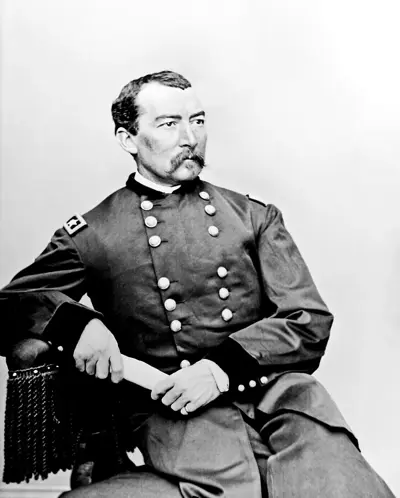
Philip Henry Sheridan was a career United States Army officer and a Union general in the American Civil War. His career was noted for his rapid rise to major general and his close association with General-in-chief Ulysses S. Grant, who transferred Sheridan from command of an infantry division in the Western Theater to lead the Cavalry Corps of the Army of the Potomac in the East. In 1864, he defeated Confederate forces under General Jubal Early in the Shenandoah Valley and his destruction of the economic infrastructure of the Valley, called "The Burning" by residents, was one of the first uses of scorched-earth tactics in the war. In 1865, his cavalry pursued Gen. Robert E. Lee and was instrumental in forcing his surrender at Appomattox.
