DeRay Mckesson Quotes
I am often asked what it is like to be on the 'front line.' But I do not use the term 'front line' to describe us, the protesters. Because everywhere in America, wherever we are, our blackness puts us in close proximity to police violence.
Mckesson, DeRay. On the Other Side of Freedom: The Case for Hope. Viking, 2018.


Instead of standing and saluting as professional athletes have done for decades before games, he kneeled and refused to stand. This caused great public criticism but also some initial support. He was potentially risking his multimillion dollar salary as this technically violated his contract to avoid anything embarrassing to the team. He also donated $1 million to programs in the area that were working to enhance Black/white understanding. Even those who disagreed with his choice of protest defended his right to do so, and after the initial furor, public opinion, while not in agreement about his method, tended to support him for having the courage of his convictions and using his celebrity for a worthy cause. After sensing the public opinion, his team matches his $1 donation. Professional athletes both in the NFL and in other sports then began to do the same as a form of protest for the large, disproportionate, number of black men who were killed, mostly when unarmed, by police. The reference to the “paid leave” was the practice followed by most police departments—usually required by collective bargaining agreements with police unions—of placing police officers accused of committing violations of laws or regulations on paid administrative leave while all the investigations, hearings, and other processes . While this practice protected the rights of those police officers who were not guilty, it ended up paying brutal murders for a some time entire their case was decided or acted upon be the district attorney.


The Muslim Brotherhood had won the Presidency in the first Egyptian democratic election shortly after the ouster of Mubarak when they were the only party that was organized. However, after one year of government, their performance was so bad that critics like El Baradei offered strong public criticism—especially of the preoccupation with Islam with little government attention given to freedom, human rights, and the economy which was in terrible shape. This triggered many protests and demonstrations in Tahrir Square where intimidation of protesters was accomplished by beatings and lynchings in the midst of a large number of Brotherhood supporters who would infiltrate the crowd. The Islamic fundamentalists were particularly harsh on female protesters who were beaten, had their clothes ripped off, and in many cases raped. A few days after this article was published there was an insurrection of huge crowds of Egyptians and the Muslim Brotherhood President Morsi was forced to resign.

Given that the Black population is less than 15 percent of the total, the odds against this occurring by chance is less than 100 million to one. The problem was then very hard to solve in that in most cases the cause was not anti-Black hostility. Rather it was that most police—including some Black police officers—were more fearful for Black males relative to white males and perceived themselves or the public in mortal danger much more often with Blacks than with whites in similar situations. Much of this was a historical societal bias and fear of Black males and much was the result of the disproportionate media depiction of violent Black males.

He was following the lead of Colin Kaepernick—Quote 643305. Instead of standing and saluting as professional athletes have done for decades before games, Kaepernick had kneeled and refused to stand as a protest about the large number of unarmed Black young men who had been killed by police. . This caused great public criticism but also some initial support. Athletes who did this were potentially risking their multimillion dollar salary as this technically violated their contract to avoid anything embarrassing to the team. He also donated $1 million to programs in the area that were working to enhance Black/white understanding. Even those who disagreed with his choice of protest defended his right to do so, and after the initial furor, public opinion, while not in agreement about his method, tended to support him for having the courage of his convictions and using his celebrity for a worthy cause.


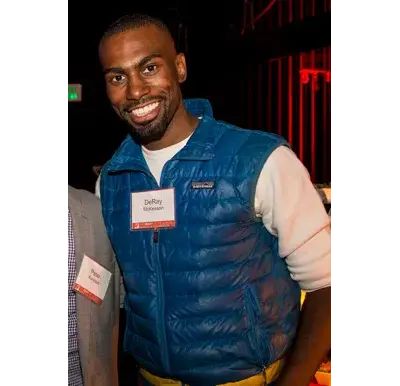
DeRay Mckesson is an American civil rights activist, podcaster, and former school administrator. An early supporter of the Black Lives Matter movement, he has been active in the protests in Ferguson, Missouri, and Baltimore, Maryland and on social media outlets such as Twitter and Instagram. Mckesson has also written for HuffPost and The Guardian. Along with Johnetta Elzie, Brittany Packnett, and Samuel Sinyangwe, Mckesson launched Campaign Zero, a policy platform to end police violence. He is currently part of Crooked Media and hosts Pod Save the People.
