Francis Emroy Warren Quotes
An armed body of white men at Rock Springs, Wyoming, have attacked Chinese coal miners working for Union Pacific Railway ... Have driven Chinamen out of town into hills. Have burned their houses and are destroying railroad property; some 40 houses burned; 3 men known to be killed, many more believed to be. Mob now preventing some 500 Chinamen from reaching food or shelter.
16 white miners were charged with riot, arson, murder and robbery. However the local white jury acquitted them all. Southern white murders of Blacks were not the only terrible crimes that were openly committed with impunity.
Francis Emroy Warren, 1844–1929, Governor of Wyoming (Republican), Telegram to President Grant, September 1885
Sourced by: Eigen's Political and Historical Quotations


Wilson, a history and government professor and college president before politics, was has been accused of being one of the most racist Presidents since Reconstruction. Prior to his Presidency, the Federal Government had been making steady progress in hiring African Americans. Under Wilson there was a wholesale firing of a large proportion of them. Some apologists argue that his League of Nations and other major aspirations required the votes and cooperation of Southern Senators who insisted that many of the blacks be terminated. At the same time, the KKK was near the zenith of its membership and political power and was an intimidating force. Wilson’s home state of New Jersey not only had a large KKK membership but there were lynching of Blacks in his own state and when Governor and President he never asked for any anti-lynching legislation.

Buying furniture and equipment for Negro schools was perceived by the White Population as “squandering public funds”. Web returned with the Militia but no one would testify against the Klan. Huggins left the area and went to the North. The Klan did not kill him, but they accomplished their objective of intimidating all the local people Black and White so that Negro schools would not be furnished and getting rid of the only White who tried to improve Negro schools. The methods of terrorists have not changed much since then.

In 1848 a pro-slavery mob in Washington DC Gamaliel Bailey's anti-slavery publication, The National Era, which soon thereafter was the publisher of the serialized Uncle Tom's Cabin. Senator John P. Hale introduced a bill in the Senate outlawing rioting in the District of Columbia. The Southern Senators objected violently and this served as a catalyst for one the for the most extensive and bitter public debate that had ever been held on the slavery issue.

The KKK is the oldest of the White Supremicist Hate groups in America. Their self styled mission has been to protect the dominance of the white race. They have, over the years, been responsible for lynchings and other forms of murder and torture. Many Southern politicians in the 20th century were members of this group which in teh first half of the century was a major political force in Souithern States and Indiana. By the end of the 20th century there were almost no politicians who would jion the organization, and the attitude of most politicians, including those from the South, was rather nagetive towards the Klan. However, a few were rather insensitive to the evil nature of the Klan and would make jokes loke this one. Sessions, over his career, had several racist commens that he had made inclding this one. He called an attorney who defended Blacks accused of crimes a race traitor and referred to civil right groups as unAmerican. His appointment as Attorney General by Donald Trump was met with consternation by many biven his history of racial remarks.
Lincoln had instituted the first draft in American History and it was terribly resented by many Americans. The draft laws allowed the wealthy and upper middle class to avoid service by paying a $300 fee of hiring a substitute just like in the Vietnam War the upper classes could get College Draft deferments. The mob led mostly by poor Irish, began by protesting the draft; then they attacked the mansions and houses of the wealthy; and then they went after Blacks. The Irish poor feared large numbers of Negroes coming out of slavery and competing for their jobs and lowering the prevailing wages. Blacks were beaten and lynched and 5,000 almost half of the then Negro population were driven to Brooklyn, New Jersey and the New York suburbs. It was the worst riot in United States History.


His home was right in the midst of the major riot area. The government had just instituted the draft to provide soldiers for the Civil War. The rich could avoid the draft by paying a modest fee. The Irish of New York were at just slightly above the Negro in the New York Socioeconomic scale and the two groups competed for the low skilled jobs. Many Irish felt that they were being forced to fight to free the Southern Negroes who when free would come to New York and compete for their jobs. They rioted and killed over 100 Blacks.


This quotation illustrates how extensive and virulent anti-Asian racism had become. Gompers was a left wing liberal, but also a labor leader, and the prospect of millions of oriental immigrants competing for the existing American jobs was frightening. The irony of this quotation was that most of the labor constituency that Gompers represented had been immigrants or were the children of immigrants who earlier had frightened American workers and whose ethnicity had been opposed—Irish, Italians, Jews.


Even in 1837 there were already riots over slavery and race in a number of American Cities. What is particularly interesting about this quotation is Lincoln bemoaning the violance and contrasting the then present with the past when law and order prevailed. Even our greatest President has had a romantic view of the past with respect to law and order, as many Americans have done in almost every American era.


Incredible as it seems today, no Black person had ever dined in the White House as a guest of the President. African American servants were common. And Abraham Lincoln had received many Black visitors as had Presidents after him. But no president had ever had a Black person to dine as a social equal. The photo, reproduced here, illustrates the parity. But that was the worst thing a President could do so far as Tillman and his fellow racists were concerned. They had, since the end of the Civil war, used violence and terrorism to murder, maim and/or intimidate the Negro population to remain in an economic and socially inferior position. In Tillman’s state over these decades they had more lynchings than legal executions and there were plenty of them. Newspapers over the South riled up the whites and there was a wave of terror to be sure that the President’s importune action would not be taken as an endorsement of the Negro’s right to any equality or even dignity. This dinner essentially wedded all the Blacks to the Republican Party and all the Southern Whites to the Democratic Party. This would remain the political situation for over 60 years until the Democrats passed the LBJ Civil Rights Act in 1964 and the Republicans decided to solicit the Southern White racists who accepted the invitation and within a few years, there was a complete reversal of party loyalty of most Blacks and most Southern White Racists.

William Z. Foster, the 1928 communist presidential candidate, was arrested because his party’s leaflet contained this “inflammatory” slogan.

In 1911 the citizens of Honea Path, SC, led by Joshua W. Ashleigh, the State Legislator representing the district and his son, the editor of the local newspaper, dismembered and lynched a Black man, Willis Jackson. Some South Carolinians were distressed and asked the Governor to initiate and investigation. See his later statement on lynching in 1930.
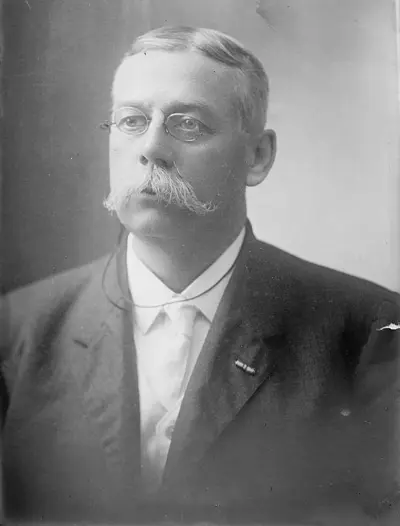
Francis Emroy Warren was an American politician of the Republican Party best known for his years in the United States Senate representing Wyoming and being the first Governor of Wyoming. A soldier in the Union Army during the American Civil War, he was the last veteran of that conflict to serve in the U.S. Senate.
