Benjamin Ryan Tillman Quotes
I would willingly lead a mob in lynching a Negro who had committed an assault upon a white woman.
Benjamin Ryan Tillman, 1847-1918, Governor of South Carolina (Democrat), U. S. Senator (Democrat, SC), “Lynching Pledge”, 1892
Sourced by: Eigen's Political and Historical Quotations

Buying furniture and equipment for Negro schools was perceived by the White Population as “squandering public funds”. Web returned with the Militia but no one would testify against the Klan. Huggins left the area and went to the North. The Klan did not kill him, but they accomplished their objective of intimidating all the local people Black and White so that Negro schools would not be furnished and getting rid of the only White who tried to improve Negro schools. The methods of terrorists have not changed much since then.

Wilson, a history and government professor and college president before politics, was has been accused of being one of the most racist Presidents since Reconstruction. Prior to his Presidency, the Federal Government had been making steady progress in hiring African Americans. Under Wilson there was a wholesale firing of a large proportion of them. Some apologists argue that his League of Nations and other major aspirations required the votes and cooperation of Southern Senators who insisted that many of the blacks be terminated. At the same time, the KKK was near the zenith of its membership and political power and was an intimidating force. Wilson’s home state of New Jersey not only had a large KKK membership but there were lynching of Blacks in his own state and when Governor and President he never asked for any anti-lynching legislation.

Named after penal reformer Johne Howard, 1726-1790. Howard Associations have since been organized in many countries.

In 1911 the citizens of Honea Path, SC, led by Joshua W. Ashleigh, the State Legislator representing the district and his son, the editor of the local newspaper, dismembered and lynched a Black man, Willis Jackson. Some South Carolinians were distressed and asked the Governor to initiate and investigation. See his later statement on lynching in 1930.

Forrest went on to be the first National Leader of the Terrorist Organzation.

Many terrorist organizations hijack the symbols and vocabulary of various religions and claim defense of the religion when their activity violates the morality and precepts of the religion they claim to defend. Indiana, although a Northern state had one of the largest and most active KKKs in the nation.


William Z. Foster, the 1928 communist presidential candidate, was arrested because his party’s leaflet contained this “inflammatory” slogan.

Some had organized and led lynchings; others participated, and others stood by without speaking out.


the white Southern racist system She was one of the first prominent white southerners to denounce racial segregation.

For years through the Jim Crow years, Whites murdered many Blacks with impunity if they were perceived to be uppity or to try and obtain their Constitutionally Protected rights. Most took place in the South. The Negroes were typically tortured, mutilated, burned and hung from trees where they would be left for days as the major purpose was to strike terror in the Southern Black population. The Southern State and local governments never opposed the policy via oratory, legislation of law enforcement. The Federal Government did not interfere either. And much of the FBI under J. Edgar Hoover actually enabled the White Citizen’s Councils and the Klu Klux Klan. The NAACP began an anti-lynching campaign and Ms. Holiday was a one-woman public exposure campaign centered around this song. The anthem itself was written by a New York City schoolteacher named Abel Meeropol, using the pen name, Lewis Allan. It reached millions of Americans and Holiday fans the world over. To view some of the historical scenes described in the song, see http://withoutsanctuary.org/main.html

Jury nullification is when the jury believes that the defendant has committed the crime alleged, but acquits anyway because it believes the law is wrong or the defendant acted properly or justly. Most trial judges detest the concept and often tell the jury that they may not engage in the practice. However, there is a long American tradition of jury nullification dating back to colonial America. This quotation shows one of the negative aspects of nullification. See {640833}.

Instead of standing and saluting as professional athletes have done for decades before games, he kneeled and refused to stand. This caused great public criticism but also some initial support. He was potentially risking his multimillion dollar salary as this technically violated his contract to avoid anything embarrassing to the team. He also donated $1 million to programs in the area that were working to enhance Black/white understanding. Even those who disagreed with his choice of protest defended his right to do so, and after the initial furor, public opinion, while not in agreement about his method, tended to support him for having the courage of his convictions and using his celebrity for a worthy cause. After sensing the public opinion, his team matches his $1 donation. Professional athletes both in the NFL and in other sports then began to do the same as a form of protest for the large, disproportionate, number of black men who were killed, mostly when unarmed, by police. The reference to the “paid leave” was the practice followed by most police departments—usually required by collective bargaining agreements with police unions—of placing police officers accused of committing violations of laws or regulations on paid administrative leave while all the investigations, hearings, and other processes . While this practice protected the rights of those police officers who were not guilty, it ended up paying brutal murders for a some time entire their case was decided or acted upon be the district attorney.

The KKK is the oldest of the White Supremicist Hate groups in America. Their self styled mission has been to protect the dominance of the white race. They have, over the years, been responsible for lynchings and other forms of murder and torture. Many Southern politicians in the 20th century were members of this group which in teh first half of the century was a major political force in Souithern States and Indiana. By the end of the 20th century there were almost no politicians who would jion the organization, and the attitude of most politicians, including those from the South, was rather nagetive towards the Klan. However, a few were rather insensitive to the evil nature of the Klan and would make jokes loke this one. Sessions, over his career, had several racist commens that he had made inclding this one. He called an attorney who defended Blacks accused of crimes a race traitor and referred to civil right groups as unAmerican. His appointment as Attorney General by Donald Trump was met with consternation by many biven his history of racial remarks.


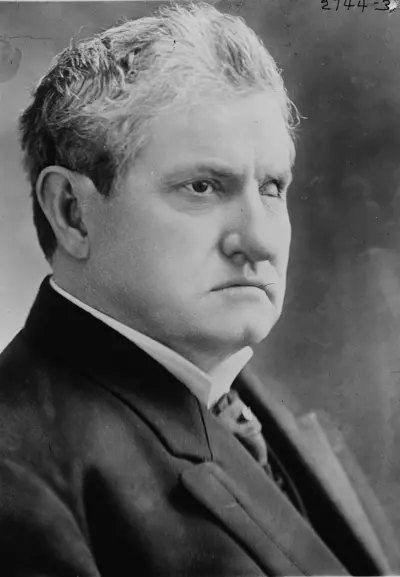
Benjamin Ryan Tillman was an American politician of the Democratic Party who served as Governor of South Carolina from 1890 to 1894, and as a United States Senator from 1895 until his death in 1918. A white supremacist who opposed civil rights for black Americans, Tillman led a paramilitary group of Red Shirts during South Carolina's violent 1876 election. On the floor of the U.S. Senate, he defended lynching, and frequently ridiculed black Americans in his speeches, boasting of having helped kill them during that campaign.
