Richard Carlile Quotes
The massacre... should be the daily theme of the Press until the murderers are brought to justice.... Every man in Manchester who avows his opinions on the necessity of reform, should never go unarmed – retaliation has become a duty, and revenge an act of justice
In August 1819 there was a reform political rally in St. Peter’s Field of Manchester. The authorities wanting to censor the reform contents sent the police to break up the meeting. The police killed 11 people and wounded hundreds more in what became known as the “Peterloo Massacre”. Carlile, who publicly condemned the massacre, was one of the heroes of freedom of the press. He was jailed frequently for publishing anti government or anti Church of England criticisms, as were his wife and sister. The government grew so desperate trying to censor his publications that they placed a high minimum price on the sale of all newspapers assuring that the average citizen could not afford to buy the “seditious and blasphemous material.” In addition to press freedom he was an early reformer for birth control, religious freedom, women's suffrage and rights (which he called for in the 1820s), and against child labor.
Richard Carlile, 1790-1843, English Publisher and Reformer, The Republican, August 27, 1819
Sourced by: Eigen's Political and Historical Quotations


Simon Bolivar and other freedom fighters in South America used this quotation to justify numerous acts of retaliation against the Spanish troops controlling their countries.

Manava Dharma Shastra. This text is a part of the Hindu Holy Texts. Hindus believe that Mahu was a prophet whose text is revealed or inspired.


At Tippecanoe, General Harrison defeated the Indians but suffered over 60 of his men killed and many more wounded. Newly supplied modern English weapons were found on captured Indians. There was a call for war with England:

This proverb only makes sense in the light of understanding the Arab concept of revenge—“blood.” In a rural desert environment where little can be expected of government, the Arabs have developed a law enforcement and peace keeping mechanism which while primitive from modern standards, nevertheless worked to some degree. It is that revenge—“blood” is a moral necessity and obligation of all people, and revenge is not limited by time or to the individuals involved in the first incidence. The immediate family are the first to extract revenge, but the extended family follows and often the entire clan. Sometimes revenge is tribal or even national. Anyone who fails to revenge a member in his group is not only a disgrace, but is a clear and present danger to the group because then they can be attacked with impunity. So revenge is a strong obligation of the group members and blood must be paid with blood no matter how many generations it may take. The only thing that keeps me and my family safe, is the surety what whosoever kills one of us will themselves be killed or if they die a natural death we will take revenge on one of the evildoers relatives. Crime must never pay!


Nathaniel Bacon had led a rebellion in Virginia and had routed the Governor’s troops and caused him to flee leaving control of Virginia to Bacon and his followers who were far more democratic and advanced. However Bacon succumbed to swamp fever, and his followers could not hold the colony together giving the Governor a chance to establish his authority. He then went on a vengeful reign of terror, executing all of Bacon’s followers he could get his hands on. With no danger to the authority of the Crown, King Charles felt that Berkeley had gone too far. The King’s father Charles I had been executed in the aftermath of the English Civil War, but he had executed far fewer than Berkely had done in Virginia.

This sura on retaliation for murder is behind the Saudi Arabian law which allows the male relative of a murder victim to personally wield the sword in the beheading of the murderer.


See {639177}.for part of the article. Platt even demanded of President Roosevelt that the Journalist, White, be barred from the White House. Actually White was a very good friend of Roosevelt’s and generally agreed with White’s assessment of Platt.


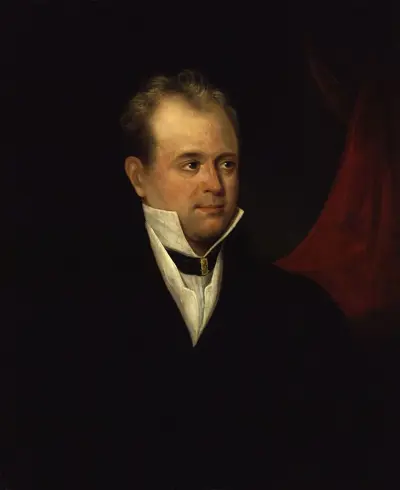
Richard Carlile was an important agitator for the establishment of universal suffrage and freedom of the press in the United Kingdom.
