Manu Quotes
One may slay without hesitation an assassin who approaches with murderous intent…. By killing an assassin the slayer incurs no guilt, whether he does it publicly or secretly; in that case fury recoils upon fury
Manava Dharma Shastra. This text is a part of the Hindu Holy Texts. Hindus believe that Mahu was a prophet whose text is revealed or inspired.
Manu, ~ 500 BC, Hindu Teacher from India, Laws of Manu
Sourced by: Eigen's Political and Historical Quotations

This proverb only makes sense in the light of understanding the Arab concept of revenge—“blood.” In a rural desert environment where little can be expected of government, the Arabs have developed a law enforcement and peace keeping mechanism which while primitive from modern standards, nevertheless worked to some degree. It is that revenge—“blood” is a moral necessity and obligation of all people, and revenge is not limited by time or to the individuals involved in the first incidence. The immediate family are the first to extract revenge, but the extended family follows and often the entire clan. Sometimes revenge is tribal or even national. Anyone who fails to revenge a member in his group is not only a disgrace, but is a clear and present danger to the group because then they can be attacked with impunity. So revenge is a strong obligation of the group members and blood must be paid with blood no matter how many generations it may take. The only thing that keeps me and my family safe, is the surety what whosoever kills one of us will themselves be killed or if they die a natural death we will take revenge on one of the evildoers relatives. Crime must never pay!

Manava Dharma Shastra. In the Hindu caste system, the highest caste was allowed to vigilante justice while the other castes had to go through the king and his magistrates. This text is a part of the Hindu Holy Texts. Hindus believe that Manu was a prophet whose text is revealed or inspired.
Manava Dharma Shastra. This text is a part of the Hindu Holy Texts. Hindus believe that Manu was a prophet whose text is revealed or inspired.

Nathaniel Bacon had led a rebellion in Virginia and had routed the Governor’s troops and caused him to flee leaving control of Virginia to Bacon and his followers who were far more democratic and advanced. However Bacon succumbed to swamp fever, and his followers could not hold the colony together giving the Governor a chance to establish his authority. He then went on a vengeful reign of terror, executing all of Bacon’s followers he could get his hands on. With no danger to the authority of the Crown, King Charles felt that Berkeley had gone too far. The King’s father Charles I had been executed in the aftermath of the English Civil War, but he had executed far fewer than Berkely had done in Virginia.

This sura on retaliation for murder is behind the Saudi Arabian law which allows the male relative of a murder victim to personally wield the sword in the beheading of the murderer.


In August 1819 there was a reform political rally in St. Peter’s Field of Manchester. The authorities wanting to censor the reform contents sent the police to break up the meeting. The police killed 11 people and wounded hundreds more in what became known as the “Peterloo Massacre”. Carlile, who publicly condemned the massacre, was one of the heroes of freedom of the press. He was jailed frequently for publishing anti government or anti Church of England criticisms, as were his wife and sister. The government grew so desperate trying to censor his publications that they placed a high minimum price on the sale of all newspapers assuring that the average citizen could not afford to buy the “seditious and blasphemous material.” In addition to press freedom he was an early reformer for birth control, religious freedom, women's suffrage and rights (which he called for in the 1820s), and against child labor.
This proverb only makes sense in the light of understanding the Arab concept of revenge—“blood.” In a rural desert environment where little can be expected of government, the Arabs have developed a law enforcement and peace keeping mechanism which while primitive from modern standards, nevertheless worked to some degree. It is that revenge—“blood” is a moral necessity and obligation of all people, and revenge is not limited by time or to the individuals involved in the first incidence. The immediate family are the first to exact revenge, but the extended family follows and often the entire clan. Sometimes revenge is tribal or even national. Anyone who fails to revenge a member in his group is not only a disgrace, but is a clear and present danger to the group because then they can be attacked with impunity. So revenge is a strong obligation of the group members and blood must be paid with blood no matter how many generations it may take. The only thing that keeps me and my family safe, is the surety what whosoever kills one of us will themselves be killed or if they die a natural death we will take revenge on one of the evildoers relatives and no one is exempt. Crime must never pay!
The Abenaki Indians from Canada had come South and raided many of the settlements of upstate New York. In the process, they committed many atrocities killing civilian men, women and children. Amhurst ordered Robert Rogers and his rangers to attack the Abenaki home villiage in Canada on a famous punitive raid. The Rangers, did indeed, raid the Abenaki and wiped out all the males of the tribe that were in the camp at the time. Amhurst hated Indians, but still had his standards regarding the killing of women and children, but was perfectly willing to kill all the mature males. There were no Geneva Conventions at the time. The same general introduced biological warfare by giving Indians smallpox infected blankets. See {619646}

In 2008 Pakistani Islamic terrorists, with the support of the Pakistani military, attacked Mumbai, India killing innocent civilians. Shoune was one of the Indian politicians who called for retaliation. The Indian government, however, restrained its forces and did not increase the cycle of violence.
The right of vengeance was written into the first book of law for the Muslims. It was a very strong part of the culture long before Muhammad, amongst all the tribes. Before there were organized law enforcement agencies, family and tribal vengeance was the basic mechanism of law enforcement. Unfortunately for many cultures and people, it still is a legitimate method of law enforcement—even in many of the modern industrial democracies.


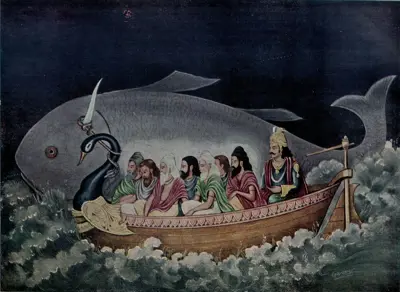
Manu (Sanskrit: मनु) is a term found with various meanings in Hinduism. In early texts, it refers to the archetypal man, or to the first man (progenitor of humanity). The Sanskrit term for 'human', मानव (IAST: mānava) means 'of Manu' or 'children of Manu'. In later texts, Manu is the title or name of fourteen mystical Kshatriya rulers of earth, or alternatively as the head of mythical dynasties that begin with each cyclic kalpa (aeon) when the universe is born anew. The title of the text Manusmriti uses this term as a prefix, but refers to the first Manu – Svayambhuva, the spiritual son of Brahma.
