Thucydides Quotes
Indeed men too often take upon themselves in the prosecution of their revenge to set the example of doing away with those general laws to which all can look for salvation in adversity, instead of allowing them to subsist against the day of danger when their aid may be required
Thucydides. The History of the Peloponnesian War. Translated by Richard Crawley, Longmans, Green, and Co., 1874, p. 224.


In August 1819 there was a reform political rally in St. Peter’s Field of Manchester. The authorities wanting to censor the reform contents sent the police to break up the meeting. The police killed 11 people and wounded hundreds more in what became known as the “Peterloo Massacre”. Carlile, who publicly condemned the massacre, was one of the heroes of freedom of the press. He was jailed frequently for publishing anti government or anti Church of England criticisms, as were his wife and sister. The government grew so desperate trying to censor his publications that they placed a high minimum price on the sale of all newspapers assuring that the average citizen could not afford to buy the “seditious and blasphemous material.” In addition to press freedom he was an early reformer for birth control, religious freedom, women's suffrage and rights (which he called for in the 1820s), and against child labor.

This proverb only makes sense in the light of understanding the Arab concept of revenge—“blood.” In a rural desert environment where little can be expected of government, the Arabs have developed a law enforcement and peace keeping mechanism which while primitive from modern standards, nevertheless worked to some degree. It is that revenge—“blood” is a moral necessity and obligation of all people, and revenge is not limited by time or to the individuals involved in the first incidence. The immediate family are the first to extract revenge, but the extended family follows and often the entire clan. Sometimes revenge is tribal or even national. Anyone who fails to revenge a member in his group is not only a disgrace, but is a clear and present danger to the group because then they can be attacked with impunity. So revenge is a strong obligation of the group members and blood must be paid with blood no matter how many generations it may take. The only thing that keeps me and my family safe, is the surety what whosoever kills one of us will themselves be killed or if they die a natural death we will take revenge on one of the evildoers relatives. Crime must never pay!


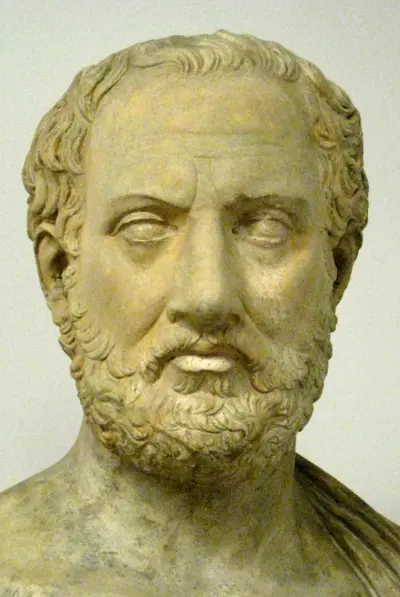
Thucydides (/θjuːˈsɪdɪdiːz/; Ancient Greek: Θουκυδίδης Thoukūdídēs [tʰuːkyːdídɛːs]; c. 460 – c. 400 BC) was an Athenian historian and general. His History of the Peloponnesian War recounts the fifth-century BC war between Sparta and Athens until the year 411 BC. Thucydides has been dubbed the father of "scientific history" by those who accept his claims to have applied strict standards of impartiality and evidence-gathering and analysis of cause and effect, without reference to intervention by the deities, as outlined in his introduction to his work.
