Ralph Waldo Emerson Quotes
The greater speed and success that distinguish the planting of the human race in this country, over all other plantations in history, owe themselves mainly to the new subdivisions of the State into small corporations of land and power.
Emerson, Ralph Waldo. "Historical Discourse at Concord." Miscellanies, Houghton, Mifflin and Company, 1884, p. 64.

The Irish Earls of Ulster, after a failed rebellion against English rule, fled to the European continent. As Chichester realized, this created an opportunity for the King to name new Earls and grant them the lands and possessions of the Earls who had fled. And since the Irish people were loyal to their traditional Earls. He suggested that English and Scots colonists be recruited to settle the lands. The King agreed and referred to the project as the “Ulster Plantation”. This was the reason that Northern Ireland had a much larger Protestant population percentage than the rest of Ireland and wanted to remain part of England when Ireland obtained its independence.


He was a great believer in moving large numbers of Dutch settlers to the Dutch colonies in the East Indies.


Nelson was referring to the past. The industrial revolution created other forms of wealth and power as a huge factory could be built on a small piece of land. In farming, the yield is proportional to the acreage tilled. Not so in manufacturing. With the knowledge era, intellectual property could produce much wealth and power, and factory size and land ownership was not necessary.

His idea was to send English people who were vagabonds, paupers, failures, and never do wells to America. These people in England were just “waste”. But in America, the could be apprenticed or become indentured servants, learn skill and they would (and indeed did) become the corps of laborers needed to cut down the trees, beat the hemp (for making rope), gather honey, salt and dry fish, dress raw animal hides, dig the earth for minerals, raise olives and silk, and sort and pack bird feathers. In England they were so desperate that they would work in the difficult conditions of the colonies and would be willing to venture out from the country and culture in which they existed—a major problem in getting colonial workers.


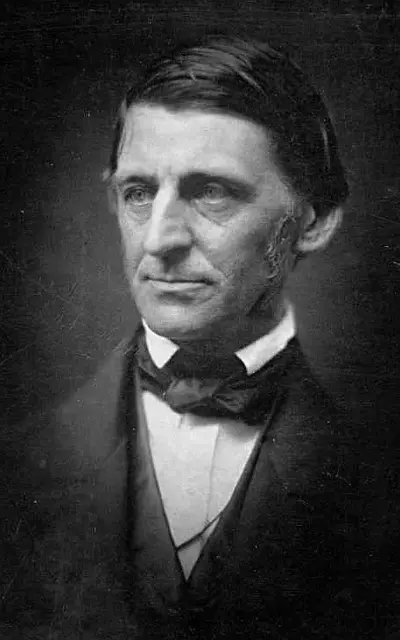
Ralph Waldo Emerson, who went by his middle name Waldo, was an American essayist, lecturer, philosopher, abolitionist and poet who led the transcendentalist movement of the mid-19th century. He was seen as a champion of individualism and a prescient critic of the countervailing pressures of society, and he disseminated his thoughts through dozens of published essays and more than 1,500 public lectures across the United States.
