Herman Melville Quotes
The Anglo-Saxon hive have extirpated Paganism from the greater part of the North American continent; but with it they have likewise extirpated the greater portion of the Red race. Civilization is gradually sweeping from the earth the lingering vestiges of Paganism, and at the same time the shrinking forms of its unhappy worshippers.


Most of her modern admirers tend to repress this quotation which is very embarrassing for most modern conservatives. However, there is a minority of thinkers who maintain that land, unused, is open to anyone who will make use of it to improve civilization. Many conservationists, in contrast, extol unused land for preservation.


This quotation is often used as the greatest evidence the white usurpation of Indian land and the dubious value of all the treaties that had been made with the Indians guaranteeing them specific lands. Jackson, however, was not completely accurate. The Iroquois who fought on the American side in the Revolution were still on their lands in New York State. However, the Iriquois had their dealings with the State and local governments, and fared better than those tribes that depended in the Federal Government—especially with racists like Jackson in the Presidency.

Published 100 years after it was written. This is the first known written statement of what became a de facto policy regarding the American Indian.


Some Mexicans have always resented the U. S. for “colonizing” Arizona and other territory that once belonged to Mexico. This quotation is very revealing concerning the reality on the ground. The Apache were on the land when the Mexicans moved in to “civilize” the territory. However, the Apache, by violence, drove the Mexicans out. At that point the Mexicans were happy to sell Arizona to the Americans and the Gadsden Purchase brought Arizona to the United States as a territory. The Americans however didn’t buy the land from the Apache, the owners before the Mexicans claimed it. Many Apaches continued the violence against whoever tried to settle in the area. Eventually, the Americans accomplished what the Mexicans did not—militarily subduing the Apache.
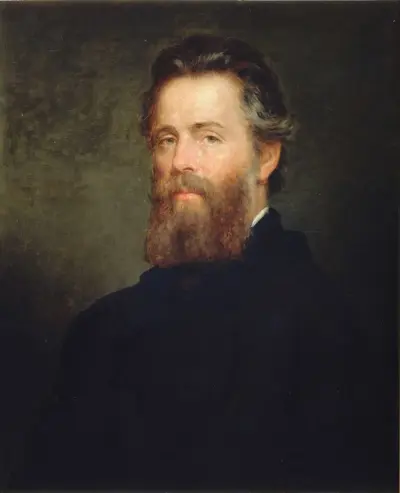
Herman Melville was an American novelist, short story writer, and poet of the American Renaissance period. Among his best-known works are Moby-Dick (1851), Typee (1846), a romanticized account of his experiences in Polynesia, and Billy Budd, Sailor, a posthumously published novella. Although his reputation was not high at the time of his death, the centennial of his birth in 1919 was the starting point of a Melville revival and Moby-Dick grew to be considered one of the great American novels.
