Henri Hauser Quotes
The fate of France is henceforth inseparably linked with that of Greater France. With a population which unfortunately remains stationary in the neighborhood of 40 millions. France would seem to be condemned to be but a great memory, a shadow of a glorious past. That instead she is a great reality, faced with a great future, is because of the 60 million subjects and protégés who inhabit the France beyond the seas. Among them there are not, it is true, more than one million of European origin and not more than 10 million of the white race. But it is French civilization which is stamping these diverse elements.
This quotation illustrates the difference between France proper and “Greater France” including its colonies without which it was perceived that France could not be a great power with its limited land mass and low fertility rate. This is why De Gaulle and other French leader fought so hard to maintain control over their colonies. Ironically, after France lost her colonies, she maintained her role as a major nation by virtue of its technology, industry and culture. A nuclear power was a power by definition, and France has had exceptional scientific and technological prowess. However, for many French leaders like De Gaulle, this was not enough to be a major power. They yearn for the colonial days where the French language was the most important in the world, and the French military was on a par with the other great power.
Henri Hauser, 1866-1946, Algerian-born French economist & historian, “Greater France”, Foreign Affairs, December 1923
Sourced by: Eigen's Political and Historical Quotations

The eventual demise of the French Colonial Empire was predicted by almost all scholars and statesmen except the French. It would be after the Second World War when the French were proved to have been delusional on this point.


First Published American Indian Author

Baratier wanted to defend Fashoda at all costs as a matter of French honor. The Minister was trying to broaden his understanding of French honor and avoid a military defeat. A diplomatic solution was found that preserved everyone’s honor.
He formed a dance troupe that performed native ceremonies before kings and queens in Europe.


Most of her modern admirers tend to repress this quotation which is very embarrassing for most modern conservatives. However, there is a minority of thinkers who maintain that land, unused, is open to anyone who will make use of it to improve civilization. Many conservationists, in contrast, extol unused land for preservation.

Bourne was one of the first writers with a national audience to question the classic but never real “melting pot” theory of immigration and suggest the “salad” model though he never used the term.

Samuel Langhorne Clemens, 1835-1910. Twain was one of the few whites who realized that success in assimilating American Indians would destroy their culture and identity. Even today, whites and Indians alike constantly debate the desirability of assimilation policies and supporting independent reservations.


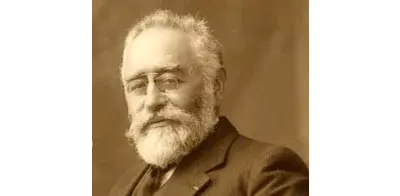
Henri Hauser was a French historian, geographer, and economist. A pioneer in the study of the economic history of the early modern period, he also wrote on contemporary economic issues and held the first chair in economic history to be established at a French university. He was born in Oran into a middle-class Jewish family who had moved to French Algeria for health reasons but returned to France when Hauser was four years old. Hauser was educated at the Lycée Condorcet in Paris and then at the École Normale Supérieure where he came first in both the entrance and leaving examinations. He initially taught in provincial lycées before taking his doctorate in 1892 with a thesis on the 16th-century Huguenot leader, François de la Noue. Hauser went on to become a professor of ancient and medieval history at the University of Clermont-Ferrand, modern history and geography at the University of Dijon, and finally a professor of history and economic history at the Sorbonne from 1919 to 1936. His 1905 book L'impérialisme américain predicted the decline of Europe and the dominance of the United States, while his 1915 Méthodes allemandes d'expansion économique analyzed the role played by German industry in the outbreak of World War I. Hauser was awarded the Legion of Honor in 1919 and in 1945 the Académie française awarded him the Prix de l'Académie for his life's work.
