Randolph Bourne Quotes
The early colonists came over with motives no less colonial than the later. They did not come to be assimilated in an American melting pot. They did not come to adopt the culture of the American Indian. They had not the smallest intention of 'giving themselves without reservation' to the new country. They came to get freedom to live as they wanted to. They came to escape from the stifling air and chaos of the old world; they came to make their fortune in a new land.
Bourne was one of the first writers with a national audience to question the classic but never real “melting pot” theory of immigration and suggest the “salad” model though he never used the term.
Randolph Bourne, 1886–1918, Social & Political Essayist, “Trans-National America”, The Atlantic Monthly, July 1916
Sourced by: Eigen's Political and Historical Quotations

Bourne was one of the first writers with a national audience to question the classic but never real “melting pot” theory of immigration and suggest the “salad” model though he never used the term.


The meeting included several Indians, President Grant, and the Secretary of the Interior and the Director of the Bureau of Indian Affairs. The Indians had been offered $25,000 and land in the Oklahoma Indian Territory in exchange for moving from their traditional lands.
This is a very instructional political quotation. It shows us that the popular American narrative of the ideal immigrant who assimilated to everything American was false even in 1916. Almost 100 years later, anti-immigration advocates would complain that the modern immigrant was not totally assimilating as immigrants did in the past. Of course they never did in the past totally assimilate. The assimilation has generally been in the areas of desire for freedom and individual opportunity, democracy, rule of law, human dignity and respect for others. However, immigrants have always brought new customs, foods, literature, modes of worship, language, and values from the “old country”. Bourne was one of the first writers with a national audience to question the classic but never real “melting pot” theory of immigration and suggest the “salad” model though he never used the term.


Segre was one of the group of European Scientists who emigrated to the United States and were key to the Manhattan Project developing the Atomic Bomb.

The Jews and Arabs for years shared Palestine. But the Jews spread out over the world, becoming modern and Westernized in the process. When the Jews returned to Palestine as a part of the Zionist movement, they were more modern, Westernized, and culturally at odds with their old Arab cousins, whose cultures had atrophied. The Arabs resented the Westernized culture that was being introduced into the Middle East. One point of view is that had Israel not tried to introduce moderism and Western ideas into the Middle East, the Jewish State might have been more accepted. However, not only did they bring a foreign perspective (democracy), education and techmology and capitalism to the area, but they far outpassed the Arab nations in agriculture, industry, science, medicine and general standard of living. The Arab dictators and monarchs had always had the excuse for poverty that the land was so poor that it simply could not be developed, but Israel developed the worst of the land in the area with no oil or natural resources. Every day of Israeli prosperity and scientific achievement was an embarassment for the rest of the Middle East where even the rich oil countries were not improving the lot of the average citizen.


In early America large numbers of whites who had been captured by Indians would refuse to leave their new families even when they had the opportunity to do so. J. Hector St. John


The eventual demise of the French Colonial Empire was predicted by almost all scholars and statesmen except the French. It would be after the Second World War when the French were proved to have been delusional on this point.

This is a complaint similar to that made by anti-immigrant Americans. France, like most other countries of the world, has never had the large scale immigration of today, nor have they had such a large proportion of the same ethnicity at once—in this case, Muslim North Africans. There were never, before the last decades, enough immigrants of any ethnicity in France to have a choice of maintaining their traditional languages and culture and not learning French or otherwise assimilating. America, in contrast, had large immigrations of different ethnicities, and despite the erroneous beliefs of immigration opponents, these blocs of immigrants have wherever there was sufficient density—usually cities, they maintained their old language and other customs. However, their children and the next generation in almost all cases have abandoned the language and many of the customs of the old country. This was true of the Germans, the Irish, the Italians, the European Jews, the Russian Jews, the Scandinavians’, and the Hispanics with their different cultures.

See the related quote for the full quote in context.


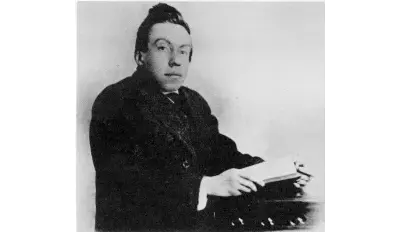
Randolph Silliman Bourne was a progressive writer and intellectual born in Bloomfield, New Jersey, and a graduate of Columbia University. He is considered to be a spokesman for the young radicals living during World War I. His articles appeared in journals including The Seven Arts and The New Republic. Bourne is best known for his essays, especially his unfinished work "The State," discovered after he died. The essay is the source of the well-known phrase "war is the health of the state," by which Bourne lamented governments' success at arrogating authority and resources during conflicts.
