Theophile Delcasse Quotes
You do not understand the honor of France!
Baratier wanted to defend Fashoda at all costs as a matter of French honor. The Minister was trying to broaden his understanding of French honor and avoid a military defeat. A diplomatic solution was found that preserved everyone’s honor.
Theophile Delcasse, 1852-1923, French Foreign Minister, Statement to Baratier regarding the negotiations over an impasse at Fashoda, Africa between Britain and France, 1898
Sourced by: Eigen's Political and Historical Quotations

The French have for over 1000 years had a nationalistic ego that was, compared to other countries, very extreme. Highly nationalistic Frenchmen have almost always felt that the French were not proud enough of their exalted role in the history of human civilization. De Gaulle was the most extreme but Chevenement was not too far behind.


He had become a French Hero for leading a small expedition 2000 miles across Africa to take possession of Fashoda on the White Nile and then facing down the British who arrived later at this strategic place. An international incident developed and the French government yielded and finally ordered Marchand to withdraw.


The French had arrived there first an “claimed” the area with a tiny military contingent under Lieutenant Marchand. However, the British arrived afterward with a much larger military force. London and Paris decided that the French should withdraw in favor of the British. Delcasse had been right. Another case of “might makes right.”


Explaining the reason for the Paris insurrection against the occupying Germans in World War II in contrast to the general French collaboration and capitulation. The French army, which was larger than the German, put up minor resistance and capitulated quickly when the Germans invaded. A number of French leaders formed a Nazi puppet government in Vichy. Many Frenchmen collaborated with the German Nazis. One of the main reasons for the formation of the French Resistance movement was for the French to have any honor after the war was over. They wanted the world to know that there were Frenchmen who valued freedom and justice and were not cowards--there were French who would risk their lives for freedom and justice. The French Resistance was extremely effective but very small, and to many Frenchman's embarrassment, the Communists were much more active in the Resistance than the conservatives. When the allies were closing in on Paris, and the German's were pulling out, the Parisians could just have waited until the Allied troops forced the Germans out. However, a small group of Parisians organized a major insurrection where Germans were attacked and sniped out while they were pulling out. When the Allies arrived, the Parisians had not been passive victims who had been freed by foreign troops, but had participated in their own fight for freedom and thus retained some honor and dignity. The insurrection was not without cost as many French men and women were killed in the insurrection, and many thought that the gesture of honor was an unnecessary risk and sacrifice. But the war ended in France with the French active in expelling the enemy with great bravery, something that had not generally happened at the beginning or in the midst of the war.

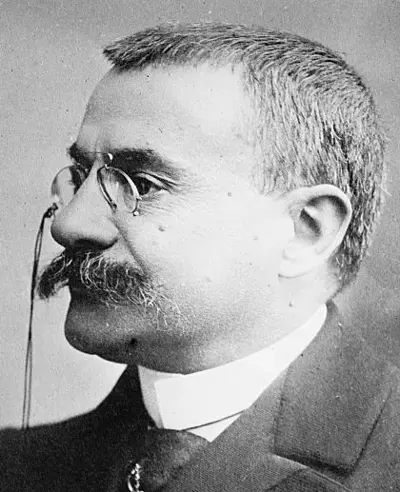
Théophile Delcassé was a French statesman and foreign minister 1898–1905. He is best known for his hatred of Germany and efforts to secure alliances with Russia and Great Britain that became the Entente Cordiale. He belonged to Radical party and was a protege of Léon Gambetta.
