Queen Victoria Quotes
how very warlike the French are … if once roused, they will not listen to the calm reasoning of those who wish for peace, or think of the great risk they run of losing by war, but only of the glory and of revenging insult, as they call it.
Victoria Alexandrina, 1819-1901, [Queen Victoria], Queen of Great Britain and Ireland & Empress of India, Letter to Viscount Palmerston, November 11, 1840
Sourced by: Eigen's Political and Historical Quotations


Attila the Hun

Cunningham was part of an American Diplomatic Delegation negotiating with the Vietnamese. He had been an Naval Ace Fighter Pilot during the Vietnam War. He was notorious for his lack of tact.

Baratier wanted to defend Fashoda at all costs as a matter of French honor. The Minister was trying to broaden his understanding of French honor and avoid a military defeat. A diplomatic solution was found that preserved everyone’s honor.

He was leading the Gordon Highlanders of the British Army against the Boers during the Boer War. He was seriously wounded and could not go on himself with a charge he had ordered, However, waifing his sword he made this famous qutation. Particualrly noteorthy is the derrogatory terms which he used to describe the enemy--the Boers of South Africa. In many wars and cultures, one or more of the combatants, in order to overcome the avarage soldier's reluctance to kill an enemy, characterizes them as less than human. In this case, vermin, who were to be exterminated. There were two predominant groups of whites who came to South Africa, the English who were generally well-educated and were interested in trading with the exhisting inhabitants and investing in businesses using mostly native labot and the Boers. The latter were of Dutch and German origin, poor farmers with little or no land in the home country and little education. Their interest was to create a nation where they could own land to farm. And the lest expensive way for them to increase their farmland was to sieze it from the native Blacks and who were the major forces behind the racial discrimination which became apartheid. The British contolled the government and sought stability and as in most of the British Empire, they wanted English law to prevail including the rights of the Black natives. The Boers had left Europe for good and would thrive or not in Southern Africa. Proportiopnately, the English might have a career in South Africa or serve there for a few years. They were Englishmen in a foreign country. The Boers saw themselves as citizens of Southern Africa who were fighting the native Blacks for control of the land. The English legal system would not allow any of the land seizures and political discrimination that the Boers saw as existential for their survival in Africa. Soon, the Boers took more and more of the law into their own hands and saw English rule and dmination as inimical to their interests in Africa and they tried to create their own independent states in Southern Africa. That was the essense of the Boer Wars. Dick-Cunyngham was awarded the Victoria Cross, the highest military decoration of Great Britain, for his exploits in the Afghan War.

This is a direct repudiation of the Christian doctrine. Ironically, it is the believe and behavior of must people who call themselves Christian. This was written under the name of Ragnar Redbeard. There are a few scholars who believe that it was written by Jack London, but most credit Desmond.

In the 18th Century, the Islamic Barbary States combined their religious beliefs for Jihad against non-believers with a classic criminal enterprise--piracy. They would authorize corsairs to outfit ships and attack Christian merchant ships on the high seas. They would capture the ship and the cargo, which would be split with the ruler of the country. The crew and passengers would by “rented out” as slaves until they would be ransomed, the proceeds of which would also be shared. To motivate a larger ransom, the captives were regularly tortured as well as worked almost to death. The Barbary Pirates encouraged the “slaves” to write to their relatives, friends and governments to try and raise the ransom. Individual Christian countries were offered a “treaty” whereby for an annual payment of tribute to the Barbary country, the corsairs of that country would not attack ships flying the flag of the country that paid the tribute. The Christian country had to make 4 different tribute payments to each of the 4 Barbary nations. Most of the European powers were paying the tribute even though some could easily defeat the Corsair navies in a war. The cost of outfitting a fleet for war was much more greater than paying the tribute. The new nation of the United States was good pickings for the Barbary pirates and there was a period of several decades where the Americans had to create a policy to pay tribute or go to war. At different times America did both. Jefferson argued for War rather than pay the blackmail tribute.


His enemy was always the Spanish colonialists—never the people of South America.


It is not clear whether their manifesto was written by D’annunzio himself or followers in Fiume the Dictatorial mini-state that he ruled, He was a precursor to the Fascists of Europe and this is the origin of the Fascist glorification of war. Hitler and Mussolini also picked up the dagger as a symbol (see Quotation 643744), the black colored uniforms and the stiff-armed salute from D’annunzio.


The French leader was one of the first to warn against the Fascism that Mussolini brought to Italy. Although most of the French leadership was opposed to Fascism when it came to fighting Fascism, the French later proved feeble, and many became collaborators and adopted the Nazi puppet state of Vichy France.

The French have for over 1000 years had a nationalistic ego that was, compared to other countries, very extreme. Highly nationalistic Frenchmen have almost always felt that the French were not proud enough of their exalted role in the history of human civilization. De Gaulle was the most extreme but Chevenement was not too far behind.
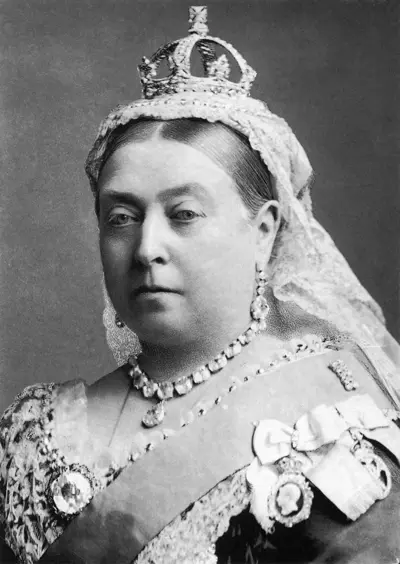
Victoria was Queen of the United Kingdom of Great Britain and Ireland from 20 June 1837 until her death in 1901. Known as the Victorian era, her reign of 63 years and seven months was the longest of any British monarch until surpassed by that of Elizabeth II. It was a period of industrial, political, scientific, and military change within the United Kingdom, and was marked by a great expansion of the British Empire. In 1876, Parliament voted to grant her the additional title of Empress of India.
