George F. Kennan Quotes
A democracy is peace-loving. It does not like to go to war. It is slow to rise to provocation. When it has once been provoked to the point where it must grasp the sword, it does not easily forgive its adversary for having produced this situation. The fact of the provocation then becomes itself the issue. Democracy fights in anger — it fights for the very reason that it was forced to go to war. It fights to punish the power that was rash enough and hostile enough to provoke it — to teach that power a lesson it will not forget, to prevent the thing from happening again. Such a war must be carried to the bitter end.
George F. Kennan, 1904-2005, Historian & U.S. Ambassador to Russia and Yugoslavia, American Diplomacy, 1951
Sourced by: Eigen's Political and Historical Quotations


Once blood is shed in a national quarrel, reason and right are swept aside by the rage of angry men.
1st Earl Lloyd-George of Dwyfor


This is a direct repudiation of the Christian doctrine. Ironically, it is the believe and behavior of must people who call themselves Christian. This was written under the name of Ragnar Redbeard. There are a few scholars who believe that it was written by Jack London, but most credit Desmond.

A number of the American soldiers refused to obey Calley's illegal order. Some helped some villagers to escape, and a helicopter pilot landed betreen Callery's men and the villagers they were shooting at, and ordered his helicopter machine gun crew to fire on the soldiers if they did back off. The soldiers stopped firing at the civillians. However, his and other reports of the massacre were covered up by the military for a few years. Mai Lai was not the only major war crime perpetrated by Americans in the Vietnam War; there had been a few others. But given the years of fighting and the many opportunities war crimes violations under orders were quite rare. The Viet Cong had many more war crimes that they perpetrated, and our South Vietnamese allies repeatedly committed war crimes against their own people.


Sherman, one of the most gifted generals of the Civil War. He hated the cruelty of war and the Civil War in particular as he had specifically warned his Southern friends ahead of time about what war would bring. See {585882}. Sherman was one of the first American military men to look at war without any of the romantic, patriotic, noble attributes that most others did.

He was criticizing the George W. Bush administration for attacking Iraq, a country which had not attacked the United States or Americans abroad while America did not attack those terrorists and countries which had killed Americans. For example, Hezbollah which blew up the Marine Barracks in Lebanon and the naval ship Cole.


Attila the Hun

Right wing conservatives were not always in favor of large defense expenditures. Prior to WWII most were opposed to defense spending and they were the pacifists. Clark was one of the few that maintained this view after WWII.
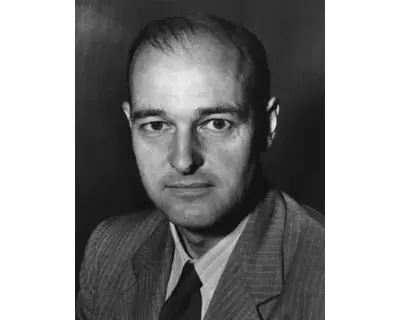
George Frost Kennan was an American diplomat and historian. He was best known as an advocate of a policy of containment of Soviet expansion during the Cold War. He lectured widely and wrote scholarly histories of the relations between the USSR and the United States. He was also one of the group of foreign policy elders known as "The Wise Men".
