Joseph Stalin Quotes
The existing pseudo-government which was not elected by the people and which is not accountable to the people must be replaced by a government recognized by the people, elected by representatives of the workers, soldiers and peasants and held accountable to their representatives.
This is an interesting historical quotation. In 1917, Joseph Stalin, was for democracy and elections with rule by the majority. Once he and his party gained control, the democratic idea of free elections with competition evaporated.
Joseph Stalin, 1879-1953, Russian Premier, "What We Need", Editorial, October 24, 1917
Sourced by: Eigen's Political and Historical Quotations

This quotation had a close proximity to Lincoln’s Gettysburg Address (see linked quote). Although this was probably Lincoln's most famous line, it was not totally original. John Adams came close in a 1774 proclamation (see linked quote). As did John Marshall in his McCulloch v. Maryland decision (see linked quote). There was also Thomas Cooper in 1795 (see linked quote). But the earliest close phrase use appears to be the English cleric, John Wycliffe, in 1382 (see linked quote). It is not known with which of these Lincoln was familiar.


At the time most candidates were chosen by party leaders in “small, smoke-filled, rooms.” La Follette started the movement for primary elections which are so taken for granted in modern politics. They did not always exist in American history.


Some people think that this quotation was partially copied from Lincoln’s Gettysburg Address. However, he gave this speech more than a decade earlier. Lincoln might have been familiar with it. His statue is in the U. S. Capitol.


Note the similarity to Lincoln who Ataturk very much admired.


His faction won on the House and lost with respect to the Senate.

This constitution, 13 years later, became the basis for the national Batavian Constitution.


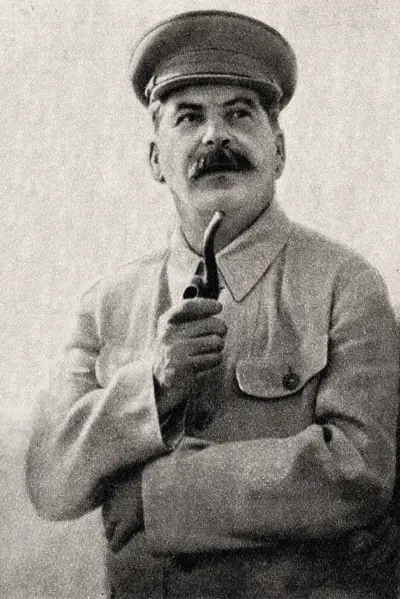
Joseph Vissarionovich Stalin was a Georgian revolutionary and the ruler of the Soviet Union from 1927 until 1953. He served as both General Secretary of the Communist Party of the Soviet Union (1922–1952) and Chairman of the Council of Ministers of the Soviet Union (1941–1953). Despite initially governing the country as part of a collective leadership, he ultimately consolidated power to become the Soviet Union's de facto dictator by the 1930s. A communist ideologically committed to the Leninist interpretation of Marxism, Stalin formalized these ideas as Marxism–Leninism while his own policies are known as Stalinism.
