William Eaton Quotes
The Egyptians prefer the English because they pay for everything. The French take everything and pay for nothing..
William Eaton, 1764-1811, Diplomat, Army Officer, Description of the attitude of the Egyptians towards foreign occupiers at the start of the 19th century, Letter to Alexander Ball, Quoted in Joseph Wheelan, Jefferson’s War
Sourced by: Eigen's Political and Historical Quotations

I will never again listen to the advice of the French … nor of anyone except the British Government.
As a young man, upon the death of his father in 1856, he tried to sieze the throne from his older brother upon the advice of the French. The British Consul with a detachment of Royal Marines put down the coup, but saved his life by not turning him over to his brother. Later he assumed the throne and tended to follow the British line.

Galloway, had campaigned against Blair and the Labor Party and had beaten the Labour MP in his district which was predominantly Muslim. He had been vehemently opposed to the Iraq War.


Japan, then a militaristic power in the East had occupied and controlled Manchuria after the Russo-Japanese War. The League of Nations voted that Manchuria should be placed under international control until elections and independence can be arranged. The Japanese then had a rapidly growing population and Japan felt that the Japanese Islands were not sufficient to produce the raw materials, oil and agriculture needed to sustain a larger Japanese population. Therefore, the Japanese argued that they were entitled to grow and expand to nearby territories to provide for their nation’s needs. When the league of nations rejected the Japanese position, Japan walked out of the League of Nations. Japan would occupy part of China and Korea all leading to WWII. See {627075} for the foreign minister’s later assessment.

His views are a mix of modernism and fundamentalism. He favors democracy and elections but also favored the Taliban destroying the great ancient Buddha statues when he was called an idol worshipper for urging the preservation of art.

The eventual demise of the French Colonial Empire was predicted by almost all scholars and statesmen except the French. It would be after the Second World War when the French were proved to have been delusional on this point.

See {636935}for the policy decision that triggered this order.

3rd Viscount Palmerston. Julius Jacob von Haynau, 1786–1853, was a vicious Austrian General who had committed many atrocities in Italy and Hungary which today would be considered War Crimes and Crimes Against Humanity. He even had women publicly flogged who were heard saying anything sympathetic about the freedom fighters who the General suppressed brutally. On a visit to London, he was attacked and beaten by draymen at the Barclay & Perkins brewery, which he was visiting. (When Giuseppe Garibaldi came to England in 1864, he insisted on visiting the brewery to thank "the men who flogged Haynau.") The Austrian government complained to Queen Victoria about his treatment and the quotation is from the Foreign Minister’s letter reporting the facts to the queen. A letter of apology was sent by Temple to Austria, but it was worded in such a way that it was clear that the English government felt that the beating should never have taken place but it was not morally unjustified. This even angered the Austrians more. Haynau was known and despised by military men the world over. See {630983} for an American use of Haynau’s name.

Hong Kong was not always a successful city or colony. In 1844 the British were thinking of swapping it for a better colony. However, in a rare combination of synergistic development of a colony, the great strengths of the Chinese and that of the English combined to make Hong Kong one of the best and well developed cities in the world. Few imperial colonies turned out as well.


American occupation of the Philippines produced great leaps forward in terms of education and political awareness and rights. However, there was not a large improvement on the average standard of living. Economic development lagged. It is interesting to contrast this with the Japanese view of colonialism at the time. See {638280}. For the Japanese, the major objective was economic development, after that perhaps education, and least important were political rights. We were just the opposite in priorities and accomplishments.
Many Irish use the term “race” in a cultural sense. To them, the Irish are a different race from the English or the Italians.


Ironically America bought the Louisiana Territory from the French, and the French traded Canada to England for Guadalupe. These are probably the two worst real estate deals ever made by a nation—and it was the same nation in both cases.


Egypt was miserably governed by the Ottoman Turks. The people had no rights or freedoms and poverty and ignorance was universal. Napoleon, came to Egypt in much the same way as the United States did in Iraq two centuries later—with the assumption that bringing freedom and affluence, modern government, and a greater expectation of standard of living would find favor with most of the downtrodden inhabitants. However, although the Egyptians hated their status quo, it was culturally something they were comfortable with. It was Islamic and not Christian or secular as much of France was. Yet occupation by these foreigners was more onerous culturally than occupation by the Islamic Ottoman Turks.

He goes on to observe that the German’s are the most hated of the Europeans in large part because they mainly trade in rotgut liquor much of it poisoned which has a devastating effect on the Africans. (The English, in contrast had to have all alcohol inspected in London for safety, before it could leave for Africa.) The “kings” to which the Bishop referred are the rural tribal kings of whom there were more than a few. It is not as if there were a unified monarchy. Another interesting observation is that although Turner was one of Americas leading Blacks, he used the term frequently, but never capitalized it.
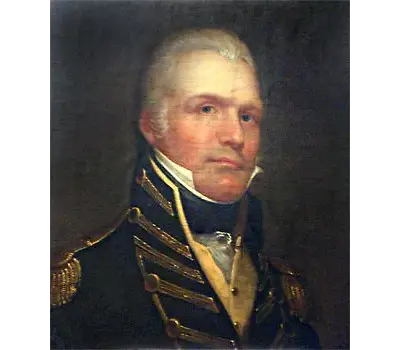
William Eaton was a United States Army officer and the diplomatic officer Consul General to Tunis (1797–1803). He played an important diplomatic and military role in the First Barbary War between the United States and Tripoli (1801–1805). He led the first foreign United States military victory at the Battle of Derne by capturing the Tripoli subject city of Derne in support of the restoration of the pasha (local monarch), Hamet Caramelli. William Eaton also gave testimony at the treason trial of former Vice President Aaron Burr. He served one term in the General Court of Massachusetts (state legislature). Eaton died on June 1, 1811 at the age of forty-seven.
