Robert Alexis McClure Quotes
The dissemination of propaganda designed to undermine the enemy's will to resist, demoralize his forces and sustain the morale of our supporters
Robert Alexis McClure, 1897-1957, General & Developer of Psychological Warfare, WWII Definition of Psychological Warfare
Sourced by: Eigen's Political and Historical Quotations


The Ayatollah reverses logic. Iranian feminists protest not because America tells them to but because Iran is terribly discriminatory and cruel to women. Students are dissatisfied because they have been trained as professionals and the government policies do not encourage the kind of economic growth that would be able to employ them.

Clark had commanded the American and NATO forces in the Serbian War where all the military and political objectives were accomplished with heavy losses to the Serbian’s and none to the allied side—what many think was the most successful war in American History. Like Eisenhower in WWII one great challenge for Clark was the political and strategic one of keeping the coalition of all the allied governments working together. His perspective had been like Eisenhower’s and other officer’s perspectives in history, which was much wider and geopolitical than the views of most military officers.


Von Richthofen, cousin of the “Red Baron,” was justifying tactics that the Germans tried out in Spain before the Second World War—specifically the complete obliteration of Guernica by bombing and strafing although there were no military targets in the city. Guernica was the first city ever completely destroyed by aerial bombardment. The atrocity inspired Picasso’s great paining of that name.


This is the earliest known explicit writing about physiological warefare and its effect on morale of the enemy.


This has been true in just about every conflict. In WWII however, there were a highly disproportionate ration of atrocities with those of the axis forces dwarfing those of the U. S. and its allies. Further, after the war, those allied atrocities that did take place were published. In addition, one basic difference is in the policies of the fighting forces and their governments as opposed to individual actions by soldiers. In WWII, the allied atrocities were of the latter type, but the axis atrocities involved both.


The British, despite Clinton’s correct perception of its importance, could not capture the “hearts and minds” of the American colonists. The importance of the quotation lies in the fact that it appears to be the first time the phrase was used in a political context. Click http://politicalquotes.org/search/node/Hearts%20and%20Minds to see other, later, political quotations that use the phrase. See especially {628753} which became one of the most famous quotations to come out of the Vietnam War.


This is a very interesting historical quotation. German leaders were aware of the risk of propaganda by demagogues leading people astray. Lerchenfeld thought this was true of all people, but the Germans seem to have been more susceptible to propaganda and demagogues than most peoples. Adolf Hitler used this weakness and the Germans destroyed much of Europe and Germany as well in WWII.


Jacobo Arbenz, 1915-1971, was the President of Guatemala who the Central Intelligence Agency ousted by organizing a coup and providing a CIA airplane to terrify and intimidate Arbenz’s loyal soldiers. Guatemala had never been bombed before and the low flying planes had the desired effect. This quotation is important because it shows that the United States engaged in some terrorism and some officials actually used the term “terror” in describing one of our activities.


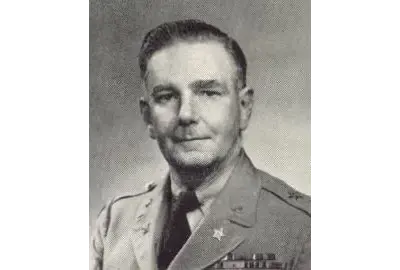
Robert Alexis McClure was an American general and psychological warfare specialist, who is considered as a Father of U.S. Army Special Warfare.
