McGeorge Bundy Quotes
Leaflet operations should be expanded to obtain maximum practicable psychological effect on the North Vietnamese population.
McGeorge Bundy, 1919-1996, Presidential Assistant for National Security (Democrat), National Security Action Memorandum No. 328, April 6, 1965
Sourced by: Eigen's Political and Historical Quotations


Von Richthofen, cousin of the “Red Baron,” was justifying tactics that the Germans tried out in Spain before the Second World War—specifically the complete obliteration of Guernica by bombing and strafing although there were no military targets in the city. Guernica was the first city ever completely destroyed by aerial bombardment. The atrocity inspired Picasso’s great paining of that name.


Jacobo Arbenz, 1915-1971, was the President of Guatemala who the Central Intelligence Agency ousted by organizing a coup and providing a CIA airplane to terrify and intimidate Arbenz’s loyal soldiers. Guatemala had never been bombed before and the low flying planes had the desired effect. This quotation is important because it shows that the United States engaged in some terrorism and some officials actually used the term “terror” in describing one of our activities.


Clark had commanded the American and NATO forces in the Serbian War where all the military and political objectives were accomplished with heavy losses to the Serbian’s and none to the allied side—what many think was the most successful war in American History. Like Eisenhower in WWII one great challenge for Clark was the political and strategic one of keeping the coalition of all the allied governments working together. His perspective had been like Eisenhower’s and other officer’s perspectives in history, which was much wider and geopolitical than the views of most military officers.


George was referring to the brutal realities of war (during the First World War).


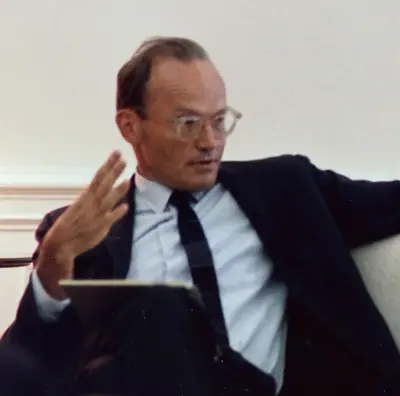
McGeorge "Mac" Bundy was an American academic who served as United States National Security Advisor to Presidents John F. Kennedy and Lyndon B. Johnson from 1961 through 1966. He was president of the Ford Foundation from 1966 through 1979. Despite his career as a foreign-policy intellectual, educator, and philanthropist, he is best remembered as one of the chief architects of the United States' escalation of the Vietnam War during the Kennedy and Johnson administrations.
