William Stephenson Quotes
The Fuehrer is not just a lunatic. The weapons in his armory are like nothing in history. His propaganda is sophisticated. His control of the people is technologically clever. He has torn up the military textbook, and written his own.
William Stephenson, 1897-1989, British Spymaster [Codenamed “Intrepid”], Intelligence Advisor to Winston Churchill, Pre WWII, Assessment of Adolf Hitler, Quoted in A Man Called Intrepid
Sourced by: Eigen's Political and Historical Quotations


She, like her husband and many of the America Firsters, believed that Hitler should be allowed to overrun Europe and Russia. See {613688}. The America First group was a pro-fascist organization who supported the axis powers until they declared war on the United States. Even then, there were some Nazi sympathizers who were anti-immigrant, racist and anti-Semitic in addition to being fascists. Both of the Lindberghs were America Firsters

He served a 20 year sentence. Unlike many of the other Nazis, upon reflection of his experience, he came to realize the wisdom of Lord Acton’s observation about power. See {292904}.


Helms was then a young agent of the Office of Strategic Services (OSS) in Berlin.


This quotation is important because there are some who believed that the professional German Soldiers did not respect Hitler and his murderous policies. This quotation shows that at least publicly Donitz had no problem extolling Hitler above all others. After the war Donitz was found guilty of Unrestricted Submarine Warfare and using thousands of slave laborers in his shipyards. He was sentenced to 10 years, one of the lightest sentences if the German War Crimes Trials.


Some scholars look back at the allied bombing of German Cities in WWII with criticism that it was morally improper to bomb populated cities, and that the use of the adjective “exterminating” indicated that Churchill was more interested in killing Germans than strategic victory. This revisionist history has two failings. First, the Germans had already bombed Coventry, London and other civilian targets in England as well as cities in Holland, Poland and other countries killing many civilians. As a result, under the rules of war, Germany was no longer entitled to protection for their cities. Further, Hamburg and other targets were manufacturing sites of war material and as such lost the protection anyway. Even Dresden, which had very little war manufacturing was the main location for R&R of German Officers and by their military presence in the city converted it into a legitimate target. FDR agreed with Churchill, that the bombing was a good strategy to cause Hitler to fall as they thought the public would rebel. They were wrong however and his grip on the population through the Gestapo and the military was so strong that, it took a land invasion and occupation to put an end to Hitler. However, the devastating bombing all but crippled the German weapons development and deployment. For example. The Germans had developed the Jet Airplane Engine and actually put a few in the fight at the end if the war. Without the bombing, they would have had many more and countered the allied air supremacy. However, it is also true that Churchill and many Englishmen and some Americans believed that the English were morally entitled to retaliation for the innocent civilians killed with the German bombing of civilian targets.


He served as a liaison with the Russian military officers after WWII. As a result he developed friendships with some who told him much about Stalin.

While England was under attack by the Germans in World War II, Congress was debating Roosevelt's proposal for lend-lease. The president had set the passage of this legislation as his main priority, and a critical meeting between Churchill and Roosevelt was deferred until passage was obtained. Roosevelt dispatched Hopkins to London. Urging a prompt meeting, Hopkins cabled:


While that is certainly true and has been borne out by history, the same thing can be said of democratic rulers and even many democratic politicians of lower rank. Yes men abound and not politicians not only want them but arguably need them in order to maintain the assurance and positivity that most voters associate with good leadership.


Hopkins was a social worker with no military of political experience. But the President trusted him implicitly. Most American military officers and Ambassador to England Joseph P. Kennedy, a Nazi sympathizer & father of JFK, believed that England could not stand up to Hitler. Any military aid we gave England would fall into the hands of the Germans. Everyone was shocked when Roosevelt sent Hopkins to England to make a military recommendation. To impress Hopkins with something he thought Hopkins would be interested in, Churchill led a tour of workers cottages built by the government. Hopkins surprised Churchill and his aids who would never forget this statement & then asked to see the military facilities. Hopkins distressed the American military by recommending that Britain could hold out against invasion if they received military aid. Despite the contrary military advice, FDR accepted Hopkins’ recommendations, and the rest is history. He had been right and much of the military wrong.
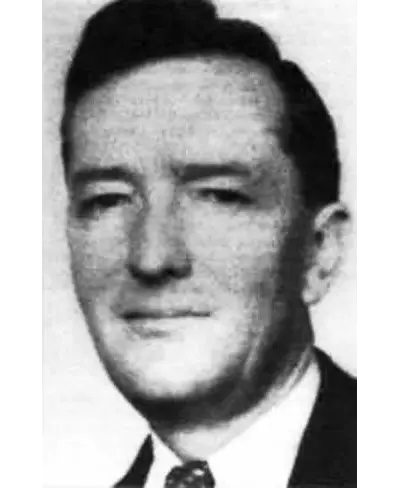
Sir William Samuel Stephenson CC MC DFC, was a Canadian soldier, airman, businessman, inventor, spymaster, and the senior representative of British Security Coordination (BSC) for the entire western hemisphere during World War II. He is best known by his wartime intelligence codename Intrepid. Many people consider him to be one of the real-life inspirations for James Bond. Ian Fleming himself once wrote, "James Bond is a highly romanticized version of a true spy. The real thing is ... William Stephenson."
