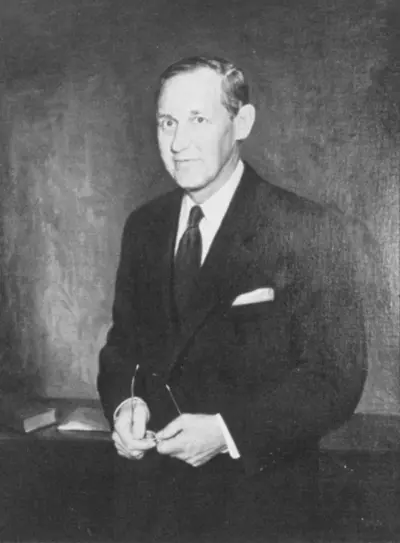
Harry Hopkins Quotes
Mr. Churchill, I don’t give a damn about your cottages. I have come over here to see how I help you beat this fellow Hitler.
Hopkins was a social worker with no military of political experience. But the President trusted him implicitly. Most American military officers and Ambassador to England Joseph P. Kennedy, a Nazi sympathizer & father of JFK, believed that England could not stand up to Hitler. Any military aid we gave England would fall into the hands of the Germans. Everyone was shocked when Roosevelt sent Hopkins to England to make a military recommendation. To impress Hopkins with something he thought Hopkins would be interested in, Churchill led a tour of workers cottages built by the government. Hopkins surprised Churchill and his aids who would never forget this statement & then asked to see the military facilities. Hopkins distressed the American military by recommending that Britain could hold out against invasion if they received military aid. Despite the contrary military advice, FDR accepted Hopkins’ recommendations, and the rest is history. He had been right and much of the military wrong.
Harry Hopkins, 1890-1946, U. S. Secretary of Commerce (Democrat), Director, Works Progress Administration, Director, Federal Emergency Relief Administration, Special Assistant to the President, Statement to Winston Churchill, February 1941, Quoted by Pamela C. Harriman on Documentary: Harry Hopkins
Sourced by: Eigen's Political and Historical Quotations
The president had wanted to send large amounts of armament and other material to England—Lend Lease—to help stave off a German invasion. The leading military men argued against it. Conservative isolationists and Congress had prevented our own military from having enough supplies and equipment. Also the conclusion of the American military leadership of the time was that England was beyond help and would have to capitulate to Germany. Even with massive armaments they would not be able to defend themselves. Any arms that we might provide to England would then fall into German hands. Roosevelt then sent his civilian assistant, Harry Hopkins, to England to assess their ability to survive. Hopkins with no military experience told Roosevelt that with the arms and ammunition England would be able to forestall invasion. Roosevelt trusted Hopkins’ judgment and decided to arm England. Hopkins turned out to be exactly correct and the military leadership was wrong. See {642830}.
Both Hitler and Stalin were gross egomaniacs who each thought that they had gotten the better of things. The result was that 22 million Russians were killed and the industrial base if Russia Was destroyed. On the German side, the German military was virtually destroyed, many civilians were killed, the nation reduced to rubble and starvation, German leaders were killed, jailed or committed suicide including Hitler, and the country was occupied for years. Neither leader appeared very smart if one judges by the results.
“Lord Haw Haw” was the name that he used in his propaganda broadcasts from Germany to England. Despite the fact that the broadcasts were anti-British and pro German, many in Britain listened to him regularly. He was very witty and many of his criticisms of British society were views held by many patriots in Britain. As pure entertainment, he was better than most of the BBC broadcasts during WWII. At the end of the war, Joyce was captured, tried and executed for treason.
De Gaulle was a very difficult ally. He was ashamed that so many of his countrymen collaborated with the German invaders including fighting against the allies and the collapse of the French Army which, although it was larger than the German invader, had exhibited much cowardice. His way of dealing with this shame was to exaggerate the positive role that the loyal French and the serious Free French Fighters and to deny the extent of the negative behavior. He was always demanding that the small Free French Army be included in all military operations, and when successful, they be given equal credit along with the British, Americans, and Russians even though the French only contributed a tiny proportion of the effort. De Gaull’s ego, personal and national was enormous and Churchill had just as great a national ego. Hence for De Gaulle, Churchill was a kind of enemy. The “Channel” referred to the English Channel.
After a reception given by Lady Astor, Channon wrote in his diary that the “Cliveden Set” {598323} would be criticized because it was in favor of the policy of appeasement. The name came from the seat of Lord and Lady Astor, who were both supporters of the policy. To some the policy was seen as pro-Hitler, but Channon saw it as reasonable and in concert with Neville Chamberlain’s views. Even so, Chamberlain’s policy of appeasement was very controversial. This very policy prevented early Allied involvement in World War II and therefore gave Hitler time to buildup the German military while invading much of Eastern Europe.
One of the predictions of the oncoming war with Germany.
The “fool” was Neville Chamberlain, 1869-1940, the British Prime Minister who refused to stand up to Hitler and instead negotiated a peace pact, returned home declaring that he had preserved peace. (See {585941}.) Then Hitler invaded more of Europe and WWII was begun. Ford was a Hitler admirer and pro-German (Hitler supported him for the American Presidency--{586988}—and awarded him a medal) but he thought that England had bungled the negotiations by sending someone who was very weak. In this sense his views were the same as most who were anti-Hitler.
Some scholars look back at the allied bombing of German Cities in WWII with criticism that it was morally improper to bomb populated cities, and that the use of the adjective “exterminating” indicated that Churchill was more interested in killing Germans than strategic victory. This revisionist history has two failings. First, the Germans had already bombed Coventry, London and other civilian targets in England as well as cities in Holland, Poland and other countries killing many civilians. As a result, under the rules of war, Germany was no longer entitled to protection for their cities. Further, Hamburg and other targets were manufacturing sites of war material and as such lost the protection anyway. Even Dresden, which had very little war manufacturing was the main location for R&R of German Officers and by their military presence in the city converted it into a legitimate target. FDR agreed with Churchill, that the bombing was a good strategy to cause Hitler to fall as they thought the public would rebel. They were wrong however and his grip on the population through the Gestapo and the military was so strong that, it took a land invasion and occupation to put an end to Hitler. However, the devastating bombing all but crippled the German weapons development and deployment. For example. The Germans had developed the Jet Airplane Engine and actually put a few in the fight at the end if the war. Without the bombing, they would have had many more and countered the allied air supremacy. However, it is also true that Churchill and many Englishmen and some Americans believed that the English were morally entitled to retaliation for the innocent civilians killed with the German bombing of civilian targets.
The reference to Munich was to the famous appeasement of Adolf Hitler and the Nazis by British Prime Minister Neville Chamberlain. See {585941}.
There was a small but influential pro-Nazi segment of British society which had a small parallel in the United States. Even the Duke of Windsor had pro-German sympathies as did the American Ambassador to England, Joseph Kennedy (father of JFK) see {610119}.
A little over a decade later the struggle began.
The last phrase was a variation of the famous Bismarck quotation {594849}.
Chamberlain’s policy was to appease Hitler and Germany to avoid war. Although he did not see Czechoslavkia as a critical British national interest and claimed he had secured peace {585941} , the reality was that he gave Germany room to start its aggression which would engulf all of Europe and much of the world. The British became the only bulwark against Hitler until the Russians stopped the Germans and America entered the war.
- Born: August 17, 1890
- Died: January 29, 1946
- Nationality: American
- Profession: Diplomat
Harry Lloyd Hopkins was the 8th Secretary of Commerce, and President Franklin Delano Roosevelt's closest advisor on foreign policy during World War II. He was one of the architects of the New Deal, especially the relief programs of the Works Progress Administration (WPA), which he directed and built into the largest employer in the country. In World War II, he was Roosevelt's chief diplomatic troubleshooter and liaison with Winston Churchill and Joseph Stalin. He supervised the $50 billion Lend-Lease program of military aid to the Allies.