Andrew J. Bacevich Quotes
The aim of war now is not to defeat your enemy – that’s probably impossible – but to change the way he and his supporters think.
Andrew J. Bacevich, Political Scientist & Historian, Executive Director of the Foreign Policy Institute at the Paul H. Nitze School of Advanced International Studies, A Warhorse of a Different Color,” Wilson Quarterly, Spring 2007
Sourced by: Eigen's Political and Historical Quotations

He was referring to the Iraq war.


Clark had commanded the American and NATO forces in the Serbian War where all the military and political objectives were accomplished with heavy losses to the Serbian’s and none to the allied side—what many think was the most successful war in American History. Like Eisenhower in WWII one great challenge for Clark was the political and strategic one of keeping the coalition of all the allied governments working together. His perspective had been like Eisenhower’s and other officer’s perspectives in history, which was much wider and geopolitical than the views of most military officers.

Ever since the end of WWII, no major war has been fought where there has been a classic victory where one nation is conquered by another and there is a surrender. Many of the wars have been fought against non-state actors or our war aim is a regime change or the establishment of a more friendly government. We have no desire to occupy the countries generally, and there is often no one “in charge” of the enemy who can even surrender. Bruce was referring to the Iraq War and the Afghanistan War. In each case, despite the lack of a surrender document, it can be said that America won both of these wars initially and then had great trouble with the occupation, the nation building, and keeping the peace. In Iraq and Afghanistan we suffered almost no casualties in the initial invasions. The occupation and “peace” is where we suffered almost all of our casualties.

His appeal was also in the name of concurring heads of state of Finland, Holland, Denmark, Norway, Luxemburg, and Sweden.


This idea came from Dutch Philosopher Benedict Spinoza. See his quotation from 1677.


Up Front was a book of cartoons with his two GI characters, Willie and Joe. The quote is from their dialogue. Up Front which won the Pulitzer Prize.


Israel's Arab enemies do not simply want to control the territory and/or the economic resources. Their aim, overtly stated thousands of times since the formation of Israel, is to "drive the Jews into the sea", murder the population, obtain revenge for their percieved humiliation that "foreigners" to the region and their religion could build a society so far advanced compared to Arabs on the harsh land abd without any of the oil riches that some of the Arab states had. Israel has won all the wars that the Arabs have initiated, and never murdered the population, and provide the "occupied territiries" with better medicine and infrastructure than the Arabs achieve on their own.


She had gone to Europe where the 2nd World War was raging.
Like many in the 1920s, Dewar saw the Communist Soviet Union as the biggest potential risk to peace. However, although the Russian leaders constantly castigated the West, they did not have a large military, and were for the most part highly anti-war as they saw war as the product of Capitalistic competition and the tool of the aristocracy. They had little military equipment and almost no training or officer corps with which to build any Army. Germany in contrast had the skill, experience, officers, a history of aggression, and huge resentment over what they considered their humiliating WWI defeat and peace terms. They would start WWII, not Russia.
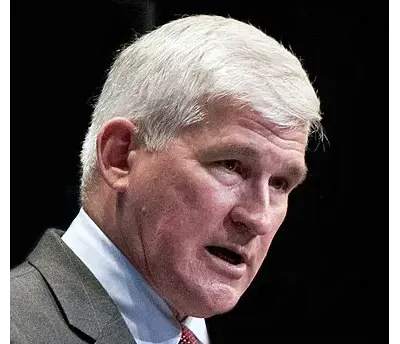
Andrew J. Bacevich Jr. is an American historian specializing in international relations, security studies, American foreign policy, and American diplomatic and military history. He is a Professor Emeritus of International Relations and History at the Boston University Frederick S. Pardee School of Global Studies. He is also a retired career officer in the Armor Branch of the United States Army, retiring with the rank of colonel. He is a former director of Boston University's Center for International Relations (from 1998 to 2005), now part of the Pardee School of Global Studies. Bacevich is the co-founder and president of the Quincy Institute for Responsible Statecraft.
