Paul von Hindenburg Quotes
The enemy bombards our front not only with a drumfire of artillery, but also with a drumfire of printed paper. Besides bombs, which kill the body, his airmen also throw down leaflets which are intended to kill the soul.
Hindenburg, Paul von. "Manifesto to the German People and Army." 2 Sept. 1918. Source Records of the Great War, edited by Charles F. Horne, vol. 6, National Alumni, 1923, p. 301.


The quotation was given by Defense Secretary Donald Rumsfeld just prior to the war with Iraq, 2003.


This has been true in just about every conflict. In WWII however, there were a highly disproportionate ration of atrocities with those of the axis forces dwarfing those of the U. S. and its allies. Further, after the war, those allied atrocities that did take place were published. In addition, one basic difference is in the policies of the fighting forces and their governments as opposed to individual actions by soldiers. In WWII, the allied atrocities were of the latter type, but the axis atrocities involved both.


The British, despite Clinton’s correct perception of its importance, could not capture the “hearts and minds” of the American colonists. The importance of the quotation lies in the fact that it appears to be the first time the phrase was used in a political context. Click http://politicalquotes.org/search/node/Hearts%20and%20Minds to see other, later, political quotations that use the phrase. See especially {628753} which became one of the most famous quotations to come out of the Vietnam War.


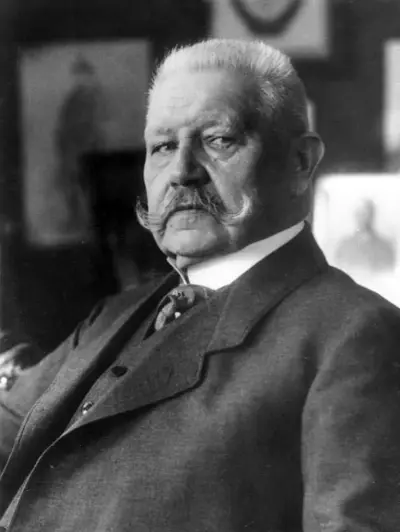
Paul Ludwig Hans Anton von Beneckendorff und von Hindenburg, was a German general and statesman who led the Imperial German Army during World War I and later became President of Germany from 1925 until his death in 1934. During his presidency, he played a key role in the Nazi seizure of power in January 1933 when, under pressure from advisers, he appointed Adolf Hitler as Chancellor of Germany.
