Joseph Story Quotes
The constitution of the United States is to receive a reasonable interpretation of its language, and its powers, keeping in view the objects and purposes, for which those powers were conferred. By a reasonable interpretation, we mean, that in case the words are susceptible of two different senses, the one strict, the other more enlarged, that should be adopted, which is most consonant with the apparent objects and intent of the Constitution
Joseph Story, 1779-1845, U. S. Supreme Court Justice, Commentaries on the Constitution, 1833
Sourced by: Eigen's Political and Historical Quotations


This quotation is particularly important because it summarizes one of two opposite schools or thought regarding judicial interpretation of the Constitution that politicians have been arguing about since the Supreme Court first sat. The other is Original Intent where only the original intentions of the writers and ratifiers of the Constitution should be considered—assuming that it can be determined.


Powell was the Secretary of State and Addington kept advising the administration that as long as the President was acting in defense of the country in his capacity as Commander in Chief, he did not have to obey any existing laws that had been Constitutionally passed which in the opinion of the President restricted or limited the President or the executive branch. Addington was an attorney and Assistant to the Vice President, but he was given much responsibility for administration policy. Powell the Secretary of State of the Administration could not have disagreed more and although most politicians including Republicans disagreed with the Addington thesis, Powell was one of the few Republicans to criticize the Addington position.


The Chief Justice at the time was an ultra-conservative judge, who together with his 8 colleagues—all conservative—had blocked much of the democratic and progressive legislation that the Congress had passed. FDR had a much different legal and philosophical view of the Constitution than the Chief Justice, and the court would declare much of his New Deal legislation, passed in the emergency of the Great Depression, unconstitutional. Almost all of those “unconstitutional” things were years later passed again and this time a more modern court found they were Constitutional.

In modern times almost all countries have written constitutions. And almost all of those constitutions appear to be democratic. Many have been taken from the United States Constitution. However, most of the countries are not real democracies as they do not enforce their own constitutions. For example, in Egypt, the constitution guarantees women equal rights to men. There are many female attorneys. However, the notion of a female judge is too much for the sexist culture. So regardless of what the constitution says, it is not enforced with respect to female judges. When Smyth gave his lecture, constitutions were just getting popular. He was prescient enough to realize that a constitution to be effective must conform to the belief structure of most of the population and the constitution most be administered as well as written.


Cummings was arguing against a Constitutional amendment. His alternative led to Roosevelt's court packing schema.

The Grammar Curmudgeon. This is one side of a fundamental argument within America as to the Constitution. The other side argues that the original intent of the Founding Fathers should prevail. That their principles are what has made America great, and we do not want to deviate from those. In determining Constitutionality, it is the original intent that should prevail even if the issues are ones of which the founding fathers had no inkling such as the ability of a nuclear power to destroy much of the nation before Congress could be called into session or that police could use geo-positioning devices to track the movement of citizens. Or that women could prove themselves the equal of (or superior to) in intellectual pursuits and would want to participate in politics and policy making.
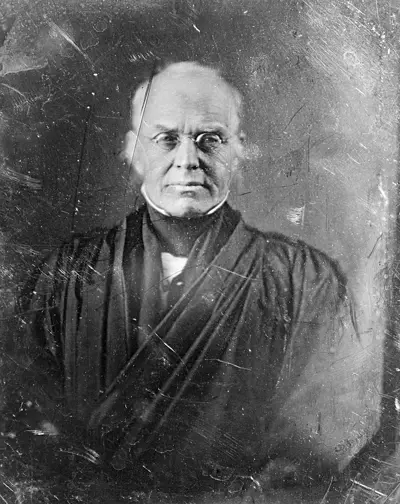
Joseph Story was an American lawyer and jurist who served on the Supreme Court of the United States from 1812 to 1845, during the Marshall Court and early-Taney Court eras. He is most remembered for his opinions in Martin v. Hunter's Lessee and The Amistad case, and especially for his magisterial Commentaries on the Constitution of the United States, first published in 1833. Dominating the field in the 19th century, this work is a cornerstone of early American jurisprudence. It is the second comprehensive treatise on the provisions of the U.S. Constitution and remains a critical source of historical information about the forming of the American republic and the early struggles to define its law.
