George Canning Quotes
The conservation of monarchy in any portion of South America will tend to break the shock of that inevitable divorce by which the New World is about to be divided by the Old... But as to putting it forward, as a project or proposition of ours, that is out of the question. Monarchy in Mexico, and monarchy in Brazil, would cure the evils of universal democracy, and prevent the drawing of the line which I almost dread – America versus Europe. The United States, naturally enough, aim at this division and cherish the democracy which leads to it.
George Canning 1770-1827, British Foreign Secretary and Prime Minister (Tory), Statement of England’s plans for South America, 1824, Quoted in Robert Harvey, Liberators
Sourced by: Eigen's Political and Historical Quotations


The professor was lecturing to British university students about 75 years after the American Revolution. The “American War” is the term the British use for the American Revolution.

Samuel Langhorne Clemens, 1835-1910

The Congress was reacting against the prospect of France supporting a monarchy in Mexico.


Although friendly to America, Canning was a monarchist and did not share America's enthusiasm for democracy and concern about Spanish Princes in Mexico and Brazil.

Publicly warning Louis Napoleon against his adventure in Mexico:

This was one of the first proposals for a type of world government. Ironically, Angell, and English politician, was suggesting that the United States take the lead in his ‘new world order” and be the principle controlling factor. This was before the League of Nations and the United Nations.

After the economic & power collapse of the Soviet Union, the United States was the only remaining superpower. Givern Russia's diminshed capability and many Americans still carrying resentments about the Cold War, America's foreign policy and diplomacy did not treat Russia as if they were a very important power in the world. Puten greatly resented the fact that Russia was no longer considered or treated like a world power, Russia had a nuclear arsenal and a total delivery system what was in the same destructive potential class as the United States. There were many Russiabs who had similar resentments and Putin sert out to adopt policieis and practices that would force the United States and the other nations to consider them with more dignity, respect and consdideration. This was a typical statement of the period when he was "stoking the fires of Russian resentment.
Cochrane became the Admiral in Chief of 2 Different South American Nations—Peru and Brazil—fighting for their independence. Incredibly enough, he was able to form idealistic freedom fighters with no naval experience into navies which defeated both the Spanish and Portuguese fleets at a time when those countries had world class navies. His achievements on behalf of the South Americans are often regarded as the most remarkable naval achievements in history.


Bourne was one of the first writers with a national audience to question the classic but never real “melting pot” theory of immigration and suggest the “salad” model though he never used the term.

Louis Napoleon had lead a military takeover or the French democratic republican government. The other great European powers, with the exception of England and Belgium at the time did not have parliaments or they were powerless and the countries were all monarchies with most of the monarchies and the aristocracy hateful of anything involving sharing their power with legislatures. This is despite the incredible success of England with its Constitutional Monarchy and Queen who was very pleased with it.

This quotation is a great demonstration of how much wiser and the better politician of all the crowned heads of Europe that Queen Victoria was. There were stirrings of freedom and desire for parliamentary government throughout Europe. Queen Victoria, even though and perhaps because she was a young woman, had a great feel for fairness and reasonableness and had read a great deal of history. There were some radical red socialists calling for complete radical revolution scaring European Royalty profoundly. They reacted very conservatively and with reaction, reverting to more tyrannical practices of the past urged in that path by very conservative, right wing advisors. Victoria also had little respect for some of the monarchs who had little interest in their people and much with their personal power and wealth. In the end, it was England which was the only nation which never had a serious radical socialist / communist threat, and that had much to do with Victoria’s political acumen and wisdom.
This is a fascinating historical quotation. The English Foreign Minister and sent a draft of his proposed policy of English involvement to make Spain more democratic to counteract the influence of France which was then England’s arch enemy. The French had a military-oriented right wing government. The Queen, although only 27 years old at the time, had a brilliant grasp of foreign policy and the sagacity of an elder statesman. (And women in the United Kingdom could not even vote.) She realized that once England was involved in nation building and backing one party in Spain, England would be responsible for whatever that party ended up doing, and yet England really could not control the situation. Corruption, violations of civil rights, impoverishment all might occur, and England would have to defend those things lest the French who would then support the opposition would gain an upper hand in a proxy war. The situation was very similar to the United States getting involved in Vietnam and supporting the South Vietnam government which, despite U. S. efforts to the contrary, was totally corrupt, inept, religiously discriminatory, and totally inept in providing good government to the people. A similar situation occurred with the American intervention in Afghanistan where the President operated a totally corrupt and inept government and we were forced to support him. On other occasions she goes even further and actually writes new copy of policies personally. Note that the formality of the time required that the Queen refer to herself in the third person and not the first.

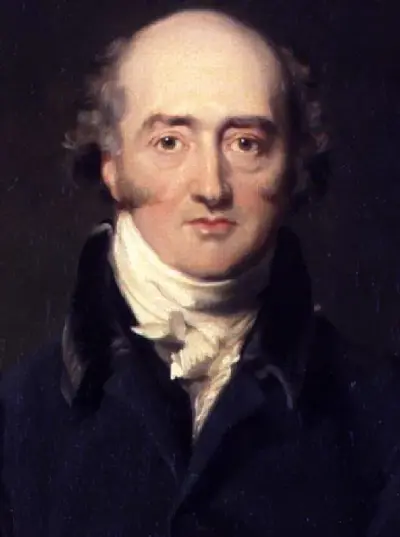
George Canning FRS was Prime Minister of the United Kingdom from April to August 1827. He occupied various senior cabinet positions under numerous prime ministers, finally becoming Prime Minister for the last 118 days of his life.
