Simon Bolivar Quotes
Democracy, which has flourished even in the polluted soil of Europe, would certainly thrive in the virgin soil of America. Here there is no real element of aristocracy, nothing but a sorry caricature. There are not then, my dear general, elements of monarchy in this land of God. Let a republic be formed here and dignity will grow in men... A monarchy established here would be of short duration, for an idea, once implanted in the people, is impossible to extinguish; and the idea of democracy has been firmly rooted here during twelve years of glorious struggle
Simon Bolivar 1783-1830, South American Colonial Liberator, President of Venezuela and Columbia, Statement to San Martin, Guayaquil, 1822
Sourced by: Eigen's Political and Historical Quotations

The commander complained of the brutal behavior of Bolivar and the revolutionaries, but the atrocities committed by the Spanish forces were even worse and both sides fought with techniques that had no civilized restraints.

Cochrane became the Admiral in Chief of 2 Different South American Nations—Peru and Brazil—fighting for their independence. Incredibly enough, he was able to form idealistic freedom fighters with no naval experience into navies which defeated both the Spanish and Portuguese fleets at a time when those countries had world class navies. His achievements on behalf of the South Americans are often regarded as the most remarkable naval achievements in history.
The United States had then only existed for about 30 years but was already a model.
South America, invaded and colonized by Spain was a brutal combination of slavery and repression. Even the European colonists suffered under the terrible combination of exploitation, militarism and religious dictatorship. Independence from Spain was equally bloody as unlike in North America where the fight was against British rule, in South America the black slaves, the indigenous Indians and the white colonists all had scores to settle with the Spanish rulers. And the Spanish in turn realized that and brutally repressed all rebellion attempts. Atrocities were common, and committed by almost all, including even idealists like Bolivar.

This was the first contact between the colonists and the French government. The French agent was very non committal and the parties were just feeling each other out. Franklin made it perfectly clear that the colonists would not trade the English King for a French one and become part of the French empire.

The government relationship to people phrase, although probably Lincoln's most famous, was not totally original. John Adams came close in a 1774 proclamation. As did John Marshall in his McCulloch v. Maryland decision. Daniel Webster's Speech on Foot's Resolution was very close. as was Theodore Parker in 1850 {629578}. There was also Thomas Cooper in 1795. But the earliest appears to be John Wycliffe in 1382 {567292}. It is not known with which of these Lincoln was familiar.


Commenting on the concept of democracy and it's lack of Biblical justification:


Samuel Langhorne Clemens, 1835-1910

This quotation is a great demonstration of how much wiser and the better politician of all the crowned heads of Europe that Queen Victoria was. There were stirrings of freedom and desire for parliamentary government throughout Europe. Queen Victoria, even though and perhaps because she was a young woman, had a great feel for fairness and reasonableness and had read a great deal of history. There were some radical red socialists calling for complete radical revolution scaring European Royalty profoundly. They reacted very conservatively and with reaction, reverting to more tyrannical practices of the past urged in that path by very conservative, right wing advisors. Victoria also had little respect for some of the monarchs who had little interest in their people and much with their personal power and wealth. In the end, it was England which was the only nation which never had a serious radical socialist / communist threat, and that had much to do with Victoria’s political acumen and wisdom.
This was written by a French Journalist who had been assigned to America for 7 years when he wrote this in 1939. WWII was just breaking out in Europe.
The Spanish colonization had been so exploitative that there was little of no infrastructure established in the Spanish colonies. Almost no institutions, no local government, existed, and there was no system of law or tolerance of minority views. Power controlled all and the Spanish (and Portuguese) were the power. When they were defeated, it was a bitter free for all in most cases unless there was a strong man and even they did not last long.

During the early days of the American independence movement, many were preoccupied with the philosophical and theological issues of whether the Almighty approved of monarchy or not. Parker urged concentration on assuring independence first.


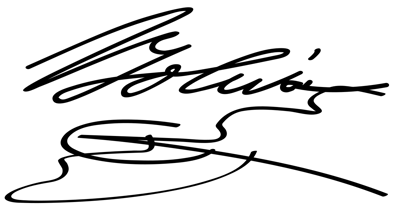
Simón José Antonio de la Santísima Trinidad Bolívar y Ponte Palacios y Blanco (Spanish: [siˈmom boˈliβaɾ] (listen), English: /ˈbɒlɪvər, -vɑːr/ BOL-iv-ər, -ar also US: /ˈboʊlɪvɑːr/ BOH-liv-ar), also colloquially as El Libertador, was a Venezuelan military and political leader who led what are currently the countries of Venezuela, Bolivia, Colombia, Ecuador, Peru, and Panama to independence from the Spanish Empire.
