Dutch West India Company Quotes
The Colonists shall not be permitod to make any woden, linen or cotton cloth, nor weave any other stuffs there, on pain of being banished
Dutch West India Company, Charter of Freedoms and Exemptions to Patroons, June 7, 1629
Sourced by: Eigen's Political and Historical Quotations

The American colonists were not allowed to sell their tobacco or other commodities directly to foreign nations. They could only sell them to English merchants who in turn would sell them to foreign markets. Thus, the large profits on American tobacco were made by English merchants and not by American farmers or merchants.


America’s first political economist

This historical quotation enables us to date the importation of slaves into Massachusetts to as early as 1638. It also shows us that even though the Spanish had enslaved Negroes from Africa, when English ships raided Spanish ships and seized their booty, they considered the slaves as property and took them to then sell for the money. Had they had a different point of view, they might have freed the Back slaves who had been captured by their enemy, the Spanish. But they did not and money and money was the major motivation.


This was one of the first and is considered the best of the Colonial arguments against taxation without representation. The argument here about exports also affected other commodities—see {636866}. Despite this, Dulany is not well known in American history because when the Revolution finally came he was a loyalist.

See {641497} for a quote from the Grenville speech. Fox, a conservative on most issues was an absolute radical on the issue of America. To aggravate the hawks in parliament, he used to dress in the colors of George Washington’s uniform to show his support once the war broke out.


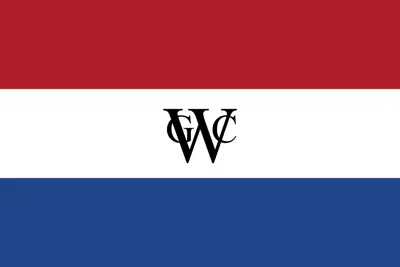
The Dutch West India Company (Dutch: Geoctrooieerde Westindische Compagnie, or GWC; Dutch pronunciation: [ɣəʔɔktroːˈjeːrdə ʋɛstˈɪndisə kɔmpɑˈɲi]; English: Chartered West India Company) was a chartered company of Dutch merchants as well as foreign investors. Among its founders was Willem Usselincx (1567–1647) and Jessé de Forest and the Americas, which included the Pacific Ocean and the eastern part of New Guinea. The intended purpose of the charter was to eliminate competition, particularly Spanish or Portuguese, between the various trading posts established by the merchants. The company became instrumental in the largely ephemeral Dutch colonization of the Americas (including New Netherland) in the seventeenth century. From 1624 to 1654, in the context of the Dutch-Portuguese War, the GWC held Portuguese territory in northeast Brazil, but they were ousted from Dutch Brazil following fierce resistance.
