Henry Charles Carey Quotes
The whole legislation of Great Britain, on this subject, has been directed to the one great object of preventing the people of her colonies, and those of independent nations, from obtaining the machinery necessary to enable them to combine their exertions for the purpose of obtaining cloth or iron, and thus compelling them to bring to her their raw materials, that she might convert them into the forms that fitted them for consumption, and then return to the producers a portion of them, burdened with great cost for transportation, and heavy charges for the work of conversion.
America’s first political economist
Henry Charles Carey, 1793-1879, Political Economist & Publisher The Harmony of Interests: Agricultural, Manufacturing & Commercial, 1851
Sourced by: Eigen's Political and Historical Quotations


Earl of Stockton


One of the reasons that Jefferson and others were so anxious to expand the territory of the United States was that Britain had operated with the policy that curtailed and limited the population growth of the American colonies and the resentment of this policy led to growth of America and the Westward expansion.

We are so used to hearing the freedom seeking reasons for the American Revolution that we overlook the more selfish and venal motives. This quotation shows that the large merchants of the colonies had banded together in an illegal conspiracy trust and monopoly and managed to keep many British competitive products out of the colonies. The British, for equally venal reasons, began to enforce the laws in favor of free trade. Many large American merchants were getting huge profits (and American consumers paying more) from their protectionist illegal monopoly. A Revolution would de facto assure that monopoly for many years to come, so they became supporters—patriots—of the American Revolution. As the Revolution drew closer, the Americans made efforts to protect the protectionism and monopoly of some of the richest Americans. See {636861}.

Executed by the English for his part in the Easter Uprising. Connolly was a socialist advocate as well as a republican. He was one of the first revolutionaries to understand that military occupation was only a part of forces that kept a nation subservient to another. However, attempts to break those economic ties have almost always led to economic ruination.

“Arsenal of Democracy” is the famous FDR phrase whereby America was able to provide weapons for the other democracies to fight Fascism. At the time, the United States had the greatest manufacturing capability of the world. When Gingrich made this quotation, much manufacturing that had been done in America had moved offshore. However, one area that did not move offshore was military weapons manufacturing where the United States manufacturing capability was thriving but America was the largest arms manufacturer in the world and exported much of its weapons. This quotation is an example of a political technique called “conflation.” Gingrich took an area where there was legitimate concern about the nation’s loss of manufacturing and implied that the problem was affecting our military and defense capability as well which was not do at all. However, while most Americans knew of the manufacturing job loss, they did not know that the defense manufacturing was the strongest in the world. So they became even more alarmed at the problem of general manufacturing loss.


This was a Nationally Broadcast Speech speech in the run up to American entry to WWII, Lindbergh had been a national here for being the first aviator to fly over the Atlantic to Europe. Politically, the National Hero became an active fascist supporter of Mussolini and Adolph Hitler who awarded him a Medal for Supporting Fascism, Anti-Semitism and advocating for America to allow Hitler to conquer German and the rest of Europe. After WWII he was in disgrace. This quotation is one of his many attempts to keep America from interfering with Hitler in Europe as he was a great admirer of Fascism and the two leading proponents in Europe.

See {641497} for a quote from the Grenville speech. Fox, a conservative on most issues was an absolute radical on the issue of America. To aggravate the hawks in parliament, he used to dress in the colors of George Washington’s uniform to show his support once the war broke out.

This is the same man who introduced the Stamp Act 12 years before which started the whole problem in America. See {74956}.

America’s first political economist
America’s first political economist


There is some debate as to whether this statement was made at this time or different parts of it on two different occasions. The sentiment and position appears to be genuine but the issue of the timing is in doubt.


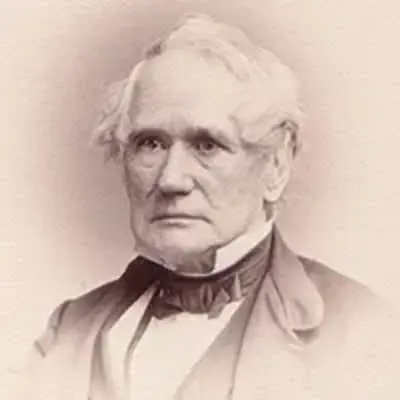
Henry Charles Carey was the leading 19th-century economist of the American School, and chief economic adviser to U.S. President Abraham Lincoln.
