Russian Orthodox Church Quotes
The Church cannot approve the alienation and re-distribution of property with violations of the rights of its legitimate owners. An exception may be made only for the alienation of property based on the law, conditioned by the interest of the majority of people and accompanied by fair compensation. Russian history has shown that the violation of these principles has always resulted in social upheavals and people's suffering
Russian Orthodox Church, Bishops' Statement, The Basis of the Social Concept of the Russian Orthodox Church, 2000
Sourced by: Eigen's Political and Historical Quotations


This was the basic document issued after the Russian Revolution establishing the basic legal and economic structure of the new Soviet State.


Note, that like other feminist leaders of the time, she viewed the fetus as a person. However, between the economic pressures and the illegality of birth control devices and information provision, abortion was a critical decision that had to be faced by many women. Later, feminist leadership had to come to grips with the issue of who makes the decision in these areas, and placed the right of the woman to make these decisions, as opposed to husbands, fathers and government, as the highest priority. Then, when the drivers for abortion could not be eliminated, it was women who were criminalized. Feminists then fought for the right of abortion and the right of the woman to make decisions, but feminine leadership has never—in America—been advocates of abortion as opposed to the right of abortion, a subtlety that often is lost.


Manava Dharma Shastra. This legal principle is operative in every one of the United States to this day, the only difference being a longer period of time. This text is a part of the Hindu Holy Texts. Hindus believe that Manu was a prophet whose text is revealed or inspired.


The Romans were very organized regarding land ownership. When they conquered Africa, defeating Carthage, they found no written records of land ownership, no deeds, no bills of sale. Therefore, they opened up the entire land mass of Africa for what amounted to public colonization where the land could be worked and claimed legally. Illiterate Africans had no written records, and most areas where under the control of a strongman who “owned” all of the land with no notion of private ownership of land.

Theoretically, this decree would have provided a fair amount of economic freedom for communist Russia. This decree gave some degree of comfort to the Western Europe and America, but had some major opponents within world communism who thought it too capitalistic. In practice the rights were never really available and this was one of the many “principles” of Soviet Communism which may have sounded reasonable but were never allowed to function in practice. Within a few years even the pretense of these principles was dropped.
Much reservation land was by law and policy divided amongst the Indians. The theory of this “Allotment System” was that if Indians owned land individually rather than communally, they had an asset which could be mortgaged, sold, rented and otherwise used as whites do their land assets. However, so many Indians had been cheated and swindled out of their land that Congress passed stringent laws regulating the manner and procedures for sale of Indians’ land. Many whites and some Indians complained that it was getting too cumbersome.

At the time the number of small, independent land owners was diminishing.

This law governed the territories outside of the original 13 colonies. The intentions of the founding fathers and the first Congress to the Indians was fair and honorable. However, there was no practical way that the new Federal Government could enforce this principle in the territories. A single greedy land speculator or trader could abuse a group of Indians and start a small war. The vast cultural differences between Indians and whites tended to polarize all violent conflicts regardless of who was at fault. The different perceptions of cruelty and atrocities further pushed the government to defend whites violating national policy and there was sufficient corruption and money to be made on Indian land and trading and things went downhill fast.
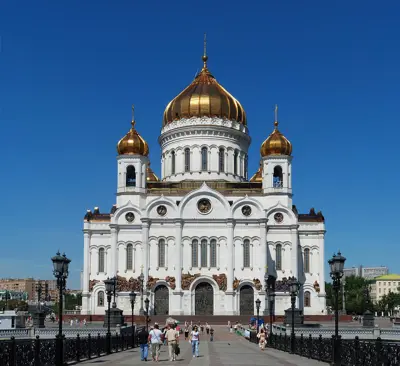
The Russian Orthodox Church, alternatively legally known as the Moscow Patriarchate, is an autocephalous Eastern Orthodox Christian church. It has 194 dioceses inside Russia. The primate of the ROC is the Patriarch of Moscow and all Rus'.
