Charles Elliot Quotes
The British illicit trading of opium in China was rapidly staining the British character with deep disgrace
The Chinese authorities wanted to stop the distribution and use of opium, but the British merchants, in one of the more disgraceful episodes of British history, would not stop the trade and actually went to war when the Chinese tried to stop the opium trade. See {625957} for more on this incident and the First Opium War that followed.
Charles Elliot, 1801–1875, British Naval Officer, Chief Superintendent of the Trade of British Subjects With China, First British Administrator of Hong Kong, 1839
Sourced by: Eigen's Political and Historical Quotations

3rd Viscount Palmerston. This historical quotations illustrates the worst of the British Empire. British merchants were making large profits shipping opium to China and selling it there. Drug addiction became a major problem and some local Chinese Authorities passed laws banning the importing and selling of opium. However, the English merchant ship captains paid no attention to these laws claiming their rights as Englishmen to free trade. The Chinese finally seized a number of shipments of opium and burned them. The British then appointed Captain Elliot to lead a squadron of ships to China, arrange for payment in compensation for the value of the seized opium and to open up the opium trade, by force if necessary. The Chinese position was not unreasonable and Captain Elliot was not able to secure the concessions the English government wanted without starting a small war with the loss of many lives. Temple, who was the Foreign Minister at this time, fired Elliot and replaced him with someone who was less concerned about problems of drug addiction and the Chinese. Thus began the First Opium War. Note that the then British view of equity was that if they had to send an expedition of ships and soldiers to force the Chinese to allow the English to sell opium, then part of the terms must be that the Chinese pay the costs for the British ships and soldiers who invaded their country and forced them to keep poisoning their own people. See {621319} for Captain Elliot’s view.

A bronze statue of Lin Zexu was erected in his honor in Chatham Square (Kimlau Square) of New York City's Chinatown.
He was the first Chinese official to make opium illegal. However, British many merchants were involved in a complicated trade scheme whereby they brought opium to Canton. They paid not attention to the new laws against opium the same as their Chinese customers. Lin Zexu, perceiving Queen Victoria to have powers equivalent to the Chinese Emperor who could do anything in China, He assumed that the Queen could and would control the merchant’s behavior, and before punishing the British merchants, he was putting the Queen on notice. There is no record of what Victoria did, if anything. When Lin Zexu tried to enforce his ban on opium, the British Merchants resisted and the First Opium War broke out between China and Britainin which the Chinese were humiliated and resent to this day. A bronze statue of Lin Zexu was erected in his honor in Chatham Square (Kimlau Square) of New York City's Chinatown.
The “foreign tribes” were the English and other European traders who were bringing opium to China. Lin had assembled a fleet of 80 ships at the mouth of the Pearl River to persuade the European powers that they would fight if the foreign ships would not cease trading in opium. The British in particular were not intimidated, and they militarily forced the Chinese to accept their “right” to sell opium. The Emperor sent Lin to the “boondocks”—see {621320} for misjudging and provoking British military action, but Lin is remembered for his sound moral and public health perspective. A bronze statue of Lin Zexu was erected in his honor in Chatham Square (Kimlau Square) of New York City's Chinatown and many other places in the world.


British merchants and the East India Company made huge profits from the drug trade buying opium in India and selling it to China where it had become immensely popular. But when the Chinese (led by Lin Zexu) tried to ban the import of opium, the British fought two wars with China to force the reopening of the opium trade. At the end of the 20th century, some referred to England and the English Crown as the largest Drug Cartel in history.
Cixi had issued a 10 point edict designed to end opium use in China. One of its most interesting elements was that it only applied to Chinese under the age of 60. She recognized that for those elderly people who are thoroughly addicted to opium, prohibition would be to radical a change and their life expectancy was not very long. At the time, the average lifespan of Chinese was under 50.

This attempt to restrict the opium trade led to the First Opium War between England and China. Some historians, and the Chinese at the time, characterized this as a legitimate attempt to rid China of a terribly debilitating vice. The English saw this as a protectionist measure against a trade agreement so that only Chinese businessmen could import and sell opium instead of competing with an open, free market. Some Chinese officials and advisors were motivated by one or both of these reasons, but they never considered at the time, general prohibition of opium. This was not done until the Empress Dowager prohibited the use of opium for all under 60 years of age in 1906, more than 70 years thereafter. See {641732}.

At the time, the traders were mostly French who traded all kinds of goods and especially alcohol—usually rum—for fur animal pelts. Many of the Indians were partial to the French and French oriented traders who did not covet their land and would provide the Indians with alcohol and guns, lead and powder while English traders sometimes tried to restrict these items. Many tribes of American Indians are genetically very susceptible to alcohol—both in terms of immediate impairment—getting drunk and in developing a dependency on having alcohol—addiction or alcoholism.

In 1839 opium was the leading commodity internationally traded in the world. The Chinese told the foreign opium merchants to cease trade in China. When they refused the Chinese dumped the opium into the river. English opium merchants demanded that Parliament force the Chinese to make restitution even if it meant war. Parliament agreed and started the Opium War. Gladstone, then an MP was one of the few who took the Chinese side when addressing the traders.

Opium addiction was ravaging Chinese society and the British were very large opium traders with most of the Chinese market. The moral and ethical argument fell on deaf ears and the British continued to sell opium to China. While it is hard to understand the British position today, consider the export sales of American cigarettes to the third world. A few countries have tried to legislate limits and restrictions and our State Department has kept all these markets open by threatening to restrict sales to the U. S. from those countries. The “logic” is that if the U. S. stopped exporting cigarettes, then the French or other country would move into the market or the local businesses would take over the cigarette trade. And cigarettes are far more lethal than opium. The British businessmen were convinced that there would be no reduction of use—the only difference would be who profits from the opium. A few years later the Opium Wars ensued.

Not only were there many opium users in the Philippines, but many of our occupying soldiers were introduced to opium and some became addicted. In that sense, it was like the Vietnam War.


That is exactly what happened. However it would not happen until after the Second World War.

There was an international conference on the worldwide drug problem.
The United States and England maintained officially that their stance was moral and ethical. And it was for most Americans and Britons. However, there were some, whose motivation was economically self-serving as this quotation suggests. The less control Japan had over China, the more other countries could freely trade with China.
“Tomans” were a quantity of money.

See {641497} for a quote from the Grenville speech. Fox, a conservative on most issues was an absolute radical on the issue of America. To aggravate the hawks in parliament, he used to dress in the colors of George Washington’s uniform to show his support once the war broke out.


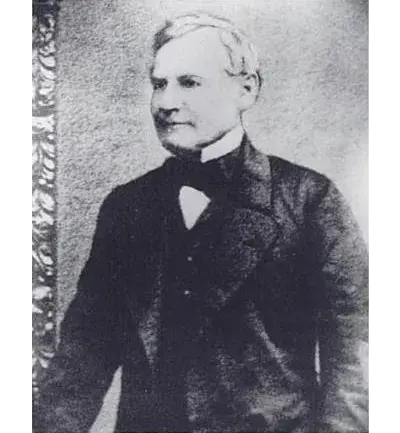
- Born: August 15, 1801
- Died: September 9, 1875
- Nationality:
- Profession:
Admiral Sir Charles Elliot KCB was a British Royal Navy officer, diplomat, and colonial administrator. He became the first Administrator of Hong Kong in 1841 while serving as both Plenipotentiary and Chief Superintendent of British Trade in China. He was a key founder in the establishment of Hong Kong as a British colony.
