China Quotes
Any foreigner or foreigners bringing opium to the Central land, with design to sell the same, the principals shall most assuredly be decapitated, and the accessories strangled.
This attempt to restrict the opium trade led to the First Opium War between England and China. Some historians, and the Chinese at the time, characterized this as a legitimate attempt to rid China of a terribly debilitating vice. The English saw this as a protectionist measure against a trade agreement so that only Chinese businessmen could import and sell opium instead of competing with an open, free market. Some Chinese officials and advisors were motivated by one or both of these reasons, but they never considered at the time, general prohibition of opium. This was not done until the Empress Dowager prohibited the use of opium for all under 60 years of age in 1906, more than 70 years thereafter. See {641732}.
China, Law Prohibiting the Smuggling of Opium into China, ~1838
Sourced by: Eigen's Political and Historical Quotations

Cixi had issued a 10 point edict designed to end opium use in China. One of its most interesting elements was that it only applied to Chinese under the age of 60. She recognized that for those elderly people who are thoroughly addicted to opium, prohibition would be to radical a change and their life expectancy was not very long. At the time, the average lifespan of Chinese was under 50.

Not only were there many opium users in the Philippines, but many of our occupying soldiers were introduced to opium and some became addicted. In that sense, it was like the Vietnam War.

The Chinese authorities wanted to stop the distribution and use of opium, but the British merchants, in one of the more disgraceful episodes of British history, would not stop the trade and actually went to war when the Chinese tried to stop the opium trade. See {625957} for more on this incident and the First Opium War that followed.

He was the first Chinese official to make opium illegal. However, British many merchants were involved in a complicated trade scheme whereby they brought opium to Canton. They paid not attention to the new laws against opium the same as their Chinese customers. Lin Zexu, perceiving Queen Victoria to have powers equivalent to the Chinese Emperor who could do anything in China, He assumed that the Queen could and would control the merchant’s behavior, and before punishing the British merchants, he was putting the Queen on notice. There is no record of what Victoria did, if anything. When Lin Zexu tried to enforce his ban on opium, the British Merchants resisted and the First Opium War broke out between China and Britainin which the Chinese were humiliated and resent to this day. A bronze statue of Lin Zexu was erected in his honor in Chatham Square (Kimlau Square) of New York City's Chinatown.
British merchants and the East India Company made huge profits from the drug trade buying opium in India and selling it to China where it had become immensely popular. But when the Chinese (led by Lin Zexu) tried to ban the import of opium, the British fought two wars with China to force the reopening of the opium trade. At the end of the 20th century, some referred to England and the English Crown as the largest Drug Cartel in history.


It is not clear that Wright actually used these words of the first title or the editors created it. The substance is his and the second line is definitely his. At the time, the average American mistakenly thought that China had a much higher consumption rate.

“Tomans” were a quantity of money.


Rangel said this sarcastically to Lindsay, who wanted to do an experiment legalizing heroin. As Rangel described it, Lindsay said the heroin would be legal only for addicted adults and the experiment would be done only in a couple of places to test it.


Defending the concept of military or police drug interdiction action in foreign countries:

In 1839 opium was the leading commodity internationally traded in the world. The Chinese told the foreign opium merchants to cease trade in China. When they refused the Chinese dumped the opium into the river. English opium merchants demanded that Parliament force the Chinese to make restitution even if it meant war. Parliament agreed and started the Opium War. Gladstone, then an MP was one of the few who took the Chinese side when addressing the traders.


This is a particular fascinating quotation. First because the American liquor trade and Prohibition are paralleled to the opium trade in China. Second, is illustrates that the opium growing problem of the 21st century was virtually the same as that which existed at the beginning of the 20th century. The only difference is that the location moved from China to Afghanistan.

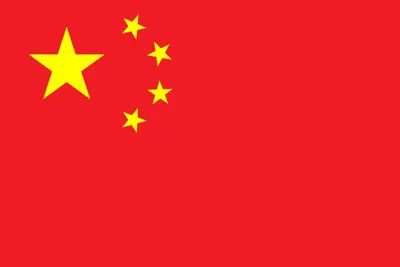
China, officially the People's Republic of China (PRC), is a country in East Asia. It is the world's most populous country, with a population of around 1.4 billion. Covering approximately 9.6 million square kilometers (3.7 million mi2), it is the world's third or fourth-largest country by area. The country is officially divided into 23 provinces, five autonomous regions, four direct-controlled municipalities (Beijing, Tianjin, Shanghai, and Chongqing), and two special administrative regions of Hong Kong and Macau.
