Gene Luen Yang Quotes
The Boxer Rebellion is a war that was fought on Chinese soil in the year 1900. The Europeans, the Japanese and their Chinese Christian allies were on one side. On the other were poor, starving, illiterate Chinese teenagers whom the Europeans referred to as the Boxers.
Yang, Gene Luen. "Gene Luen Yang On 'Boxers & Saints'." Interview. NPR, 30 Aug. 2013.


This threat was shocking to coalition forces and NATO country citizens whose own soldiers were dying to keep the Taliban from taking over Afghanistan again. There were some errors made in calling in airstrikes in the Afghanistan War and collateral civilian casualties occurred. However it was often very difficult to determine if a target held civilians or insurgent Taliban. Very often Taliban sympathizers would invite Taliban into their homes to ambush coalition forces. However, Taliban would also force their way into a home and threaten to kill the family if they did not cooperate. Then they attacked from that home or several at the same time. From the point of view of the coalition forces being shot at, the view was the same. An airstrike would take out the house and no one would ever really know which of those scenarios (or others) actually produced the situation. Ironically, many more Afghanis were killed by the Afghani Taliban than by NATO forces in what was a brutal civil war. See {634912} for the American Ambassador’s reply to Karzai whose administration was totally corrupt and incompetent, making the coalition’s job almost impossible.


The Viet Cong used Cambodia as a sanctuary from American bombing in the Vietnam War. They would transport arms and ammunition without the chance of American interdiction. The King wanted them out, and the American government started secretly bombing the Vietnamese in Cambodia. The Cambodians and the North Vietnamese obviously knew about the bombing and shared it with different intelligence agencies friendly to them. The only people who did not know about the Cambodian bombing were the American public as the administration kept it “secret” for domestic political purposes when the anti-war movement was gaining much support.


American official foreign policy had been officially isolationist—to not get involved in the squabbles and fights of other nations. Angell however pointed out that even before WWII, America had formally been involved in 6 foreign wars and used military incursions on foreign soil on almost 100 occasions.

Germany had just attacked Russia with whom it had a treaty. For a while, Hitler paid little attention to Italy and just gave their “ally” orders and instructions. Italian public opinion was concerned about the same question. See {627973} .


The Empress had earlier decided not to try and suppress the Boxers when they started attacking foreigners--{641838}. But now things had gotten out of hand and many ordinary Chinese people—especially Chinese Christians-- were suffering Boxer abuse. Cixi thought the government had to “ally” with the Boxers in the hope that she could influence directions in the future. This, of course, made her anathema in the West and forever damaged her reputation and legacy in Western history.

The Romanovs were the family of the Russian Czars while the Hapsburgs were the family names of the Emperors of Austria. The Austrian Army Chief of Staff hated the Russians and was constantly urging war against Czarist Russia. The archduke, the heir to the Austrian throne, was constantly arguing against attacking Russia. When Franz Ferdinand was assassinated, it triggered WWI. He was no longer able to have a voice against war, and Austria and Russia were soon at war. At the end of WWI, the Austrian Empire—an ally of Germany was broken up and the Russian Revolution ended the Romanov dynasty. The Archduke was absolutely right.

This quotation is important for two reasons. First, it shows that there was a very hostile environment in Europe well before the assassination of the Archduke of Austria that “triggered” WWI. Second, that the Germans were racist before Hitler ever came on the scene. The Emperor demagogued the issue and took it to new extremes, but the evil was there. To the Germans, the Slavs and Russians were a lesser form of humanity than the Germans. The Austrians were threatening to attack Serbia and Russia. The Austro-Hungarian Empire, ruled many ethnic Slavs, Russians and Muslims—the lower forms of humanity—and long before Hitler, Wilhelm and other leading Germans thought that the Germanic Peoples should rule that part of the world as the lesser “races” were not fit to rule.

1914 was the outbreak of WWI in which all the belligerents had very different interests and reasons for war—even allies on the same side greatly differed as to their motivation for fighting.

The Times regretted that the Germans did not speak to the Austrians more vigorously when they were threatening to attack Serbia who harbored anti-Austro-Hungarian terrorists (see {642085}). What the Times editors did not realize was that the Germans had already made their war plans (see {642092}) and the Serbian issue was just the justification they needed to implement them. So there was no real reason for the Germans to discourage the Austro-Hungarian Empire from its mission to punish Serbia.
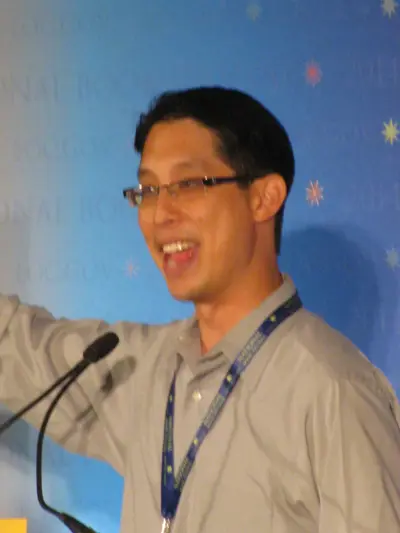
Gene Luen Yang is an American cartoonist. He is a frequent lecturer on the subjects of graphic novels and comics, at comic book conventions and universities, schools, and libraries. In addition, he was the Director of Information Services and taught computer science at Bishop O'Dowd High School in Oakland, California. In 2012, Yang joined the faculty at Hamline University, as a part of the Low-Residency Master of Fine Arts in Writing for Children and Young Adults (MFAC) program. In 2016, the U.S. Library of Congress named him Ambassador for Young People's Literature. That year he became the third graphic novelist, alongside Lauren Redniss, to receive the MacArthur Fellowship.
