Charles I Quotes
The commotions in Ireland were so sudden and so violent that it was hard at first either to discern the cause or apply a remedy to that precipitate rebellion.
Charles I, 1600-1649, King of Great Britain & Ireland, Reflection on the Irish Rebellion of 1641, Quoted in Ernest Hamilton, The Irish Rising Of 1641, With A Detailed Account Of The Massacres
Sourced by: Eigen's Political and Historical Quotations


China had learned to grow new crops from the Americas and their greater ability to produce food led to large population growth which was straining the other national resources and the economy, technology and government could not handle the growth, producing much unhappiness and discontent.


In the history of America

The Empress had earlier decided not to try and suppress the Boxers when they started attacking foreigners--{641838}. But now things had gotten out of hand and many ordinary Chinese people—especially Chinese Christians-- were suffering Boxer abuse. Cixi thought the government had to “ally” with the Boxers in the hope that she could influence directions in the future. This, of course, made her anathema in the West and forever damaged her reputation and legacy in Western history.


This was a rebellion of the Irish natives of Ulster against the English Protestants land owners and the English settlers. In addition to the desire for liberty as this proclamation formally states, the rebels were mostly Roman Catholics whose religion had been almost destroyed the thought by the English component of the Protestant Reformation. 12 years after this proclamation, he was executed.

The Roman Catholic Defender Organization had about 300 thousand volunteers, and Belfast was the central location of the Defender leaders.


He was addressing the Conservatives of Ulster, the Northern Ireland province that was the center of the Orangemen movement of Irish Protestants who were fighting to retain 'Protestant Ascendency' -- which was the social, political and cultural domination of the Protestants (the minority) over the Catholics (the majority). This was best achieved by keeping Ireland a part of Great Britain as opposed to having Ireland as a separate, independent country.


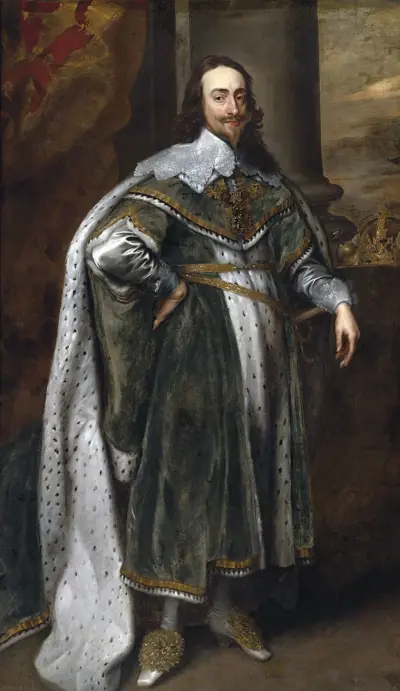
Charles I was King of England, Scotland, and Ireland from 27 March 1625 until his execution in 1649. He was born into the House of Stuart as the second son of King James VI of Scotland, but after his father inherited the English throne in 1603 (as James I), he moved to England, where he spent much of the rest of his life. He became heir apparent to the three kingdoms of England, Scotland, and Ireland in 1612 on the death of his elder brother Henry Frederick, Prince of Wales. An unsuccessful and unpopular attempt to marry him to the Spanish Habsburg princess Maria Anna culminated in an eight-month visit to Spain in 1623 that demonstrated the futility of the marriage negotiations. Two years later, he married the Bourbon princess Henrietta Maria of France.
