Horatio Herbert Kitchener Quotes
The Boers are not like the Sudanese who stood up for a fair fight, they are always running away on their little ponies.
The Boer farmers of South Africa invented commando tactics where they would surprise the British, hit and run. It was very effective. Although they could not win the war that way, the prolonged the battle against an overwhelmingly superior force setting an example of asymmetric warfare that lasted hundreds of years. The Sudanese to whom the General referred were the Islamic religious insurgents whom he had soundly defeated the year before in the Sudan. With their religious fervor they attacked en mass and although very courageous were not very effective.
Horatio Herbert Kitchener, 1850-1916, British General & Secretary of War, Complaint about the Boers in the Boer War in South Africa, 1899
Sourced by: Eigen's Political and Historical Quotations

The White Africaners were attacking the Blacks to force them off their land so the Afrkaners could take over. The country was under British rule and the unarmed Blacks were being slaughtered by the Afrikaners who were British Subjects. Eventually the Boer War set the English against the Afrikaners. See {583902} for a related quotation.


White Africaners were slaughtering Blacks to appropriate their land in violation of English law. See {583901} for a related quotation.
When the British first colonized South Africa, the area they used was akmost uninhabited or very sparcely so. However, some Black tribes (including the Zulus) were moving from the north and themselves were colonizing or annexing the areas to their kingdom. The British were most interested in Trading so did not have large land asperations. The Dutch white Boer Africanners, in contrast, wanted to farm the lands and use the range for their cattle. They wanted the land. The English policy was that there would be friendly relations with the Black tribes surrounding their Cape Colony and no one should take their land. However the Boers started attacking the Black areas and seizing their farms and villages. At first, the English assumed that the Blacks would easily be able to ward off the invasion as the Afrikanners had no professional troops like the British. However, the neighboring tribes were not very warlike or good fighters. They were being overrun by the Zulus coming from the North and the Boers from the South. The British Government had a real problem in that they would have to have British soldiers fight the white Afrikanners if they wanted to stop the illegal white invasions. This was the root of the Boer War where the British would be fully at war with the Africanners.
When the British first colonized South Africa, the area they used was not inhabited or very sparcely so. However, some Black tribes (including the Zulus) were moving from the north and themselves were colonizing or annexing the sparcely populated areas to their kingdom. The British were most interested in Trading so did not have large land asperations. The Dutch white Boer Africanners, in contrast, wanted to farm the lands and use the range for their cattle. They wanted the land. The English policy was that there would be friendly relations with the Black tribes surrounding their Cape Colony and no one should take their land. However the Boers started attacking the Black areas and seizing their farms and villages. At first, the English assumed that the Blacks would easily be able to ward off the invasion as the Afrikanners had no professional troops like the British. However, the neighboring native tribes were not very warlike or good fighters. They were being overrun by the Zulus coming from the North and the Boers from the South. The British Government had a real problem in that they would have to have British soldiers fight the white Afrikanners if they wanted to stop the illegal white invasions. This was the root of the Boer War where the British would be fully at war with the Africanners.
There was continuing tension between England, the Colonial Governors of South Africa and the Boers. Immigrant settlers to South Africa from Holland. The Boers were very uneducated and not steeped in democratic government. They wanted to enslave and sieze the land of the Black residents. Under English law, the Blacks were also English subjects. The Boers insisted that any interference in their persecution and enslavery of the Blacks was oppression just as the Southern American Whites saw Reconstruction defense of the Blacks as oppression to them. The classic question is: “Is it oppression to stop people from opressiong others?”


The whites had come to South Africa by sea—English and Dutch. Many settled at the Southern Shore—Capetown area. The Dutch Boers however were more interested in farming and commerce and moved North taking land from the natives who sparsely populated the interior of the land. At the same time the aggressive and sophisticated Zulus came from the North. Like the Boers, they were after land and seized it from the natives. It was inevitable that the two conquering, land grabbing groups would run into each other. The English had had a number of wars with the Zulus, but the English were not real competitors with the Zulu for land. So when England annexed the Tranvaal area, the Zulus were pleased as the English would control the Boers and the Zulus did not have to be contesting every bit of ground. However, the Boers and the English split over the English restricting the Boers from seizing native and Zulu land (which the Zulus had seized just like the Boers). The Boer War resulted, and to this day the Zulus and the native Black tribes are more comfortable with the South Africans of English extraction than those who are in the Boer community.


The Boers were lower class, uneducated, farmers from Holland who came to South Africa before the English did. They were at the bottom of the Dutch socioeconomic ladder. Unlike the English who were interest in establishing a trading colony, the Boers just wanted to own and farm the land and use blacks as slave or cheap labor. The Dutch Government and Trading companies lost interest in South Africa as there were much more profitable parts of the world, and they felt no obligation to the Boers whom they were glad to be rid of. So the Boers found themselves having to follow the British laws and rules of the British Colonial Office. Slavery was outlawed, and Blacks could be educated and become citizens under British law. They could own land, and contest the right of the Boers who had settled in some uninhabited land and some that was owned by Black tribes. The Blacks outnumbered the whites in general and the Boers, and there were educated Blacks who “outclassed” the still relatively uneducated Boers. So the Boers, fighting for their “way of life” set up their own area in Southern Africa and claimed independence. But Blacks claimed that it was their land and looked to the British to exercise English law. The Boer war ensued. Although the Boers lost the war, the bred at a much faster rate than the English, many of whom did not even have their families in South Africa. By the end of WWII, the Boer white majority controlled the government and kept the majority Blacks from voting and having full citizenship rights. They dominated Apartheid South Africa until the Black Revolutionists obtained control and although Black and white relations are better in South Africa than most countries, the extemeist Boers and most militant Blacks are in political, but not violent, conflict. Churchill and the British have always perceived themselves as being caught in the middle between the Boers and the Blacks.
The Boers had just a few years before lost their war with the British who were then in control of South Africa. However, the British did not treat the Boers harshly in defeat and most Boers were at the time farmers and land owners who were a major force in democratic South Africa and had much invested in the nation. Others were still resentful of the British. The Boers sided with the British and fought the Germans who had troops and colonies in Africa. Like the Irish, culturally, they were always up for a good fight.

Washington was describing the British strategy at the start of the war. The expectation was not only that of the British high command in America but was the prevailing expectation in the Court, Parliament, and the media in London. British critics of the military strategy point to this as a key reason the British lost the war in the end. Instead of waiting for the American troops to fall apart during the hard winter and gain a cheap and easy victory, the critics argue that the British should have initiated full scale attacks on the weakened and ill provisioned American soldiers.

The main oppressors were not the British, but the white Afrikaners who had come to South Africa generations ago—at the same time as the majority of the Blacks did.

This quotation while difficult for us to fathom today, illustrates a very conservative 18th century view of punishment and law enforcement. The South African high court was very distressed that torture was to be ended. To them, and many others throughout the so called “civilized” European cultures of the time, capital punishment was not a very good deterrent—even for slaves. The execution was usually accompanied by horrible torture and cruelty before death. Slavery was such a horrible life, and the White colonists knew it, that death could be welcome (many slaves had committed suicide). So the suffering at the execution was to serve as a further deterrent. In reality it did not, any more than capital punishment did in the 20th century, but by the logic of the culture and the times, torture was needed as well as capital punishment.

He was leading the Gordon Highlanders of the British Army against the Boers during the Boer War. He was seriously wounded and could not go on himself with a charge he had ordered, However, waifing his sword he made this famous qutation. Particualrly noteorthy is the derrogatory terms which he used to describe the enemy--the Boers of South Africa. In many wars and cultures, one or more of the combatants, in order to overcome the avarage soldier's reluctance to kill an enemy, characterizes them as less than human. In this case, vermin, who were to be exterminated. There were two predominant groups of whites who came to South Africa, the English who were generally well-educated and were interested in trading with the exhisting inhabitants and investing in businesses using mostly native labot and the Boers. The latter were of Dutch and German origin, poor farmers with little or no land in the home country and little education. Their interest was to create a nation where they could own land to farm. And the lest expensive way for them to increase their farmland was to sieze it from the native Blacks and who were the major forces behind the racial discrimination which became apartheid. The British contolled the government and sought stability and as in most of the British Empire, they wanted English law to prevail including the rights of the Black natives. The Boers had left Europe for good and would thrive or not in Southern Africa. Proportiopnately, the English might have a career in South Africa or serve there for a few years. They were Englishmen in a foreign country. The Boers saw themselves as citizens of Southern Africa who were fighting the native Blacks for control of the land. The English legal system would not allow any of the land seizures and political discrimination that the Boers saw as existential for their survival in Africa. Soon, the Boers took more and more of the law into their own hands and saw English rule and dmination as inimical to their interests in Africa and they tried to create their own independent states in Southern Africa. That was the essense of the Boer Wars. Dick-Cunyngham was awarded the Victoria Cross, the highest military decoration of Great Britain, for his exploits in the Afghan War.


This was published after he had been murdered by the Afrikaner White South African authorities. The text illustrates his pointed criticisms that had so embarrassed and enraged the apartheid government.
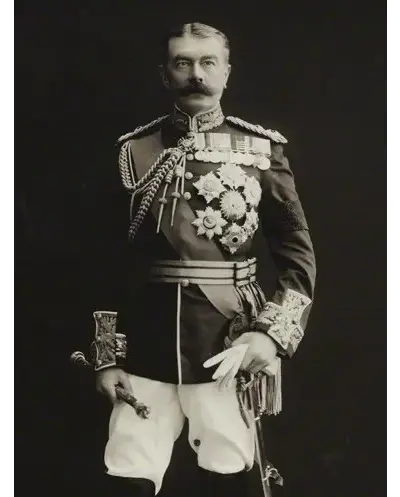
Horatio Herbert Kitchener, 1st Earl Kitchener KG, KP, GCB, OM, GCSI, GCMG, GCIE, PC was an Irish-born senior British Army officer and colonial administrator. Kitchener won notoriety for his imperial campaigns, especially his scorched earth policy against the Boers, his expansion of Lord Roberts' internment camps during the Second Boer War and his central role in the early part of the First World War.
