Ahmed Kathrada Quotes
Unlike other colonial countries, our oppressors were not foreigners. They were South Africans.
The main oppressors were not the British, but the white Afrikaners who had come to South Africa generations ago—at the same time as the majority of the Blacks did.
Ahmed Kathrada, South African Freedom Fighter Member of Parliament, ANC, Close friend and advisor of Nelson Mandella
Sourced by: Eigen's Political and Historical Quotations


This was published after he had been murdered by the Afrikaner White South African authorities. The text illustrates his pointed criticisms that had so embarrassed and enraged the apartheid government.


The Boers were lower class, uneducated, farmers from Holland who came to South Africa before the English did. They were at the bottom of the Dutch socioeconomic ladder. Unlike the English who were interest in establishing a trading colony, the Boers just wanted to own and farm the land and use blacks as slave or cheap labor. The Dutch Government and Trading companies lost interest in South Africa as there were much more profitable parts of the world, and they felt no obligation to the Boers whom they were glad to be rid of. So the Boers found themselves having to follow the British laws and rules of the British Colonial Office. Slavery was outlawed, and Blacks could be educated and become citizens under British law. They could own land, and contest the right of the Boers who had settled in some uninhabited land and some that was owned by Black tribes. The Blacks outnumbered the whites in general and the Boers, and there were educated Blacks who “outclassed” the still relatively uneducated Boers. So the Boers, fighting for their “way of life” set up their own area in Southern Africa and claimed independence. But Blacks claimed that it was their land and looked to the British to exercise English law. The Boer war ensued. Although the Boers lost the war, the bred at a much faster rate than the English, many of whom did not even have their families in South Africa. By the end of WWII, the Boer white majority controlled the government and kept the majority Blacks from voting and having full citizenship rights. They dominated Apartheid South Africa until the Black Revolutionists obtained control and although Black and white relations are better in South Africa than most countries, the extemeist Boers and most militant Blacks are in political, but not violent, conflict. Churchill and the British have always perceived themselves as being caught in the middle between the Boers and the Blacks.


Black Natives with property had voted and served on juries. This was abhorrent to the Afrikaners whom Rhodes wanted as political allies so he switched his position on native suffrage.


South Africa was then ruled by a white separatist, apartheid government.

Bismarck was opposed to any German colonial adventures but they were very popular with the electorate. Eventually he changed his policy and Germany became heavily engaged in Africa and elsewhere. The actual German word used by the Prince was “schwindel” whose connotation implies more of a deliberate deception.


Why Western nations have no right to press African countries to accept democratic reforms:
No one at the time knew the answer to the question but we do today. The colonial whites brought small pox with them to the new world. The whites had many generations of building immunity to small pox so that only a small percentage of whites who contracted the disease would die. The Indians, however, had never before been in contact with small pox and their immune. Their systems had not had the time to evolve resistance to the disease. The same thing occurred with the Spanish conquistadors and the native people in Central and South America only the percentage of death was much higher than the Indians of North America—possibly due to more sexual and other interpersonal contact, possibly climate, and possibly the North American Indians were better nourished and generally healthier to better withstand the disease which wiped out the vast majority of the Indians of Central and South America.
The graphic is the famous Benjamin West painting of the treaty signing between the Lenape Indians and William Penn in 1686. Tenoughan was one of the Indians depicted at the signing but we do not know which one.


The Boer farmers of South Africa invented commando tactics where they would surprise the British, hit and run. It was very effective. Although they could not win the war that way, the prolonged the battle against an overwhelmingly superior force setting an example of asymmetric warfare that lasted hundreds of years. The Sudanese to whom the General referred were the Islamic religious insurgents whom he had soundly defeated the year before in the Sudan. With their religious fervor they attacked en mass and although very courageous were not very effective.
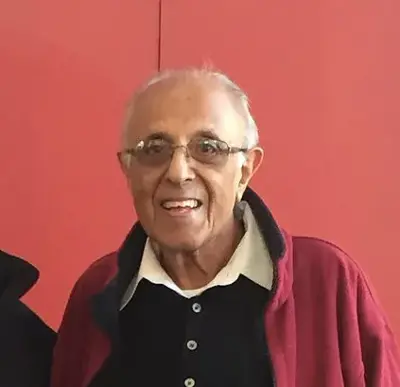
Ahmed Mohamed Kathrada, sometimes known by the nickname "Kathy", was a South African politician and anti-apartheid activist.
