Jacob Zuma Quotes
Jan van Riebeeck's arrival in Cape Town was the beginning of all South Africa's problems.
Zuma, Jacob. Address at the ANC 103rd Anniversary Rally. African National Congress, 10 Jan. 2015.


Description of the Dutch Reformed Church in South Africa in the 1730’s
The upper socioeconomic classes are generally less rascist then the lower classes in the United States as well as England and South Africa. The counter argument given by the lower classes are that the upper classes have the money to insulate themselves from the negative aspects of desegregation and the lower class whites have to bear the brunt of desegregation. However, in South Africa, the English of all socioeconomic classes were far less enthusiastic about apartheid then were the Boers. The latter were farmers who wanted the land; the former were traders who could succeed even of the Blacks had their land and were given political rights.


The White Boers viewed themselves as superior to the Blacks and the Blacks and Whites competed for land. In an early form of ethnic cleansing, the Boers attacked the undefended women and children of the Black tribes. The authorities opposed these atrocities but did not have any way of enforcing their orders.

DeKlerk had just become president of South Africa which was enmeshed in a brutal system of apartheid—racial separation with the 10% white population controlling the 90% black majority. The black political parties were illegal and net even recognized and there was no negotiation at all. The country was a world pariah, boycotted by many in the world including much of the Untied States. When De Klerk became president no one had any idea that he would make such a radical break with the past. However, he announced the lifting of the ban on the Black political parties, and the release of Nelson Mandela who had served 26 years in prison, and then made this famous statement which led to the modern state of South Africa. DeKlerk and Mandela shared the Nobel peace prize for their remarkable achievement.

The Boer farmers of South Africa invented commando tactics where they would surprise the British, hit and run. It was very effective. Although they could not win the war that way, the prolonged the battle against an overwhelmingly superior force setting an example of asymmetric warfare that lasted hundreds of years. The Sudanese to whom the General referred were the Islamic religious insurgents whom he had soundly defeated the year before in the Sudan. With their religious fervor they attacked en mass and although very courageous were not very effective.


The whites had come to South Africa by sea—English and Dutch. Many settled at the Southern Shore—Capetown area. The Dutch Boers however were more interested in farming and commerce and moved North taking land from the natives who sparsely populated the interior of the land. At the same time the aggressive and sophisticated Zulus came from the North. Like the Boers, they were after land and seized it from the natives. It was inevitable that the two conquering, land grabbing groups would run into each other. The English had had a number of wars with the Zulus, but the English were not real competitors with the Zulu for land. So when England annexed the Tranvaal area, the Zulus were pleased as the English would control the Boers and the Zulus did not have to be contesting every bit of ground. However, the Boers and the English split over the English restricting the Boers from seizing native and Zulu land (which the Zulus had seized just like the Boers). The Boer War resulted, and to this day the Zulus and the native Black tribes are more comfortable with the South Africans of English extraction than those who are in the Boer community.


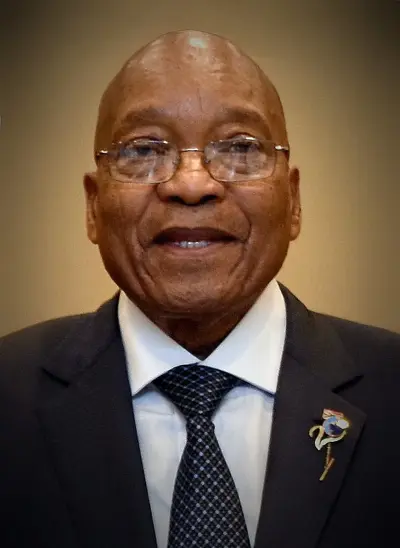
Jacob Gedleyihlekisa Zuma is a South African politician who served as the fourth democratically elected President of South Africa from the 2009 general election until his resignation on 14 February 2018. Zuma is also referred to by his initials JZ (pronounced jay-zee) and his clan name Msholozi.
