Jan Christiaan Smuts Quotes
When I consider the political future of the Natives in South Africa I must say that I look into shadows and darkness, and then I feel inclined to shift the intolerable burden of solving that sphinx problem to the ampler shoulders and the stronger brains of the future.
Jan Christiaan Smuts, 1870-1950, Prime Minister, South Africa, Quoted in Frank Welsh, A History of south Africa
Sourced by: Eigen's Political and Historical Quotations


The Boers were lower class, uneducated, farmers from Holland who came to South Africa before the English did. They were at the bottom of the Dutch socioeconomic ladder. Unlike the English who were interest in establishing a trading colony, the Boers just wanted to own and farm the land and use blacks as slave or cheap labor. The Dutch Government and Trading companies lost interest in South Africa as there were much more profitable parts of the world, and they felt no obligation to the Boers whom they were glad to be rid of. So the Boers found themselves having to follow the British laws and rules of the British Colonial Office. Slavery was outlawed, and Blacks could be educated and become citizens under British law. They could own land, and contest the right of the Boers who had settled in some uninhabited land and some that was owned by Black tribes. The Blacks outnumbered the whites in general and the Boers, and there were educated Blacks who “outclassed” the still relatively uneducated Boers. So the Boers, fighting for their “way of life” set up their own area in Southern Africa and claimed independence. But Blacks claimed that it was their land and looked to the British to exercise English law. The Boer war ensued. Although the Boers lost the war, the bred at a much faster rate than the English, many of whom did not even have their families in South Africa. By the end of WWII, the Boer white majority controlled the government and kept the majority Blacks from voting and having full citizenship rights. They dominated Apartheid South Africa until the Black Revolutionists obtained control and although Black and white relations are better in South Africa than most countries, the extemeist Boers and most militant Blacks are in political, but not violent, conflict. Churchill and the British have always perceived themselves as being caught in the middle between the Boers and the Blacks.

The White Africaners were attacking the Blacks to force them off their land so the Afrkaners could take over. The country was under British rule and the unarmed Blacks were being slaughtered by the Afrikaners who were British Subjects. Eventually the Boer War set the English against the Afrikaners. See {583902} for a related quotation.


Description of the Dutch Reformed Church in South Africa in the 1730’s

The ANC is the African National Congress, the majority political party of South Africa. The Communists of the 20th century espoused the cause of Blacks throughout the world and their struggle for equal rights as a method of recruiting people to their cause. Racists, then as a political ploy, began to refer to all those advocating Black equality as communists. This carried over even after apartheid had ended in South Africa. The same technique was used by American, racist, segregationists to label all those who advocated desegregation as communists, because the Communist Party advocated an end to segregation.


The Iroquois were among the most sophisticated of the North American Indian Tribes. They also were highly assimilated into the American society. In the next decades, they would switch their political position when New York State provided better legal guarantees for Iroquois land than the Federal Government. By the end of the 20th Century, led by the Iroquois, the Indian residents of New York State had the same level of earnings as the white man—and that was with NO INDIAN GAMING.


One of the driving forces to employ the Negro was the lower wages that they could be paid compared to white workers.


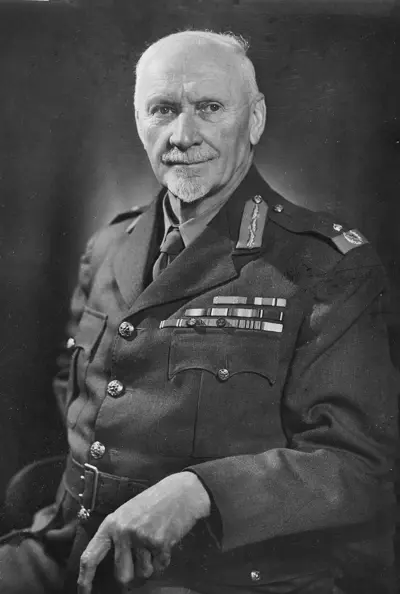
Field Marshal Jan Christiaan Smuts PC, OM, CH, DTD, ED, KC, FRS (24 May 1870 – 11 September 1950) was a South African statesman, military leader, and philosopher. In addition to holding various cabinet posts, he served as prime minister of the Union of South Africa from 1919 until 1924 and from 1939 until 1948. Although Smuts had originally advocated racial segregation and opposed the enfranchisement of black Africans, his views changed and he backed the Fagan Commission's findings that complete segregation was impossible. Smuts subsequently lost the 1948 election to hard-line Afrikaners who created apartheid. He continued to work for reconciliation and emphasized the British Commonwealth’s positive role until his death in 1950.
