Henry Louis Gates Jr. Quotes
The biggest surprise for me, without a doubt, was that the first black people who came to the United States weren't the 20 who arrived in Jamestown in 1619. All of us had been taught that. The first African came to Florida in 1513. And the huge shock is we know his name, Juan Garrido, and that he wasn't a slave. He was free!
Gates, Henry Louis, Jr. Interview regarding The African Americans: Many Rivers to Cross. PBS, 2013.


Most free Blacks were not enthusiastic about the possibility of colonization. Those that were, wanted a colony in the Western part of America—not Africa or the Caribbean. See {613811}.

The perception of the necessity of slavery was evident very early in the South.


The early laws regarding slaves were more protective in earlier Colonial America than they were after independence. In Colonial America all local laws and the enforcement thereof were subject to the government and king of England. When the Constitution was passed with the understanding that Slavery issue was not to be even discussed in Congress, there was NO OUTSIDE ENTITY to check any laws or lack of laws or the enforcement thereof. The Southern States were a law unto themselves on the slavery issue and the system became even more brutal and cruel with no moderating force. When such a force seemed close with the Republican 1860 victory, the South seceded. Then war was the moderating force.

Since a slave was not a person, he/she could not accept any gifts or own any property. They were themselves property. The Greeks, the Romans, the ancient Germans, the Poles, with the Portuguese, the Spanish and the French had provided, both by law and by custom, for the possession of property by the slave, which could, not be seized by his master. This is another sense in which American slavery was even worse than most slavery had been.

American socialists and communists were very vocal about the terrible racial discrimination that existed in the United States until the Civil Rights and Voting Rights Acts were passed in the 1960s. In 1933 describing Black African societies as anything but primitive was rare regardless of the historical facts. When communists and socialists too these anti-racist positions, the racist Southerners then conflated this position and accused all opponents of segregation of being socialists and communists. This tactic actually worked quite well and for many years discouraged many politicians or others from speaking out against discrimination lest they be accused of being a communist or socialist.

Jefferson’s views, actions and inactions regarding slavery are very complex and contradictory. This quotation is one example of the many statements and activities to end slavery. Yet he never freed his own slaves (as did George Washington) and he fathered a child by one of his slaves with no attempt at freeing even her and the child. The Andrew Dickson White article is one of the first serious studies of the Jefferson contradictions regarding slavery.

This is a remarkable analysis given the prejudices of the time. Second to Benjamin Franklin, Rush was the only other real scientist of the American colonial era.

She was a great and powerful orator using a combination of preaching, story telling, and rhetoric.
loyalty oath to the King of England His “Ethiopian Regiment” was the first Black military regiment in North America. Soon after, Rhode Island organized a Black military unit—see {613949}.


His fear was well founded. That is exactly what the British tried to do.


This law required the treatment of Blacks as whites were then treated with respect to indentured servitude—a limit of 10 years after which the person would be free. However, this law was poorly enforced. The “General Court” was the name for the legislature of the Rhode Island colony.
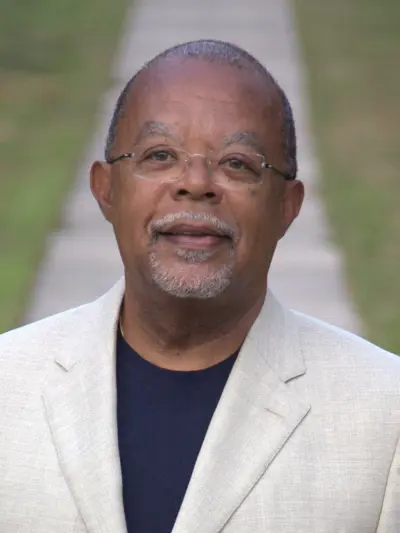
Henry Louis "Skip" Gates Jr. is an American literary critic, professor, historian, filmmaker, and public intellectual who serves as the Alphonse Fletcher University Professor and Director of the Hutchins Center for African and African American Research at Harvard University. He rediscovered the earliest African-American novels, long forgotten, and has published extensively on appreciating African-American literature as part of the Western canon.
