Sojourner Truth Quotes
… that's what I do. The Lord has made me a sign unto this nation, an' I go round a'testifyin', an' showin' on 'em their sins agin my people
She was a great and powerful orator using a combination of preaching, story telling, and rhetoric.
Sojourner Truth, ~1797–1883, [Isabella Baumfree], Orator, Preacher,Feminist, Abolitionist and Women's Rights Activist, Statement to Harriet Beecher Stowe when they first met, 1863, Quoted in Harriet Beecher Stowe,, “Sojourner Truth, The Libyan Sibyl”, The Atlantic Monthly, April 1863
Sourced by: Eigen's Political and Historical Quotations


He was not only an atheist himself, but he was a major opponent of organized religion which he regarded as one or the major initiators and drivers of slavery, segregation and discrimination. For this reason he was critical of Martin Luther King—{583307}. His irreligiosity had always prevented his gaining much support from his fellow African Americans even though a great writer like H. L. Menken considered Schuyler, "the best writer in America".

Jackson was a civil rights worker who was murdered by white racists trying to intimidate Blacks from their desegregation efforts. King broadened the moral responsibility to those who did not oppose the segregationist system prevalent in the South.

Billy Sunday was the most famous preacher of the day. Unlike the vast majority of white preachers, he not only preached to black audiences but exuded an atmosphere of friendliness and comfort around Blacks that amazed most. Most Black leaders thought Sunday was very good for race relations, but there were some clergy like Grimke who criticized him. Sunday was castigated by many racist whites for preaching to Blacks, but he did not go as far as to condemn or preach against racism and the discrimination of the day and he would not preach to an integrated audience. Grimke, in contrast, preached to an integrated congregation and was one of the few white clergy who did in the South. (Washington DC was then a southern, segregated city.) See {585415} for another critique of Sunday.


Johnson was then Vice President.

Booth was the younger son of a very prominent Northern family of actors. His older brother was considered the greatest American actor, and the rest of the family were abolitionists and vehement Union supporters. They found young John’s views reprehensible.

Jones, like many religious leaders at the time was an inveterate racist. He not only branded anyone advocating against segregation as “in opposition to God”. Jones also solicited the support of the Ku Klux Klan, and like many clerics would never condemn the KKK beatings, tortures, lynchings and murders.

It was not until this publication that people who suggested that discrimination and lack of education and opportunity might have something to do with the problem Blacks faced in society were regarded by many Americans as anything but left wing intellectuals.


Christian had just briefed the President about the riots in many cities after the assassination of Martin Luther King. Christian had expressed surprise that the Blacks were so violent.


Like so many of his other predictions about America, he saw that the evil of racism and slavery was bound to cause the nation to implode. And this was decades before the Civil War, but the problem was inescapable to a critical observer like de Tocqueville.


Billy Sunday was the most famous preacher of the day. Unlike the vast majority of white preachers, he not only preached to black audiences but exuded an atmosphere of friendliness and comfort around Blacks that amazed most. Most Black leaders thought Sunday was very good for race relations, but there were some critics like Grimke. Sunday was castigated by many racist whites for preaching to Blacks, but he did not go as far as to condemn or preach against racism and the discrimination of the day and he would not preach to an integrated audience. See {585416} for another critique.


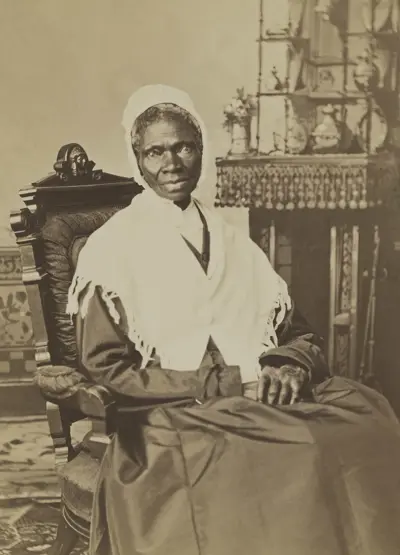
Sojourner Truth was an American abolitionist and women's rights activist. Truth was born into slavery in Swartekill, New York, but escaped with her infant daughter to freedom in 1826. After going to court to recover her son in 1828, she became the first black woman to win such a case against a white man.
