Che Guevara Quotes
The basic feature of the Congo People’s Liberation Army was that it was a parasitic army…and demanded provisions and labor from the population, sometimes with extreme harshness. The peasants were at the mercy of groups who came on leave from the camps to demand extra food.
He was a radical revolutionary who immediately saw the fundamental weakness in the so-called People’s Army of the Congo. Having observed the enmity amongst the peasants to the Red Army in the Russian Revolution, Mao Tse Tung developed the model revolutionary army in China where soldiers were not only forbidden from harassing or stealing from the peasants, but were ordered to provide labor and help with their farm work and the like. Che and Fidel Castro had a similarly popular army in the mountains of Cuba, but in Congo Che found a corrupt and abusive army calling itself a people’s army but exploiting and abusing the people—unfortunately a pattern in most sub-Saharan African armies.
Ernesto G. “Che” Guevara, 1928-1967, Argentine Revolutionary, The African Dream: The Diaries of the Revolutionary War in the Congo
Sourced by: Eigen's Political and Historical Quotations


The moral imperative of submission rather than allowing a war started by the aggressor, logical for Pizarro and Church leaders of the time, is the same logic of aggressors from Adolf Hitler to Saddam Hussein.

In Russia at the time, serfs were little better off than slaves. Not only did they have to obey their landlords in all things, but any who advocated disobedience on their part were beaten and sent to Siberia. Exile to the Siberian Gulags was not an invention of the Communists of the 20th century although they used that punishment in unprecedented numbers. It was used by the Czars and the Empress.

Referring to the Arawak natives he found when he landed in the "new world—San Salvador:"

Southern secession and the Civil War This is one of the major quotations with which historians rebut the revisionist view that the Civil War was about States’ Rights or other economic factors.
As a result of the programs and philosophy he expounded, Leontiev joyously predicted:

The description is of the Mexican conquest of Arizona and the Indian revolt. See {612107}

He was expelled from Parliament for such.


The Roman Catholic Defender Organization had about 300 thousand volunteers, and Belfast was the central location of the Defender leaders.


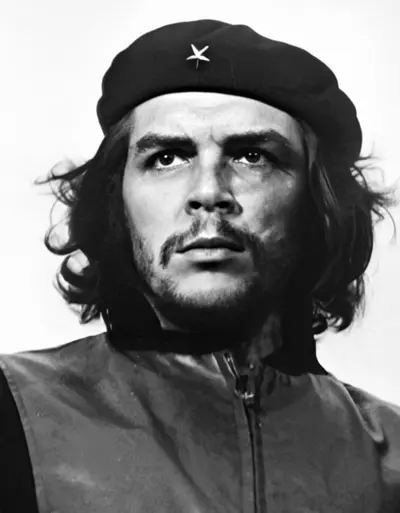
Ernesto "Che" Guevara was an Argentine Marxist revolutionary, physician, author, guerrilla leader, diplomat, and military theorist. A major figure of the Cuban Revolution, his stylized visage has become a ubiquitous countercultural symbol of rebellion and global insignia in popular culture.
