Herbert Henry Asquith Quotes
The Army will hear nothing of politics from me, and in return I expect to hear nothing of politics from the Army.
1st Earl of Oxford
Herbert Henry Asquith, 1858-1928, Prime Minister of England, Speech, April 4, 1914
Sourced by: Eigen's Political and Historical Quotations


Miles, a hero of the Indian Campaigns (although he led the atrocities at the massacre at Wounded Knee) and then the leading military figure in America was an opponent of the policies of the new young President and had political aspirations of his own for the Presidency. Miles’ opinions were printed in the press. He maintained that he was not speaking as the Commanding General of the Army but personally as a citizen. The President surprised almost all by publicly scolding and reprimanding Miles when he next came to the White House. Five days later Roosevelt made the reprimand official, effectively ending Miles career. The issue of when senior military officers can criticize the administration has been debated ever since. Roosevelt was also a war hero himself, and although the military was shocked by such “savage” treatment of a senior officer, the President had public opinion on his side. Every decade or so there is a military official who does not care for the administration’s policies and expresses himself publicly. President Truman’s firing to General Douglas Macarthur was the most dramatic case, but Truman was well aware of the Miles and TR precedent.

History is replete with instances of military coups. In the final analysis, in every country at all times, there is no force in a society that could cope with a military which decides to act on its own. The Founding Fathers were very conscious of this reality and history, hence the firm civilian control of the military in America.


In Japan at that time there was no civilian control of the military and the military resented any attempt at the civilian government to influence military affairs in any way whatsoever. At the same time the military often tried to influence the politics of civilian government. The Emperor made this feeble effort to inhibit that, but as World War II proved, he had not tried very hard to prevent the military from dominating the country.


At the height of the Watergate scandal, the president wanted special prosecutor Archibald Cox fired, because Cox was developing evidence against the president. The attorney general, Elliot Richardson, refused to fire Cox and resigned. The chief of staff then turned to the deputy attorney general, William Ruckelshaus, who also refused and resigned. Finally, the Solicitor General, next in line of authority, agreed to fire the special prosecutor. These events happened on a Saturday night and became known as the “Saturday Night Massacre”. This event persuaded most Americans that Nixon was guilty of felonies and was desperately trying to cover things up. Congress would include “obstruction of justice” in it’s list of crimes that they would have impeached Nixon for had he not resigned.


Few high ranking officers, or officials of civilian organizations, take the responsibility for subordinates not understanding instructions.

The President told McNamara that if the administration does not send the troops the Generals want, they will be blamed for any military failures that occur. If they do send all the troops that the Joint Chiefs wanted, they would be going far beyond the limits that the Defense Secretary recommended and the President would have preferred. JBJ felt he really had no political choice. He authorized the wanted troops further escalating the war. See his special assistant’s question about that decision in {617151}.


There is frequently a disagreement between the military and civilian leaders just as there are disagreements among most political personnel. Hawks, and people who have had experience in the military tend to think that military advice on military matters should be determinative with the President and Congress. Others tend to believe that military advice should be considered, but if it were always adhered to, there would be no point in having civilian control over the military. See {639667} for an example of when military leadership advice prevailed and it was a mistake.


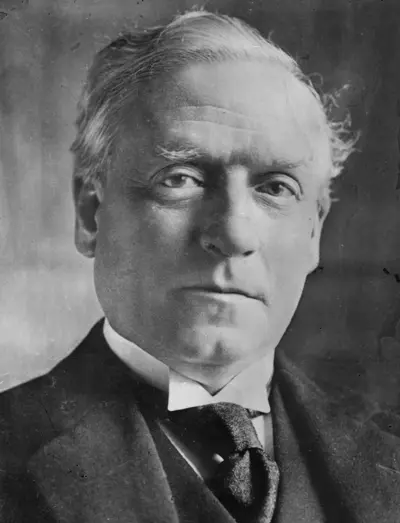
Herbert Henry Asquith, 1st Earl of Oxford and Asquith, KG, PC, KC, FRS was Prime Minister of the United Kingdom from 1908 to 1916. He was the last prime minister to lead a majority Liberal government, and he played a central role in the design and passage of major liberal legislation and a reduction of the power of the House of Lords. In August 1914, Asquith took Great Britain and the British Empire into the First World War. In 1915, his government was vigorously attacked for a shortage of munitions and the failure of the Gallipoli Campaign. He formed a coalition government with other parties, but failed to satisfy critics. As a result, he was forced to resign in December 1916, and he never regained power.
