Robert Trout Quotes
The American Revolution was, in fact, a battle against the philosophy of Locke and the English utilitarians.
Trout, Robert. "Life, Liberty, and the Pursuit of Happiness: How the Natural Law Concept of G.W. Leibniz Inspired America's Founding Fathers." Fidelio, vol. 6, no. 1, Spring 1997, pp. 27-71.


The simplistic view that the American colonists were patriots and the British were the colonizers against whom the colonists revolted is not really accurate. The American colonists were polarized into patriots and loyalists. The Loyalist Americans ranged from many of those merchants whose business depended upon England, those whose family were still in England, those whose religion made them loyal to the Church of England, slaves who would be free under British law, Americans who had strong cultural and intellectual ties to England and those Americans who were great believers in monarchy and whose honor required that they fulfill the oath that they had taken to the King of England. Some of the worst atrocities of the American Revolution occurred in the battles of these Americans against each other. See {82105} for more on this point.


Jefferson wrote more on more subjects than any other president in American history. For exa,ple, he wrote more letters during his presidency than any other president including the modern ones who had word processors and large staffs. So Jefferson wrote on almost every subject and expressed so many ideas that Lincoln could make this statement.


Fox was one of the opposition leaders who were opposed to the heavy handed policies that the British King and Government had used.

document he wrote. He and Benjamin Franklin were sent to France to try and raise support for the revolution in troops, war material, or loans. Franklin was much more popular in France and Adams included Holland where he tried to show the Dutch how similar the histories and traditions of the two countries were. He succeeded in obtaining loans that were needed badly.


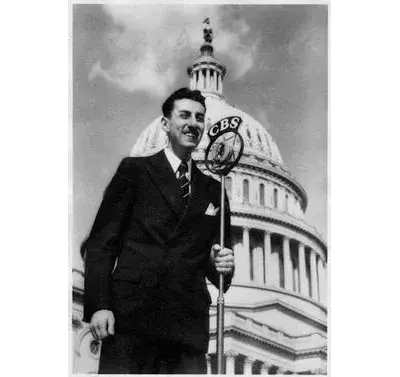
Robert Trout was an American broadcast news reporter, best remembered for his radio work before and during World War II for CBS News. He was regarded by some as the "Iron Man of Radio" for his ability to ad lib while on the air, as well as for his stamina, composure, and elocution.
