Woodrow Wilson Quotes
Jefferson's Declaration of Independence is a practical document for the use of practical men. It is not a thesis for philosophers, but a whip for tyrants; it is not a theory of government but a program of action.
Wilson, Woodrow. "The Author and Signers of the Declaration of Independence." The North American Review, vol. 186, no. 622, Sept. 1907, p. 22.


This resolution was the trigger that began the debate which became the Declaration of Independence.


Jefferson had deliberately modified John Locke’s phrase “life, liberty and property.
Jefferson and some of the other Founding Fathers saw the American experiment as having implications for the whole world. To Jefferson, the Declaration of Independence was not just for Americans but ideally for all mankind.

Most politicians and philosophers would argue that liberty is both an individual right and a group right. However there are money who do not recognize group rights and feel that they are inimical to individual rights.

In Philadelphia, the state delegates had just started to vote for independence. The majority of each state delegation determined the vote for the state. Delaware had three delagates, but only two were in Philadelphia. Rodney, the third delegate from Delaware, had been attending a meeting in Dover when he received word that the other two Delaware delagates Thomas McKean and George Read were split—McKean for and Read against independence. Rodney immediately left for Philadelphia late on July 1. He rode all night in a thunderstorm to traverse the 80 miles to Philadelphia. He arrived in his spurs and riding boots and cast his famous vote and thus Delaware voted for Independence. After the vote, the next 2 days were spent drafting the Declaration of Independence and Rodney signed it on July 4. After Rodney returned to Delaware, he was ousted in the next election by conservative loyalists who felt that Rodney had betrayed them and England.

This resolution of independence was voted upon a month before the Declaration of Independence. It was approved by 12 of the colonies but not by New York. The Congress appointed a committee to draft what became the Declaration of Independence and that was approved by all the colonies. The resolution was introduced by Richard Henry Lee on instructions from Virginia. The graphic is of Lee’s original notes.


The preamble to this declaration of womens’ rights cleverly beginy s with the words of the Declaration of Independence with the single change that “all men” is replaced with “all men and women.” The message was clear. If the founders had a moral right and duty to revolt for these objectives women would be justified and duty bound to make similar efforts. That message terrified many men of the era.

1st Earl of Chatham. The Continental Congress had endorsed and sent to England a set of resolutions from Suffolk County, Massachusetts, drawn up by Joseph Warren. Legislators forever since have admired the logic and presentation of the case for America. The King and the Prime Minister failed to heed Pitt’s view, and the Declaration of Independence and the American Revolution followed.

Jefferson, who drafted the declaration, asked Franklin to edit it—see {604295}. This phrase was suggested as a replacement for Jefferson’s original: “We hold these truths to be sacred and undeniable.”

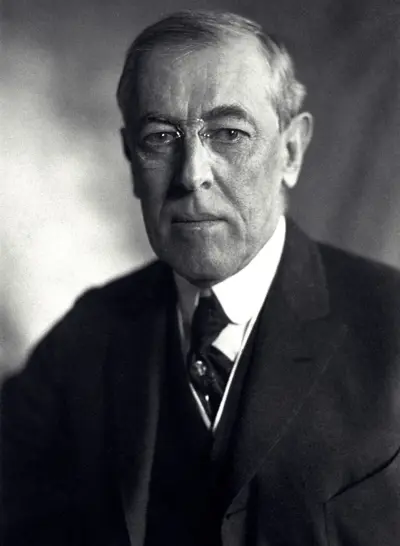
Thomas Woodrow Wilson was an American politician and academic who served as the 28th president of the United States from 1913 to 1921. A member of the Democratic Party, Wilson served as the president of Princeton University and as the 34th governor of New Jersey before winning the 1912 presidential election. As President, Wilson led the United States into World War I in 1917. He was the leading architect of the League of Nations, and his progressive stance on foreign policy came to be known as Wilsonianism. Scholars have generally ranked Wilson in the upper tier of U.S presidents, although he has been criticized for supporting racial segregation and white supremacy.
